
Storipod, a digital platform for readers and writers, has reached 50,000 users worldwide, showing remarkable user activity and community building. Storipod announced it has grown its user base to 50,000, with over half of them active weekly, a rate much higher than typical consumer apps. This means about 28,354 users engaged with the platform in the past week, and nearly all of these active users are not just browsing but actively reading, reacting, and creating content. The platform also boasts 29,344 “pods” or story groups created, indicating that users are deeply involved in building communities rather than just scrolling through content. This level of engagement is impressive compared to industry averages, where many platforms struggle to keep even 20% of signups active. James Nelson, Storipod’s Product Manager and Business Analytics Expert, highlighted that the platform is more than just a gathering place for users, it’s a movement where stories spread, writers grow, and audiences stay hooked. James Nelson shared on LinkedIn, “We’re proving that screen time can mean story time and people love it!” Other tech professionals and users congratulated the team, noting the platform’s snowballing growth and potential in the creator economy. Adding to the conversation, Muhammad Sal, a digital marketing and MarTech expert and Storipod user (@sal), pointed out the challenges African creators face on global platforms like Wattpad. He said: “Wattpad tried. But it may still be missing the point for African creators. Wattpad made moves to help writers monetize, Paid Stories, Creator Program, Brand partnerships, but these systems rarely center creators outside the West. For most African storytellers, Wattpad still feels like a place to give value without receiving it back.” Sal stated that monetization on Wattpad is often locked behind huge follower thresholds and unclear eligibility, favoring stories that perform by Western standards. In contrast, he praised Storipod’s approach: “Platforms like Storipod are emerging with a different mindset, built from day one with monetization in mind, designed for micro-audiences and intimate storytelling, rooted in the idea that every voice has value, not just the viral ones. It’s not about competition. It’s about direction. The creator economy in Africa doesn’t need copy-paste platforms. It needs tools built with our realities in mind. Wattpad walked so others could fly, but we’re ready for something local, flexible, and truly creator-first.” With strong user engagement and a creator-first mindset, the platform is set to write many more successful chapters ahead.

MTN launches accelerator program for African startups, offers ₦5M non-equity grant
MTN has introduced a new 12-week accelerator program designed to help growth-stage African startups expand their businesses . The program, called the MTN Cloud Accelerator, aims to support promising startups across the continent . Participating startups will receive a ₦5 million non-equity grant . They will also get access to MTN’s APIs, including MoMo, Cloud, SMS/USSD, and Chenosis . The accelerator provides product and go-to-market support, cloud credits, technical advising, and venture capital exposure . It runs in a fully sponsored, hybrid format, concluding with a Demo Day in Lagos . MTN is looking for startups in several key sectors . These include FinTech, AgriTech, EdTech, AI, HealthTech, Cybersecurity, and Retail . There’s no need to be an MTN customer to apply . The deadline for applications is August 15, 2025 . Interested startups can apply through the MTN Accelerate website . This program shows MTN’s commitment to fostering innovation and growth within Africa’s startup ecosystem .

Burna Boy warns fans to stay away from meme coin scam using his name
Burna Boy has publicly warned his fans against a meme cryptocurrency falsely linked to him. The Nigerian music star made it clear he has no connection to any cryptocurrency projects. He described such crypto activities as fraudulent and urged fans to be cautious. This comes after a meme coin appeared online using his name, misleading some followers into thinking he was involved. Burna Boy’s statement aims to protect his fans from falling victim to scams that exploit celebrity names to gain trust. Cryptocurrency scams have been a growing concern in Nigeria and worldwide, often targeting young people eager to invest. His warning shows the need for vigilance in the fast-evolving crypto space, where not all projects are legitimate. Fans are advised to verify any investment opportunity independently before committing funds. This alert from a major public figure like Burna Boy is crucial in raising awareness and safeguarding the public from scams disguised as trendy digital currencies. Nigerian investors and fans should stay informed and cautious about such offers.

EFCC arrests six in Uyo over alleged internet fraud, recovers gadgets
Nigeria’s anti-corruption agency has arrested six people in Uyo, Akwa Ibom, for suspected internet fraud. The Economic and Financial Crimes Commission (EFCC) announced the arrests on Saturday. According to the agency, four suspects were picked up in the Ekamba Nsukara area, while two others were caught at Ekpri Nsukara, both in Uyo. The EFCC said the operation was based on intelligence. Officers from the Uyo Zonal Directorate recovered eight mobile phones and two laptops from the suspects during the raid. A statement from the commission read, “Operatives of the Economic and Financial Crimes Commission, Uyo Zonal Directorate, have arrested six suspected Internet fraudsters at the Ekamba and Ekpri Nsukara areas of Nwaniba, in Akwa Ibom State.” The agency did not release the names of the suspects but confirmed that all six are currently in custody. The EFCC said it is preparing to charge them to court soon. An EFCC spokesperson said, “The intelligence-driven arrest led to the recovery of the following items: eight mobile phones and two laptops. The suspects will be charged to court soon.” This case shows the EFCC’s ongoing efforts to fight cybercrime in Nigeria. The commission urges the public to remain vigilant and report suspicious online activities.
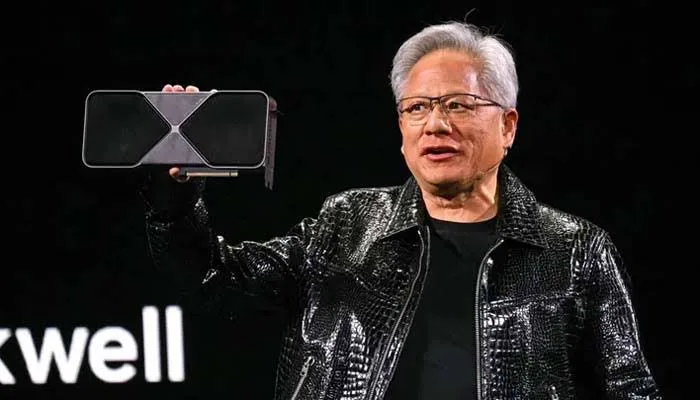
AI will change every job, but innovation holds the key – Nvidia CEO warns
Jensen Huang, CEO of Nvidia, says artificial intelligence will affect all jobs, but the real impact depends on how fast industries keep coming up with new ideas. Jensen Huang, the boss of Nvidia, the world’s top AI chipmaker, has warned that artificial intelligence will soon touch every job. Speaking in a recent interview, he explained that while AI can make work faster and more efficient, whether it leads to job losses or more opportunities depends on how much innovation continues in the economy. “If the world runs out of ideas, then productivity gains translate to job loss,” Huang said, responding to concerns that AI could wipe out millions of jobs if industries stop innovating. Huang’s comments come after Dario Amodei, CEO of Anthropic, predicted that AI could eliminate up to half of entry-level, white-collar jobs and push unemployment as high as 20% in the next five years. Surveys by Adecco Group and the World Economic Forum back up these concerns, with about 41% of CEOs and employers expecting to cut jobs due to AI by 2030. But Huang is more optimistic. He believes that as long as people keep coming up with new ideas, both jobs and productivity can grow together. “Everybody’s jobs will be affected. Some jobs will be lost. Many jobs will be created, and what I hope is that the productivity gains that we see in all the industries will lift society,” he said. Nvidia, which recently hit a $4 trillion market value, supplies the chips that power AI systems for tech giants like Microsoft, Amazon, and Google. Huang pointed out that every big shift in technology has created new jobs, even as it changed or replaced old ones. He also stressed that AI is an “equaliser” because it makes technology easier for everyone to use, not just experts. “It lifts people who don’t understand technology,” he said. Huang even admitted that AI has changed his own job, but he’s still working. He encouraged workers to learn how to use AI tools, saying, “You are not going to lose your job to AI, but you are going to lose your job to somebody who uses AI”. AI is already changing how companies work, with many businesses using it to automate tasks like paying suppliers and managing invoices. More changes are coming, and Huang’s advice of keep learning, keep innovating, and use AI as a tool to stay ahead is clear.
Meta buys Play AI, steps up global race for smarter voice tech
Meta, the company behind Facebook and Instagram, has acquired Play AI, a fast-rising startup known for developing artificial intelligence that creates natural-sounding, human-like voices. The deal, confirmed by a Meta spokesperson and reported by Bloomberg, will see the entire Play AI team join Meta next week. Play AI’s technology will help Meta build better AI characters, improve voice assistants, and create more engaging audio content across its platforms. An internal memo described Play AI’s work as “a great match for our work and road map, across AI Characters, Meta AI, Wearables and audio content creation.” Financial details of the deal were not made public. Meta’s Play AI purchase is just one part of a bigger strategy. In late June, Meta bought a 49% stake in Scale AI for $14.3 billion. Scale AI’s co-founder, Alexandr Wang, is now Meta’s Chief AI Officer and leads the new Meta Superintelligence Labs. This division will focus on making Meta’s artificial intelligence efforts faster and more unified. Wang is well-known in the tech world, having built Scale AI into a major supplier of data tools for companies like Google, Microsoft, and OpenAI. Under his leadership, Scale AI reached a $13.8 billion valuation by 2024. Meta is also hiring top talent from other AI labs. Meta recently recruited Jack Rae, a principal researcher from Google DeepMind. The company has tried to lure OpenAI staff with signing bonuses as high as $100 million, according to OpenAI CEO Sam Altman. However, Altman said none of his top people have left, arguing that OpenAI’s culture and mission keep them loyal. Until recently, Meta mostly built its AI tools in-house, especially its Llama large language model. This was different from rivals like Microsoft and Amazon, who invested heavily in outside AI startups. But Meta’s approach is changing. In January, CEO Mark Zuckerberg said AI would be Meta’s top priority in 2025, with up to $65 billion planned for AI infrastructure and innovation this year. Meta is also looking to raise up to $29 billion to fund its expansion into AI infrastructure. The company is talking to big private investors to secure $3 billion in equity and $26 billion in debt. This money will help Meta build next-generation data centers in the US, supporting its growing AI ambitions. Meta has also announced the Llama Impact Grant for startups and researchers in Sub-Saharan Africa, showing its interest in supporting local innovation.