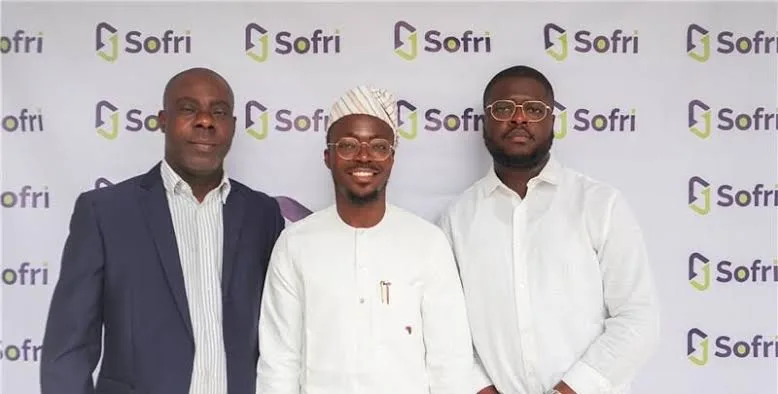
The Managing Director of Sofri, Mr. Paul Adebayo, has identified the lack of reliable data as a major obstacle to expanding credit access in Nigeria’s financial sector. Speaking at Sofri’s relaunch media event in Lagos, Adebayo explained that the credit industry struggles with limited and low-quality data, which makes it difficult for lenders to properly assess risk and develop inclusive lending products. Without a strong data ecosystem, financial institutions face challenges in scaling loans to underserved populations. Adebayo highlighted the Central Bank of Nigeria’s Global Standing Instruction (GSI) policy as a significant step forward. The GSI framework allows lenders to recover loan repayments from any bank account linked to a borrower’s Bank Verification Number (BVN), even if the borrower switches banks. “This is a game-changer for credit recovery and risk reduction,” he said. Sofri is also adopting artificial intelligence and machine learning to improve credit assessments, especially for small loans ranging from ₦2,000 to ₦10,000. The company uses alternative data points such as phone usage, location, education, lifestyle patterns, and even social media presence to evaluate borrowers beyond traditional salary or employment history. Adebayo noted, “If you have 10,000 followers on Instagram and I have 2,000, the probability that you will default is lower because your social capital is higher.” This “social credit” approach aims to widen access to credit for individuals typically excluded from formal banking. The fintech’s strategy reflects a broader trend in Nigeria, where digital lenders are leveraging data analytics to reach over 38 million financially excluded adults. Uzoma Nwagba, CEO of Nigeria Consumer Credit Corporation (CREDICORP), also emphasized the need for improved regulation and credit reporting reforms to address the country’s credit challenges. Currently, only 13% of Nigerians have records with credit bureaus, limiting lenders’ ability to extend loans. CREDICORP and the Central Bank are working on new legislation to strengthen credit reporting and enforcement.
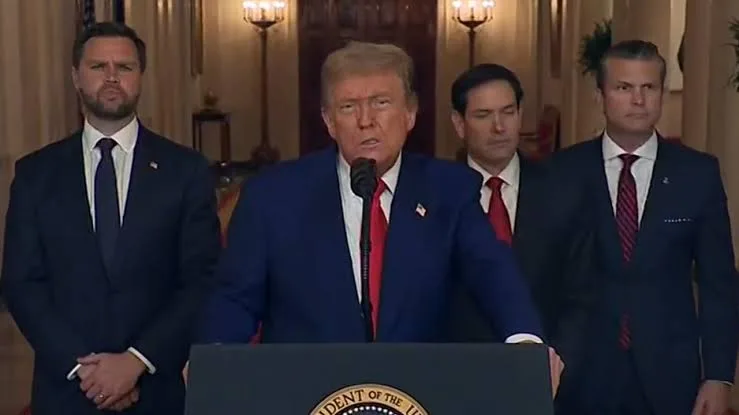
U.S. conducts airstrikes on Iranian nuclear sites, Trump calls mission a ‘spectacular military success’
U.S. military forces launched targeted airstrikes on three major Iranian nuclear facilities, Fordow, Natanz, and Isfahan, marking a significant escalation in Middle East tensions. President Donald Trump confirmed the operation, describing it as a “spectacular military success” aimed at destroying Iran’s nuclear enrichment capacity after diplomatic efforts failed. The strikes were reportedly carried out using B-2 stealth bombers equipped with bunker-busting ordnance designed to penetrate fortified underground sites. Trump stated the mission “completely and totally obliterated” key enrichment facilities, emphasizing the goal to halt the nuclear threat posed by Iran, which he called “the world’s number one state sponsor of terror.” The operation was coordinated with Israel, whose Prime Minister Benjamin Netanyahu praised the strikes as a historic move toward regional stability. U.S. Senator Lindsey Graham also supported the action, calling it the “right call.” Iran acknowledged the attacks but claimed nuclear materials had been removed prior, minimizing the damage. Iranian officials condemned the strikes as violations of international law and vowed to continue their nuclear program. Saudi Arabia reported no radioactive contamination in the region. The United Nations Secretary-General Antonio Guterres expressed grave concern over the escalation, warning of potential catastrophic consequences for civilians and the wider region. This development follows weeks of escalating airstrikes between Israel and Iran amid fears over Iran’s nuclear ambitions. Whether this military action will deter further conflict or provoke wider hostilities remains uncertain.
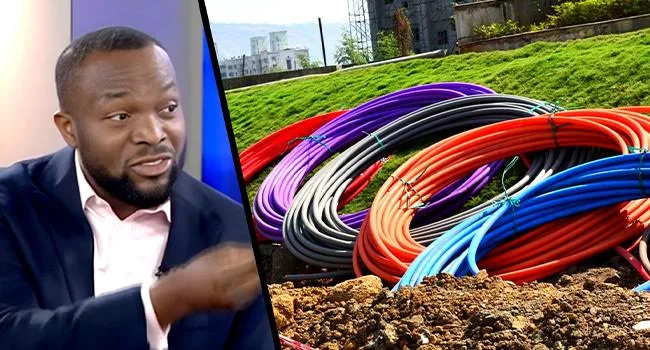
Nigeria accelerates digital transformation with $3 billion telecom infrastructure investment by mid-2025
Nigeria is set to receive a landmark $3 billion investment in telecommunications equipment and fibre optic infrastructure by June 2025, to enhance the country’s digital connectivity and broadband access nationwide. Dr. Bosun Tijani, Minister of Communications, Innovation and Digital Economy, announced the development during a World Bank panel discussion on Nigeria’s digital economy. The first tranche, valued at $1 billion, will deliver advanced telecom equipment, followed by a $2 billion rollout of fibre optic cables designed to expand broadband coverage, especially in underserved rural and semi-urban areas. This investment, a collaboration between the Federal Government and the World Bank, aims to close Nigeria’s digital divide by improving internet quality and accessibility for millions of Nigerians who currently lack reliable connectivity. Dr. Tijani emphasized the urgency of this initiative, stating, “We all need quality internet access regardless of our location. Technology is no longer a luxury but a necessity.” The government’s broader digital strategy also targets attracting up to $40 billion in private capital investments by 2025 to further develop digital infrastructure, foster innovation, and grow the digital economy from 10.68% to 12.54% of GDP. Key components include strengthening legal frameworks, promoting STEM education, and enhancing e-governance. This massive infrastructure upgrade aligns with Nigeria’s ambition to become a technological powerhouse in Africa, leveraging its young, tech-savvy population and growing investor interest. It also addresses persistent challenges such as frequent fibre optic cable disruptions and limited broadband penetration outside major cities. Telecom operators are complementing government efforts with over $1 billion in capital expenditure planned for 2025 to modernize networks and improve service quality, signaling a new era of digital resilience and economic growth for Nigeria. As the rollout begins in the fourth quarter of 2025, stakeholders remain optimistic that these investments will unlock Nigeria’s full digital potential, enabling inclusive connectivity and empowering millions of Nigerians across the country.

Bomb explosion in Kano kills five, injures 15
A deadly explosion rocked a residential area along the Eastern Bypass early Saturday, killing five people and injuring 15 others, authorities confirmed. The blast is suspected to have involved a military-grade mortar bomb transported in a trailer believed to have come from Yobe State. The trailer was reportedly carrying scrap metal, a business recently banned in Maiduguri, prompting transport to Kano. Kano State Commissioner of Police Ibrahim Adamu Bakori arrived at the scene shortly after the explosion. He confirmed the casualties and said the injured were rushed to Aminu Kano Teaching Hospital for urgent medical care. “Preliminary findings suggest the explosive material was being transported by a trailer, but it remains unclear whether the vehicle belonged to military personnel or contractors,” Bakori said. He added that security agencies are investigating the incident to determine the exact cause and ownership of the explosives. The explosion caused panic among residents and drew a swift response from emergency teams, including security agents and medical workers. This incident follows a recent suicide bombing at a crowded fish market in Konduga, Borno State, which killed at least 10 civilians and injured seven others. Authorities have appealed for calm as investigations continue.

Nigeria’s first female fighter pilot shines at Ghana Armed Forces Command and Staff College
Flight Lieutenant Kafayat Sanni, Nigeria’s first female fighter pilot, has distinguished herself at the Ghana Armed Forces Command and Staff College (GAFCSC) in Accra. She was named Best Allied Student and received the Best Assistant Commandant Paper award during the college’s recent graduation ceremony. Lieutenant Kafayat Sanni The awards were announced by Air Commodore Ehimen Ejodame, Director of Public Relations and Information for the Nigerian Air Force, on Saturday in Abuja. The ceremony, held on Friday, drew top military officials and dignitaries from across Africa. Flt. Lt. Sanni’s achievements highlight her exceptional academic performance and leadership skills in a competitive, multinational military environment. Her success marks a significant milestone for women in the Nigerian military and serves as an inspiration for aspiring female officers. The recognition at GAFCSC portrays Nigeria’s growing prominence in regional military cooperation and the increasing role of women in defense sectors across Africa.
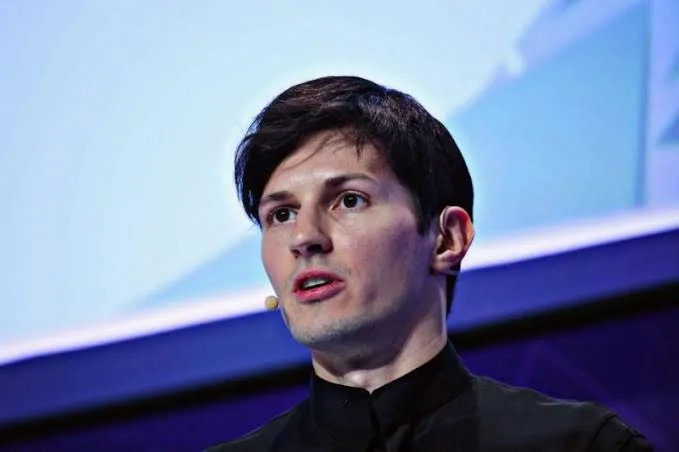
Telegram CEO Pavel Durov to divide $17 billion fortune equally among 106 children
Telegram co-founder and CEO Pavel Durov has announced plans to divide his $17.1 billion fortune equally among his 106 children, which include six biological children and over 100 others conceived through anonymous sperm donations across 12 countries. In a recent interview with French media outlet Le Point, the 40-year-old tech billionaire revealed that he recently wrote his will, ensuring all his children, both biological and donor-conceived, will have the same inheritance rights. However, Durov has stipulated that none of his children will have access to the fortune for the next 30 years. He explained this decision is designed to encourage them to live independently, build their own lives, and develop self-reliance rather than depend on inherited wealth. “There are those who were conceived naturally and those who come from my sperm donations. They are all my children and will all have the same rights,” Durov said. “I want them to live like normal people, to build themselves up alone, to learn to trust themselves, to be able to create, not to be dependent on a bank account.” Durov also highlighted that his decision to formalize his will was influenced by the risks involved in his work defending digital freedoms and maintaining Telegram’s independence from state control. He noted that if he were to disappear, a non-profit foundation would take over the company to ensure its continued independence and commitment to privacy and freedom of expression. Telegram has recently surpassed $1 billion in revenue, with 12 million premium subscribers and significant cash reserves. The platform also secured a $300 million investment from Elon Musk’s AI company xAI, marking a major collaboration in AI messaging.