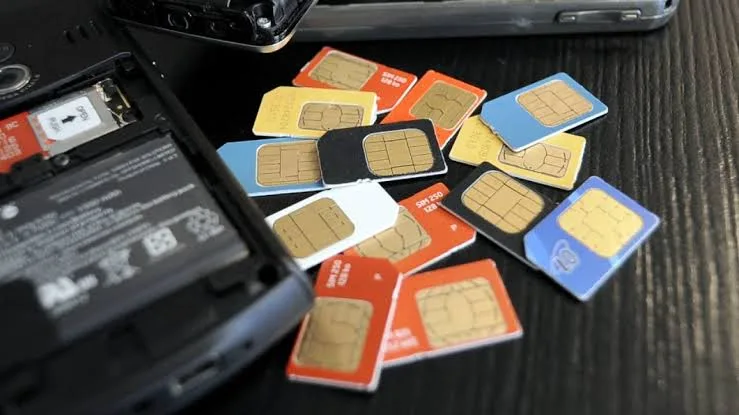
Telecom operators in Nigeria have confirmed that SIM swap services are back, following weeks of nationwide disruption that left millions unable to replace or activate SIM cards. Both MTN and Airtel have restored SIM swaps across their networks after the downtime, which was traced to the migration to a new National Identity Management Commission (NIMC) verification platform. MTN posted on Sunday via its support account:“SIM swaps have now resumed. We can confirm that NIMC services are fully operational and appreciate their support in the migration to a new platform for NIN verification services for the telecommunications industry.” The company added that anyone who still has issues should visit their nearest service centre for help. Airtel Nigeria also notified customers through social media that,“The NIMC PORTAL is up and running. We regret earlier messages suggesting otherwise. We are sorry for the delay and are addressing the issue… We value our partnership with the NIMC and value your patience.” For now, other big networks like Glo and 9mobile have not made formal statements on SIM swap restoration. However, NIMC has reposted MTN and Airtel’s updates, showing that SIM swap is available on multiple networks again. Earlier in July, many Nigerians suddenly lost access to SIM-related services. This included SIM swaps, replacements, and new activations. The trouble came from technical changes ordered by NIMC, who directed all telcos to move to a new identity verification system. This system is critical, because the federal government now requires everyone to link their SIM cards to a National Identification Number (NIN). If the verification platform is down, no new SIM can be activated. The NIMC said the migration is part of plans to improve the security and reliability of Nigeria’s digital identity infrastructure. But the switch did not go smoothly and caused nationwide service delays for several weeks. Both MTN and Airtel have urged customers still experiencing delays to visit their service centres for quick support. Operators have thanked the public for their patience during this unexpected break. For now, Nigerians should expect normal service for SIM swaps and other SIM-related issues, though some queues are likely at major service centres as backlogs are cleared. As MTN’s message put it:“We appreciate [NIMC’s] support in the migration… and thank our customers for their patience.” Nigerians are advised to make sure their NIN is up to date and handy when visiting service centres for any SIM-related request.

MTN launches accelerator program for African startups, offers ₦5M non-equity grant
MTN has introduced a new 12-week accelerator program designed to help growth-stage African startups expand their businesses . The program, called the MTN Cloud Accelerator, aims to support promising startups across the continent . Participating startups will receive a ₦5 million non-equity grant . They will also get access to MTN’s APIs, including MoMo, Cloud, SMS/USSD, and Chenosis . The accelerator provides product and go-to-market support, cloud credits, technical advising, and venture capital exposure . It runs in a fully sponsored, hybrid format, concluding with a Demo Day in Lagos . MTN is looking for startups in several key sectors . These include FinTech, AgriTech, EdTech, AI, HealthTech, Cybersecurity, and Retail . There’s no need to be an MTN customer to apply . The deadline for applications is August 15, 2025 . Interested startups can apply through the MTN Accelerate website . This program shows MTN’s commitment to fostering innovation and growth within Africa’s startup ecosystem .

South Africa’s Blue Label Telecoms to rebrand as Blu label unlimited group
South Africa’s Blue Label Telecoms is set to change its name to Blu Label Unlimited Group, reflecting a fresh direction and bigger ambitions in tech and telecoms. The rebrand awaits shareholder approval and marks a major restructuring for the company. Blue Label, a key player in South Africa’s prepaid economy, plans to separate its telecoms business from other units. The new name drops “telecoms” and shortens “Blue” to “Blu” to match its updated branding seen in marketing. The company serves about 35 million customers with prepaid airtime, electricity, and mobile data, distributed through thousands of outlets like spaza shops and supermarkets. Despite fierce competition from giants like MTN and Vodacom, Blue Label remains influential in the market. South Africa’s telecom sector is expected to grow from $10.43 billion in 2025 to $12.28 billion by 2030, with mobile data driving much of that expansion. The rebrand also ties into Blue Label’s recent move to acquire a controlling stake in mobile operator Cell C. Under new leadership, Cell C is pursuing a “capex-light” strategy focused on financial recovery and sustainable growth. There are plans to possibly list Cell C separately on the Johannesburg Stock Exchange after restructuring. Once approved, the company will trade on the JSE as Blu Label Unlimited, keeping its current share code and telecom sector listing. This rebrand signals a shift towards a more diversified tech group ready to expand its footprint in South Africa’s fast-evolving digital space. The change is expected to be finalised soon after shareholder approval, with the company continuing to build on its strong distribution network and digital platforms.
MTN rolls out AI to boost network quality in Nigeria, eyes Africa-wide expansion
MTN Group has started using artificial intelligence (AI) to improve its network and services in Nigeria, setting the pace for a bigger rollout across Africa. MTN, one of Africa’s biggest telecoms companies, announced it is now using AI to manage network traffic and deliver better service to customers in Nigeria. This move is part of its “MTN Genova” programme, which aims to transform how the company operates by using responsible AI technology at scale. The new AI systems are not just for Nigeria. MTN is also testing smart fuel management for data centres in South Africa, energy management in Benin, and fibre cut detection in Côte d’Ivoire. These efforts are all coordinated by MTN’s Artificial Intelligence Centre of Excellence, which works alongside a Cloud Centre of Excellence and a team of over 300 engineers. MTN says its AI team is focused on building solutions that are ethical and safe, following strict guidelines set by its Responsible AI Policy. A special committee within MTN’s leadership oversees this work. Mazen Mroué, MTN’s Chief Digital Infrastructure Officer, explained, “AI is no longer just a tool. It’s now the engine changing how businesses work and how value is created globally. We’re building AI for Africa, by Africans, to unlock real value for everyone.” He added that AI is helping people do more and is becoming a natural part of everyday life and work. MTN is also working with African startups to develop local language AI models. These models will help with customer service and make digital experiences better for users across the continent. The company believes that, with the right infrastructure, talent, and partnerships, AI can help Africa grow faster. MTN’s goals include making its operations more efficient, improving customer experience, cutting costs, and supporting digital growth that includes everyone. “AI is not just about automation, it’s about boosting human potential and transforming how we live and work,” said Mazen Mroué, MTN’s Chief Digital Infrastructure Officer. Experts say AI could add as much as $1.5 trillion to Africa’s economy by 2030, with millions of new digital jobs expected.

TStv boss, Bright Echefu, faces fresh N1bn, $1.3m fraud charges, seeks settlement
Bright Echefu, CEO of TStv, has been re-arraigned in Abuja on new fraud and tax charges worth over N1 billion and $1.3 million, but is now pushing for an out-of-court settlement. On June 30, 2025, the Economic and Financial Crimes Commission (EFCC) brought Bright Echefu, head of Telecom Satellites Limited (TStv), and three others before the Federal High Court in Abuja. They face a twelve-count charge, including money laundering, investment fraud, and tax evasion. The EFCC accused Echefu and his team of defrauding investors, including former Minister Tanimu Turaki and BYI General Limited, of N1 billion and $1.3 million. The charges also claim TStv failed to remit over N66 million in taxes, covering VAT, company income tax, and PAYE deductions from staff salaries. According to the charge sheet, the alleged offences happened around May 2020. The breakdown includes: N33.9 million in unremitted company tax, N13.5 million in unremitted VAT, N19.4 million in unpaid PAYE and multiple counts of collecting large sums from investors under false pretence Echefu and the other defendants pleaded not guilty to all charges. However, before the charges were read, Echefu’s lawyer told the court that some payments had been made to investors in hopes of settling the matter. He asked for an adjournment to allow for a possible agreement. EFCC’s lawyer confirmed that some payments had been made, but insisted the trial must proceed. The court agreed and set the next hearing for October 15, 2025. “There are moves to settle this matter and there was a meeting on Saturday between myself with the Nominal Complainant as it is about investment. The Defendants have paid some money and I was thinking that the matter would be adjourned for a report of settlement.”- Echefu’s lawyer, Eyitayo Fatogun, SAN, said. “They are correct, they have made some payment but they have not taken their Plea and the matter cannot be adjourned for trial.”- EFCC counsel, A. S. Tomwell, responded. TStv launched in 2017, promising to shake up Nigeria’s pay-TV market, but struggled to deliver consistent service. The company went off the radar in 2023, leaving many customers disappointed. In 2024, Echefu launched a new pay-TV project, LUFT TV, and said TStv subscribers would be moved to the new platform. The case remains an allegation, Echefu and his team are presumed innocent until proven guilty. The court will decide if the matter can be settled out of court, or if the trial will go ahead.
“Fix internet quality issues or face fines”- NCC to tower companies
The Nigerian Communications Commission (NCC) has ordered tower companies to urgently improve internet service quality by the end of August or risk penalties. At a recent Abuja meeting, NCC Executive Vice Chairman Aminu Maida directed major tower infrastructure providers, including IHS Towers, American Tower Corporation (ATC), and Pan-African Towers, to resolve problems like poor power supply, equipment failures, and lack of technical support that are hurting internet quality. Tower companies, known as TowerCos, own and maintain the cell towers that mobile operators like MTN, Airtel, and Glo rely on for network coverage. When towers experience power outages or technical faults, it causes dropped calls and slow data, frustrating millions of users. IHS Towers leads the market with around 62% of Nigeria’s telecom towers, followed by ATC and Pan-African Towers. The NCC’s new directive came after it expanded its Quality of Service regulations in August 2024 to include TowerCos, requiring them to meet strict performance standards. Maida emphasized that financial disputes between mobile operators and tower companies are no excuse for poor service, insisting all parties must meet their technical and financial obligations. The NCC is also boosting transparency by launching a Major Incident Reporting Portal and plans to publish performance dashboards online so consumers can track how well providers meet their targets. This set to improve network reliability and internet experience for Nigerians, especially as digital connectivity becomes ever more crucial for work, education, and social life. If tower companies fail to act before the August deadline, fines and stricter enforcement could follow, which at the end will reshape Nigeria’s internet landscape for the better.