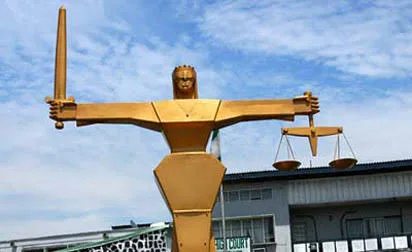
The Federal High Court in Abuja will rule on September 24, 2025, on a case involving businessman Abubakar Isa’s claim that his 43 million shares in 9mobile were transferred without his consent. Abubakar Isa has taken legal action to challenge the transfer of his 43 million shares, which he alleges were held in trust by Seltrix Limited but were transferred to Emerging Markets Telecommunication Services Limited (9mobile’s operating company) without his permission. Isa’s suit argues that this transfer led to an illegal change of control of 9mobile to LH Telecommunication Limited, approved by the Corporate Affairs Commission (CAC) and Nigerian Communications Commission (NCC). Isa’s legal team, led by Femi Atteh, SAN, insists Isa is the rightful beneficial owner of the shares and that Seltrix and others breached trust by transferring the shares without his consent. The shares in question were part of Teleology Nigeria Limited’s capital, which held a majority stake in 9mobile. Teleology had secured a loan from the African Export-Import Bank using these shares as collateral. The defendants include Seltrix Limited, Hayatu Hassan Hadeija, Teleology Nigeria Limited, LH Telecommunication Limited, CAC, NCC, and others. The defense argues the case should be dismissed as time-barred and an abuse of court process, suggesting Isa should pursue a civil suit against his trustee instead. After hearing arguments, Justice Mohammed Umar adjourned the case for ruling on September 24. 9mobile, formerly Etisalat Nigeria, has experienced multiple ownership changes. Teleology Nigeria Limited acquired it in 2018 after the previous owners defaulted on loans. In 2024, LH Telecommunication Limited acquired a 95.5% stake in 9mobile, a move approved by the NCC and other regulators. Isa’s lawsuit challenges the legitimacy of this latest acquisition, focusing on the alleged mishandling of his shares during the ownership transition. The Federal High Court’s ruling in September will clarify the ownership status of the disputed shares and potentially impact 9mobile’s control structure going forward.
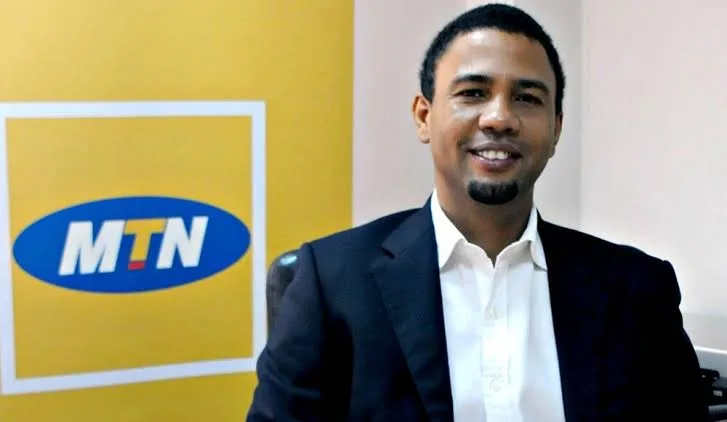
AGF to decide on criminal charges against MTN Nigeria and CEO Karl Toriola by October 2025
The Attorney General of the Federation (AGF) will make a final decision by October 2025 on the criminal copyright infringement charges against MTN Nigeria Communications Limited and its CEO, Karl Toriola, according to court proceedings in Abuja. The case began when the Nigerian Copyright Commission (NCC) accused MTN and others of using musical works by artiste Maleke Idowu Moye as caller ringback tunes without permission between 2010 and 2017. This led to a criminal charge filed at the Federal High Court, Abuja, against MTN Nigeria, Karl Toriola, and others, alleging unauthorized use and distribution of copyrighted music. MTN challenged the case, asking the court to dismiss it as defective. Following petitions from MTN’s lawyers claiming attempts to damage the company’s reputation and destabilize its business, the AGF took over the prosecution from the NCC in mid-2024, as allowed by the constitution. At the latest court session, the AGF’s counsel informed the judge that the office was reviewing the matter and requested more time to decide. The court adjourned the case to October 22, 2025, for the AGF’s report on whether to continue or drop the charges. MTN’s legal team expressed hope that the AGF’s decision will soon resolve the uncertainty hanging over the CEO and the company. For now, the matter remains under review by the highest legal authority in the country.
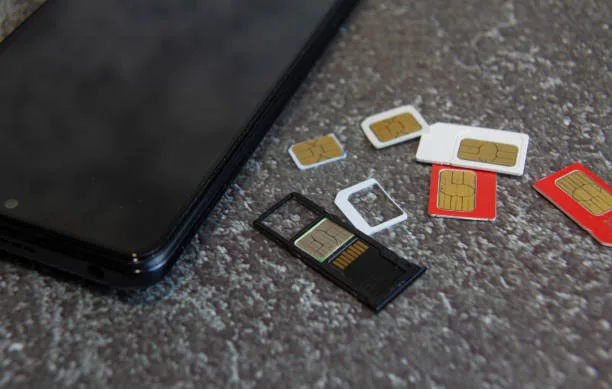
Nationwide SIM services disrupted as Telcos switch to new NIMC verification platform
Millions of Nigerians are currently unable to activate new SIM cards, swap, or replace existing ones due to a technical glitch caused by telcos migrating to a new identity verification system mandated by the National Identity Management Commission (NIMC). The Association of Licensed Telecommunications Operators of Nigeria (ALTON) confirmed that all mobile network operators (MNOs) nationwide are affected by this disruption. The problem stems from the switch to NIMC’s new platform designed to improve the security and efficiency of identity verification linked to SIM registration and related services. However, unforeseen technical issues have halted real-time verification processes, making it impossible for telcos to process SIM-related requests such as swaps, replacements, and new activations. ALTON urged subscribers to avoid visiting service centers for SIM transactions until the problem is fixed.The association is working closely with the Nigerian Communications Commission (NCC), NIMC, and other authorities to resolve the integration challenges as quickly as possible. ALTON also apologized for the inconvenience and promised to keep the public updated on progress. This disruption comes after Nigeria completed the mandatory linking of all SIM cards to the National Identification Number (NIN), a policy aimed at strengthening identity verification and reducing fraud in telecom services.
NCC approves 3-year national roaming agreement between MTN Nigeria and 9 Mobile
The Nigerian Communications Commission (NCC) has approved a three-year national roaming agreement allowing 9Mobile subscribers to use MTN’s network across Nigeria. This new deal means 9Mobile customers can now access MTN’s extensive network in areas where 9Mobile’s coverage is weak or unavailable. It offers a cost-effective way for 9Mobile to expand its reach without building new infrastructure. In return, MTN gains access to 9Mobile’s underused spectrum in key frequency bands, which can help improve MTN’s network capacity. The agreement is seen as a major step toward better collaboration in Nigeria’s telecom sector, which has long discussed infrastructure sharing but rarely implemented it at this scale. MTN Nigeria’s CEO, Karl Toriola, said the deal supports the NCC’s vision of a fully connected Nigeria and shows what can be achieved through partnership between private and public sectors. 9Mobile’s market share has dropped sharply in recent years, from 6.6% in 2020 to just 1.72% in April 2025, due largely to poor service quality and customer loss. This roaming deal could help 9Mobile win back subscribers by improving network reliability. The NCC has encouraged telecom companies to share infrastructure to reduce costs and expand mobile access nationwide. This agreement follows a successful pilot roaming trial between MTN and 9Mobile in Ondo State in 2020, which tested the impact on service delivery. Karl Toriola, MTN Nigeria CEO, said:“This agreement represents a significant step in our commitment to driving industry collaboration, improving customer experience, and supporting the NCC’s vision of a fully connected Nigeria.” “Now that 9Mobile will have access to MTN’s national footprint, it’s all about how well they can package and market their services.” This national roaming deal could reshape Nigeria’s telecom landscape by making services more reliable and affordable, especially for 9Mobile users. It also sets a model for smaller operators to survive and thrive in a market dominated by giants like MTN and Airtel.
Lebara Nigeria, new telecom enters with a new way to buy phone minutes
Lebara Nigeria has officially setup to compete in the telecom market with a fresh approach: selling voice minutes instead of traditional airtime. The company rolled out its 0724 phone number series and secured full connectivity with all major Nigerian networks, promising seamless calls from day one. Lebara holds a Tier 5 Mobile Virtual Network Operator (MVNO) license, the highest level in Nigeria, allowing it to lease infrastructure and offer innovative services nationwide. Unlike usual airtime, where you pay upfront and minutes disappear unpredictably, Lebara’s voice bundles let you buy exact minutes. For example, if you buy 100 minutes and your call lasts 30 seconds, you still have 99 minutes and 30 seconds left. This means clearer billing and better value for users. Samuel Alabi, Lebara’s Head of Corporate Communications, said, “You buy minutes, not airtime. That’s the kind of clarity and control we’re bringing to Nigerian telecoms.” The company aims to offer affordable, transparent, and high-quality services to compete with big players like MTN and Airtel. Lebara’s entry could shake up Nigeria’s $20 billion telecom market by giving customers more control and pushing other operators to improve. The launch is set for the third quarter of 2025, and it could make mobile communication more predictable and affordable for millions of Nigerians.
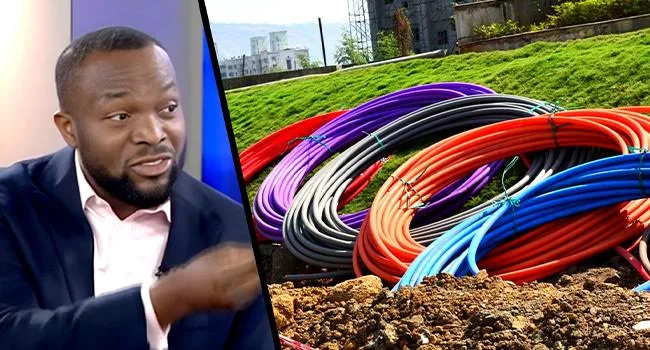
Nigeria accelerates digital transformation with $3 billion telecom infrastructure investment by mid-2025
Nigeria is set to receive a landmark $3 billion investment in telecommunications equipment and fibre optic infrastructure by June 2025, to enhance the country’s digital connectivity and broadband access nationwide. Dr. Bosun Tijani, Minister of Communications, Innovation and Digital Economy, announced the development during a World Bank panel discussion on Nigeria’s digital economy. The first tranche, valued at $1 billion, will deliver advanced telecom equipment, followed by a $2 billion rollout of fibre optic cables designed to expand broadband coverage, especially in underserved rural and semi-urban areas. This investment, a collaboration between the Federal Government and the World Bank, aims to close Nigeria’s digital divide by improving internet quality and accessibility for millions of Nigerians who currently lack reliable connectivity. Dr. Tijani emphasized the urgency of this initiative, stating, “We all need quality internet access regardless of our location. Technology is no longer a luxury but a necessity.” The government’s broader digital strategy also targets attracting up to $40 billion in private capital investments by 2025 to further develop digital infrastructure, foster innovation, and grow the digital economy from 10.68% to 12.54% of GDP. Key components include strengthening legal frameworks, promoting STEM education, and enhancing e-governance. This massive infrastructure upgrade aligns with Nigeria’s ambition to become a technological powerhouse in Africa, leveraging its young, tech-savvy population and growing investor interest. It also addresses persistent challenges such as frequent fibre optic cable disruptions and limited broadband penetration outside major cities. Telecom operators are complementing government efforts with over $1 billion in capital expenditure planned for 2025 to modernize networks and improve service quality, signaling a new era of digital resilience and economic growth for Nigeria. As the rollout begins in the fourth quarter of 2025, stakeholders remain optimistic that these investments will unlock Nigeria’s full digital potential, enabling inclusive connectivity and empowering millions of Nigerians across the country.