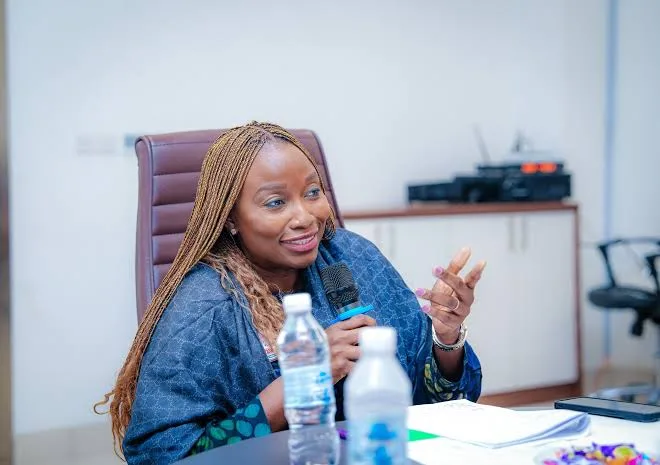
The Managing Director of the Federal Airports Authority of Nigeria (FAAN), Mrs. Olubunmi Kuku, has warned that incidents involving unruly passengers, staff conflicts, and non-compliance with safety protocols are threatening the progress made in Nigeria’s aviation safety record. Speaking in Lagos at FAAN’s Aviation Safety Week, themed “Navigating Conflict for a Safer Aviation in Nigeria”, she called for a coordinated and proactive response from all industry stakeholders, emphasizing that safety is a collective effort requiring complete synergy between agencies, airlines, and regulators.Former FAAN General Manager, Hon. Yakubu Dati, delivered the keynote address, corroborating the Managing Director’s concerns. He stressed that the industry has recorded an increase in incidents involving unruly passengers over the past decade, which directly challenges operational efficiency and compromises safety.Dati cited the International Air Transport Association (IATA), reporting that disruptive passenger events now occur at a rate of 1 in every 568 flights, leadinging to verbal abuse, intoxication, and non-compliance with instructions. The International Civil Aviation Organization (ICAO) has also identified “air rage” and aggression as safety-critical issues, urging member states to integrate behavioural risk management into their safety frameworks. Dati largely attributed the rise in conflicts within the aviation industry to a breakdown in communication.Represented by Dr. Emiola Luqman, the Director of Human Resources and Administration, Mrs. Kuku outlined the decisive steps FAAN is taking to manage conflicts: The FAAN MD stressed that the industry must shift from siloed efforts to integrated safety strategies, where security agencies, airlines, ground handlers, and the regulator work in complete synergy to promote a culture of safety, trust, and collaboration.
Utila joins the ABI Membership Network to strengthen institutional digital asset infrastructure across Africa
The Africa Blockchain Institute (ABI) is proud to announce that Utila,a global leader in institutional digital asset infrastructure, has officially joined the ABI Membership Network.This partnership marks a significant step toward advancing the development of secure, scalable,and institution-ready digital asset infrastructure across Africa. As blockchain adoption gains momentum across the continent, the inclusion of Utila within the ABI Membership Network underscores a shared commitment to building resilient systems that enable institutions to securely manage and innovate with digital assets. The addition of Utila to our network comes at a defining moment for Africa’s digital transformation. As governments and enterprises increasingly explore blockchain for governance, finance, and infrastructure, Utila’s expertise in institutional-grade digital asset and stablecoin infrastructure will be instrumental in ensuring these innovations are secure,compliant,and sustainable – Kayode Babarinde, Executive Director of the Africa Blockchain Institute. Founded on the belief that the future of finance is digital, secure, and inclusive, Utila offers one of the most robust, secure, and scalable platforms for institutional digital asset operations. Through its cutting-edge technology, the company empowers organizations to manage, build,and innovate confidently within the rapidly evolving blockchain ecosystem. Africa is one of the most promising frontiers for stablecoin innovation and institutional digital asset adoption. Joining the Africa Blockchain Institute allows us to collaborate with leading policymakers, innovators, and financial institutions working to build secure, compliant, and inclusive financial infrastructure across the continent. We’re excited to contribute our expertise in institutional wallet infrastructure and stablecoin operations to help power the next wave of digital finance in Africa – Bentzi Rabi, Co-founder & CEO of Utila The partnership arrives at a pivotal time for Africa’s blockchain and digital asset landscape. As central banks, fintechs, and public institutions explore tokenization, digital currencies, and decentralized finance (DeFi), collaborations like this between ABI and Utila will play a vital role in shaping policy, building capacity, and developing real-world use cases. Together, we aim to establish a future-ready foundation for Africa’s digital economy, one where institutional adoption of blockchain technology drives inclusion, accountability,and sustainable growth. About Utila Utila is the future of institutional digital assets. The company provides the most robust, secure, and scalable platform for institutional digital asset operations, empowering organizations to securely manage and build on digital assets. By combining advanced security with operational simplicity, Utila enables enterprises and institutions to confidently embrace the next generation of digital finance. About the Africa Blockchain Institute (ABI) The Africa Blockchain Institute (ABI) is a pan-African think-and-do tank advancing blockchain education, research, policy, and enterprise development. Through strategic programs,ecosystem partnerships, and capacity-building initiatives, ABI works to drive blockchain adoption and innovation that supports Africa’s sustainable digital transformation. For Media Inquiries:Africa Blockchain Institute (ABI)info@africablockchain.institutewww.africablockchain.institute
Africa Blockchain Institute and 10,000 Codeurs unite to empower Africa’s digital future
The Africa Blockchain Institute (ABI) has signed a groundbreaking Memorandum of Understanding (MoU) with 10.000 Codeurs, a France-based non-profit organization dedicated to digital skills empowerment across Africa. This strategic partnership aims to accelerate blockchain education, research, and employability across the continent, ushering in a new era of Africa-driven digital transformation. The Africa Blockchain Institute (ABI) has signed a groundbreaking Memorandum of Understanding (MoU) with 10,000 Codeurs, a France-based non-profit organization dedicated to digital skills empowerment across Africa. This strategic partnership aims to accelerate blockchain education, research, and employability across the continent, ushering in a new era of Africa-driven digital transformation. Under the MoU, ABI and 10,000 Codeurs will co-develop and deliver blockchain-focused capacity-building programs, including blended learning bootcamps, hackathons, micro-credentials, and policy research initiatives designed to align with national digital transformation agendas across Africa. This collaboration bridges two powerful ecosystems – Africa’s blockchain innovation hub and one of its largest youth digital training movements. Together, we are building a continent-wide pipeline of blockchain talent that meets real employer demand while positioning Africa as a leader in emerging technology adoption – Kayode Babarinde, Executive Director of the Africa Blockchain Institute Through the partnership, ABI will provide blockchain curriculum resources, master trainers, technical oversight, and research expertise, while 10,000 Codeurs will coordinate learner recruitment, mentorship, and job placement through its expansive employer network. Both organizations will engage with governments and industry to ensure that blockchain skills development directly supports Africa’s economic modernization goals. Our vision has always been to transform Africa’s youth into drivers of the digital economy…By combining our expertise with ABI’s leadership in blockchain research and policy, we are equipping a new generation with the skills and mindset to build trusted, transparent, and inclusive digital systems for the continent – Douglas Mbiandou, President of 10,000 Codeurs The partnership emphasizes collaborative curriculum design, research publications, pilot deployments, and train-the-trainer programs, ensuring the sustainability and scalability of blockchain talent development. Certifications issued under this alliance will follow rigorous quality assurance and accreditation standards, establishing a unified benchmark for blockchain education in Africa. About Africa Blockchain Institute (ABI) The Africa Blockchain Institute is a pan-African think tank and training institute focused on blockchain education, policy advocacy, and innovation. Headquartered in Kigali, Rwanda, ABI drives blockchain adoption through capacity building, research, and ecosystem development. About 10,000 Codeurs 10,000 Codeurs is a France-based non-profit organization dedicated to preparing Africa’s youth for the digital economy through mentorship, training, and employment pathways. Operating across multiple African countries, it connects learners, trainers, and employers to unlock sustainable digital careers. For Media Inquiries: Africa Blockchain Institute (ABI)info@africablockchain.institutewww.africablockchain.institute 10,000 Codeurscontact@10000codeurs.comwww.10000codeurs.com

Equinix to launch $22 million data center in Lagos
Global digital infrastructure leader Equinix has announced plans to open LG3, a $22 million data center in Lagos, Nigeria, marking its first purpose-built facility in West Africa set to launch in early 2026.LG3 designed to provide high-quality infrastructure and connectivity, will support local businesses and attract international companies by enabling seamless connection to global cloud services and partners through Equinix Fabric.Equinix Managing Director for West Africa, Wole Abu, described the Lagos facility as instrumental in bridging Africa’s digital divide; We’re not just building data centres; we’re fostering growth, empowering innovation, and laying the foundation for an interconnected African economy – Abu LG3 aims to elevate local startups, banks, fintech firms, e-commerce platforms, and AI enterprises by providing reliable, global-standard data services in Nigeria.Cedarview Managing Director Olawale Owoeye stressed the critical role of LG3’s connectivity and performance. Access to Equinix’s global ecosystem will enable Cedarview to expand its digital footprint and deliver high-performance solutions The upcoming LG3 data center will be a cornerstone for Africa’s digital transformation, enhancing technological capacity across Nigeria and the region.

Satellite images indicate possible mass graves in El-Fasher, Sudan
The medical charity Doctors Without Borders (MSF) has expressed grave concern over the fate of hundreds of thousands of civilians who fled the Sudanese city of El-Fasher following its seizure by the paramilitary Rapid Support Forces (RSF) in late October 2025. The warning comes as Yale University researchers, analyzing satellite imagery, released a report suggesting evidence of body disposal activities consistent with mass graves being dug in and around the city. MSF and UN officials report ethnically targeted violence including executions, sexual violence, and torture, by the RSF against civilians.El-Fasher, the capital of North Darfur, was the last major stronghold of the Sudanese Armed Forces (SAF) in the Darfur region. Its fall to the RSF on October 26, 2025, after an 18-month siege, gives the paramilitary group control over all five state capitals in Darfur.The violence reported is deeply rooted in ethnic conflict, echoing the patterns of atrocities committed by the RSF’s predecessor militia (the Janjaweed) in the early 2000s. Survivors have recounted harrowing stories of being targeted based on their ethnicity, including non-Arab ethnic groups such as the Fur, Masalit, and Zaghawa. The destruction of civilian infrastructure, particularly healthcare facilities, has compounded the crisis. The World Health Organisation previously reported the tragic killing of more than 460 patients and medical staff at the Al-Saudi Hospital during the takeover. The UN Human Rights Chief, Volker Turk, has warned that those who remain trapped in El-Fasher are being prevented from leaving.Newly elected MSF president Javid Abdelmoneim stressed the main concern of the organization about the scale of the displacement and the specific nature of the violence; Our main concern is that though we have seen approximately 5,000 people coming out of El-Fasher towards Tawila, we don’t know where the other hundreds of thousands have gone… That is worrying given the ethnic nature of targeting of violence towards civilians by the RSF The Yale HRL report details the grim findings from the satellite data, which corroborate eyewitness testimony and videos posted by the RSF themselves: At least two earth disturbances consistent with mass graves at a mosque and the former Children’s Hospital They acknowledged the disappearance of clusters of objects consistent with bodies, suggesting their removal or disposal. Adding to the regional crisis, the conflict has intensified and spread to the Kordofan region, where a medical source reported the RSF shelled a hospital in besieged Dilling, killing five and injuring five more. The UN Human Rights Chief, Volker Turk, issued a warning about the escalating violence, stating that civilians remain trapped inside El-Fasher and are being prevented from leaving.
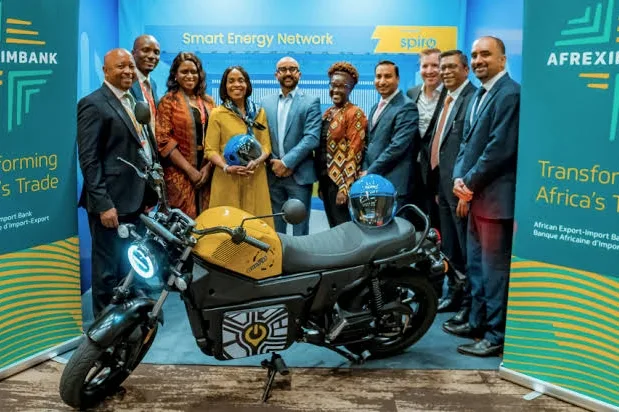
FEDA invests $75 million to boost the expansion of Spiro electric vehicle across Africa
The Fund for Export Development in Africa (FEDA), part of Afreximbank, has committed $75 million to Spiro, the continent’s leading electric two-wheeler and battery-swapping network, to accelerate clean mobility across Africa.Founded in 2022, Spiro operates Africa’s largest electric motorcycle battery-swapping network, with over 60,000 electric motorcycles and 1,200 swapping stations spanning several countries.Afreximbank’s move aligns with the increasing push towards electric vehicle adoption by governments in Nigeria, Kenya, Rwanda, and Ghana, which have recently rolled out pro-EV policies. The investment supports not only local vehicle manufacturing but also regional integration and knowledge transfer within Africa’s emerging clean energy ecosystem.Marlene Ngoyi, CEO of FEDA, said; Spiro’s success to date is a clear demonstration of the strength and scalability of its business model… it underscores the demand for sustainable mobility solutions across Africa Spiro’s approach combines commercial viability with social impact, driving practical progress toward cleaner transportation. The Federal Government’s launch of National Occupational Standards for compressed natural gas and electric vehicles further complements these efforts to reposition Nigeria’s automotive industry towards a cleaner future.