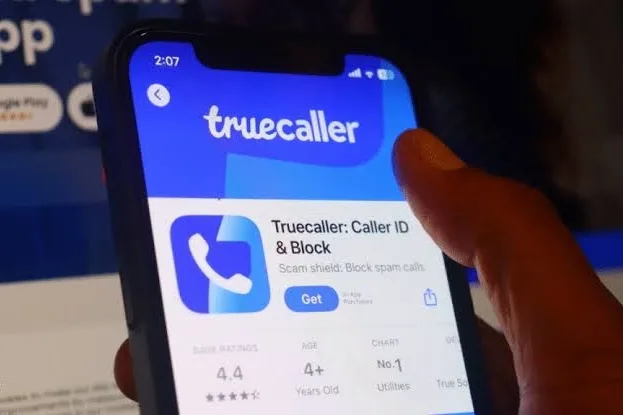
Truecaller, the popular caller ID app, is under investigation by South Africa’s Information Regulator for allegedly violating the country’s Protection of Personal Information Act (POPIA) through misuse of user data.The investigation follows complaints that Truecaller improperly labels some businesses as spam and demands payment for removal, charges the company denies. Truecaller insists it does not charge for whitelisting and that its use of contact permissions complies fully with POPIA regulations. Known for identifying unknown callers and blocking spam, Truecaller argues that accessing users’ contact lists is necessary for core app functions, not for collecting or misusing personal data. However, privacy experts remain sceptical, especially about how Truecaller displays information about individuals who have never downloaded the app or given consent. Senior associate Lucinda Botes of Phukubje Pierce Masithela Attorneys explained that displaying information on non-users raises legal concerns under POPIA’s principle of “openness,” which requires clear communication about how personal data is collected and used. Many individuals featured in Truecaller’s database may not have consented to their data being shared via others’ contact lists. The law protects businesses, which can request removal or clarification of wrongly tagged information to protect their reputations.
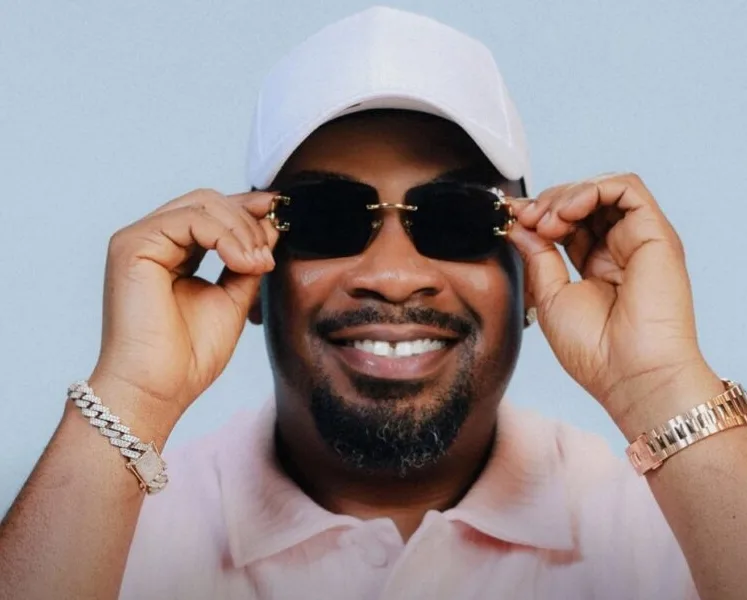
Don Jazzy donates N20 million to empower 10,000 Nigerian youths with laptops
Popular music artist Don Jazzy has pledged N20 million to support The Tech Access Project, a campaign aimed at equipping 10,000 Nigerian youths with laptops to boost their digital skills and entrepreneurship.The Tech Access Project, driven by Ayilola Ayotomiwa and three other conveners, seeks to empower Nigerian youths passionate about tech, music production, design, and digital entrepreneurship. The goal of this initiative is to provide laptops that will enable young talents to turn their ideas into reality. Bro, I hail o. Your initiative is commendable. But sir, 10,000 laptops is not beans. At this time, I can only afford to support with 20 million Naira and a repost. Hopefully, some other well-meaning Nigerians can help achieve the goal – Don Jazzy The conveners confirmed receiving the donation and reported that over N21 million has now been raised. They have reached out to other prominent figures like DJ Cuppy, Davido, Adekunle Gold, Olamide, and Victor Osimhen, as well as companies such as VAAS Global, which has committed to scholarships supporting the beneficiaries.The initiative, trending with the hashtag #10klaptopsproject, has drawn massive public support for a cause that recognizes young talents needing a helping hand to develop their ambitions in technology and digital fields.

Mothers warn of online chatbot dangers after cases of tragic teen suicide surface
Several grieving mothers have come forward, warning that AI chatbots have pushed their vulnerable teenage sons towards suicidal thoughts, with one case ending in tragedy last year.Megan Garcia’s 14-year-old son, Sewell Setzer, disappeared into hours of conversations with a chatbot based on a fictional character from Game of Thrones during spring 2023. This virtual relationship, filled with explicit and romantic messages, culminated in Sewell taking his own life within ten months.Unaware of these exchanges, Megan describes the experience as “like having a predator in your home”, noting the added danger since children often hide such interactions from parents.Similar stories have emerged worldwide. In the UK, a mother who wished to remain anonymous revealed her 13-year-old autistic son was groomed via chatbot from October 2023 to June 2024 after encountering bullying at school. The bot shifted from comforting messages to explicit grooming and suicidal suggestions, even encouraging the boy to run away. His family only uncovered the extensive logs after his increasing hostility led to a search on his device. The mother lamented the “soul-deep trauma” the AI inflicted on her child and family.These accounts show the growing concern amid the soaring use of AI chatbots by children and teenagers. Research by Internet Matters shows that two-thirds of UK children aged 9-17 have engaged with chatbots like ChatGPT, Google’s Gemini, and Snapchat’s My AI.While many enjoy these platforms innocently, the capacity for harm grows as chatbots mimic human interaction and, in some cases, exploit vulnerabilities. The UK’s Online Safety Act, enacted in 2023, aims to protect users, especially children, from harmful online content. However, experts like Professor Lorna Woods of the University of Essex warn the legislation struggles to keep pace with rapidly advancing chatbot technology and does not cover all use cases. Ofcom, the UK’s regulator, insists that chatbots are within the Act’s scope and has urged tech firms to implement robust protections, though enforcement remains uncertain without legal precedent.Andy Burrows of the Molly Rose Foundation criticized the slow political response, calling it “disheartening” that lessons from a decade of social media harm have not been fully applied to AI.Calls for tighter controls on children’s phone use and chatbot interactions are growing, but government action remains tentative. Character.ai, the platform involved in some of these incidents, has responded by banning direct chatbot access for under-18s and planning additional age assurance features. Yet, grieving parents like Megan Garcia said that these changes come too late. If my son had never downloaded that app, he’d still be here…It’s like having a predator or a stranger in your home. I just ran out of time. Other parents shouldn’t have to
PalmPay and Wema Bank complete Nigeria’s first live transaction on NPS
PalmPay and Wema Bank on November 7, 2025, executed the first live transaction on the newly launched National Payment Stack (NPS) by the Nigeria Inter-Bank Settlement System (NIBSS), heralding a new era in the digital payments landscape in Nigeria.The transaction, completed at precisely 11:56 AM in milliseconds with instant settlement, showcased the speed, security, and efficiency promised by the NPS platform. Developed and powered by NIBSS, the NPS is designed to unify Nigeria’s payment ecosystem, bringing together banks, fintechs, and other payment institutions on a seamless, interoperable infrastructure.Built on the globally recognized ISO 20022 financial messaging standard, the NPS not only ensures compatibility with international payment systems but also introduces advanced security features such as digital signatures and multi-factor authentication to safeguard customer data. Additionally, it includes cross-border payment capabilities, positioning Nigeria to play a bigger role in regional and global financial markets. NIBSS is set to gradually phase out its long-standing NIBSS Instant Payment (NIP) platform that has operated for 14 years, replacing it with the more scalable and reliable NPS to improve user experiences across the country.Premier Oiwoh, Managing Director of NIBSS, reiterated that the NPS aim to build a $1 trillion economy within eight years by providing a modern payment infrastructure that fuels innovation, financial inclusion, and effective government payments like social interventions and tax collections.NIBSS has encouraged all banks and payment service providers in Nigeria to complete their integration with the NPS to realize faster, safer, and more inclusive digital transactions for Nigerians.
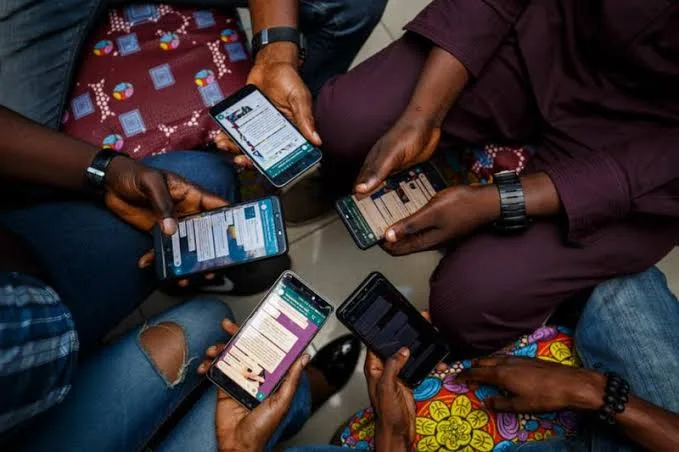
The tragedy of our social media mindset
By; Dr Kabiru Danladi Lawanti There are moments when you scroll through Nigeria’s social media space and feel a deep sense of shame and embarrassed, not for yourself, but for the nation we are becomingq. The kind of ignorance and hate that freely circulates online today is frightening. You read certain posts and wonder how people who went through the same schools, lived in the same communities, and claim to serve the same God can descend into such moral darkness. I woke up this morning to yet another hateful post shared by someone on Facebook calling himself”Evangelist”, and what disturbed me was not just the comment itself, but the comments under the post. People hailing him as a hero, grown men and women, educated adults, clapping for ignorance. Earlier, I had engaged one such extremist who shared a clip of another dullard, who appeared on a national TV, claiming that a Christian girl from “Guoza” in “Bruno” State was denied admission into the University of Abuja despite scoring 277 in the “UDME.” He also claimed she was denied indigene letter by the “Bruno” state liaison office in Abuja. The thick headed moron was displaying ignorance with the confidence of someone delivering gospel truth. When I challenged the sharer, someone appeared to claim that Christian are not offered admission in universities in the north. When I asked him to produce evidence, he went silent. I even asked him to give me four names of Muslims who graduated from Nnamdi Azikiwe University (UNIZIK), since his profile suggested he studied there and promised to tag fifteen Christian classmates from my days in Ahmadu Bello University, Zaria, including Igbos, to prove how false his claim was. The fool never replied. This is what our national discourse has become – a theatre of ignorance, anger, and religious superiority. On WhatsApp alumni groups, you will find adults forwarding divisive and hate-filled messages without a single thought. Many don’t even read what they share. They just see “us versus them” and hit forward. In groups dominated by either Muslims or Christians, the level of hate-mongering is alarming. How, in all honesty, can we talk about good governance or national development with this kind of mindset? When people define truth only through their religion or region, how can competence thrive? We have replaced merit with mediocrity, and facts with prejudice. Positions that should require expertise now go to those with the “right” tribe, religion, or political godfather. This is why we keep recycling failure. A people who cannot think beyond identity cannot build lasting institutions. This problem is not only about the government – it is about us. The hate we spread online eventually seeps into our real lives, poisoning workplaces, classrooms, and even our places of worship. We cannot build a sane country while living in digital madness. Social media was supposed to expand our minds; instead, it has exposed how narrow they have become. Many Nigerians do not debate to understand – they argue to attack. They do not seek truth, they seek validation. We can’t change everyone. Some minds are so hardened that even deradicalisation won’t help, just like Boko Haram members who see every difference as an enemy. But we can change the tone of our spaces. We can choose not to forward that divisive message. We can insist that evidence matters. We can stop rewarding hate with applause. If Nigeria must heal, it won’t start from Aso Rock or the National Assembly. It will start from ordinary citizens who decide that decency, not hate, will define how they engage. That’s how a society begins to rebuild – one honest conversation, one responsible post, and one verified truth at a time.
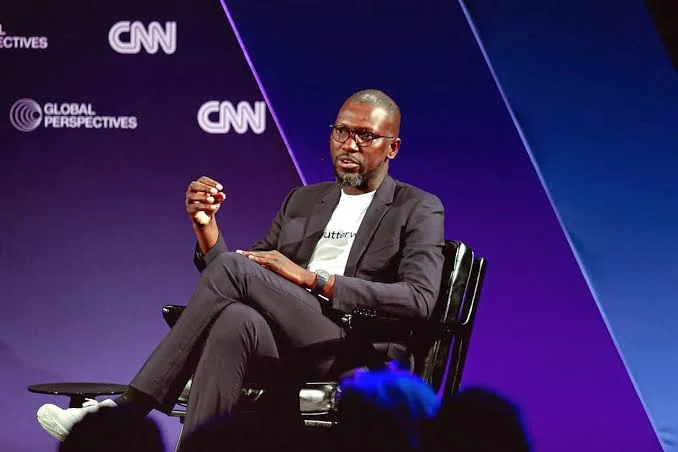
Flutterwave CEO outlines vision for Africa’s “payment superhighway” at CNN summit
Flutterwave Founder and CEO Olugbenga “GB” Agboola unveiled his vision to transform Africa’s digital economy by building a seamless “payment superhighway” hat to connect African economies and facilitates cross-border money movement. Speaking at CNN’s inaugural Global Perspectives Summit on November 8, in a session focused on “Fueling the Next-Generation Startup Ecosystem”, Agboola emphasized the critical role of regulatory collaboration and interoperable infrastructure in driving the fintech growth in Africa. Agboola outlined recent progress in regulatory cooperation, referencing the Ghana-Rwanda fintech memorandum of understanding as a notable example of efforts to harmonize cross-border financial technology operations. He praised African regulators for their understanding of market dynamics and commitment to enabling growth through supportive infrastructures.Joining Agboola on the panel were Lucy Liu, Co-founder and President of Airwallex; Alex Okosi, Managing Director of Google Africa; and Serigne Dioum, CEO of MTN Group Fintech, with veteran CNN anchor Richard Quest moderating. The panelists echoed optimism about Africa’s evolving regulatory landscape and its potential to foster financial inclusion and economic growth. Okosi stressed the growing recognition of regulators and the need for open markets, while Liu emphasized ecosystem integrity and consumer protection as key priorities. Dioum emphasized the shared vision between regulators and operators to enhance financial access continent-wide. Agboola pointed to Africa’s pioneering role in alternative payment systems, citing innovations like Kenya’s M-Pesa and Nigeria’s Inter-Bank Settlement System (NIBSS), paired with mobile money adoption. To realize this vision, Flutterwave has partnered with Polygon to develop Africa’s largest infrastructure for stablecoin payments, aiming to expand digital currency acceptance and cross-border transactions.The CNN summit, themed “Africa’s Role in a Changing World”, gathered public leaders, entrepreneurs, and innovators to explore how Africa’s youthful, vibrant economies can drive sustained inclusive global growth.