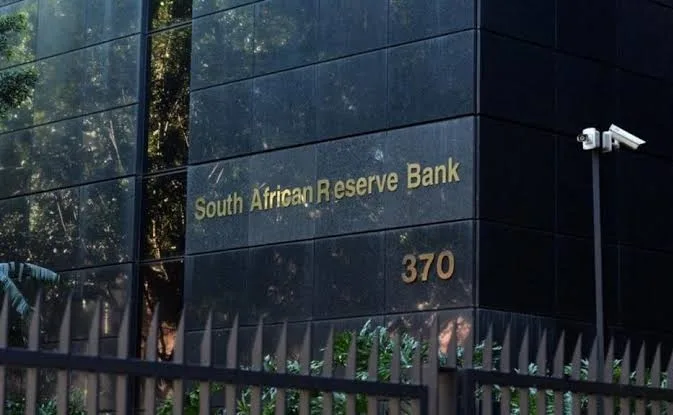
The South African Reserve Bank (SARB) has opened the door for fintech companies to participate in the National Payment System (NPS), a crucial shift aimed at fostering competition and expanding access. Previously, access to the NPS, which underpins the clearing, settlement, and value exchange mechanisms in South Africa’s financial network, was limited to traditional banks. Under new guidelines, innovative technology-driven firms like mobile payment providers and wallet operators can now join the ecosystem, aligning with SARB’s Vision 2025 to build a more accessible and efficient system. To ensure the stability and security of the financial infrastructure, SARB requires fintech applicants to meet stringent conditions. These include strong governance practices, adequate capital reserves, and rigorous compliance with anti-money laundering (AML) and cybersecurity regulations. Client funds must be carefully segregated to safeguard customer assets, while transparency is ensured through clear informed consent procedures. The central bank’s proportionality concept tailors oversight to suit the risk profiles of non-bank entities, so regulation does not impose the heavier burdens typical of conventional banks unnecessarily. This nuanced approach aims to balance innovation with prudence. Accompanying this development, SARB released a detailed Draft Directive outlining the operational standards fintechs must maintain. Additionally, a Draft Exemption Notice clarifies the scope of payment activities, such as e-wallet issuance and faster payments processing, that these firms can conduct without being classified as banks. These reforms show an evolution in South Africa’s payments ecosystem, enabling fintech enterprises to serve underserved and unbanked populations, thereby promoting financial inclusion while upholding system integrity. The expansion of access to the National Payment System reflects our commitment to fostering innovation without compromising security. By applying a proportional regulatory framework, we can encourage growth among fintechs while protecting public trust in our financial infrastructure – A SARB spokesperson, said A fintech industry leader added, that this development will enable diverse financial service providers to compete on a level playing field, which will ultimately benefit consumers across the country. SARB plans to continue evolving supportive regulations that encourage technological advancement while securing the nation’s financial systems for the long term.

New Kenyan tax rules force Twitch to end monetisation programs
Popular American video streaming service Twitch has announced the suspension of its monetisation features in Kenya, citing recent governmental tax policies that have made it challenging to support content creators in the country. Twitch conveyed to its Kenyan audience that freshly introduced regulations are restricting its ability to provide earning opportunities on its platform. The streaming giant described the move as a reluctant but necessary response to the local fiscal landscape. “Following extensive evaluation, we have decided to pause all monetisation options for streamers in Kenya due to these regulatory changes,” Twitch stated. This includes halting both Partner and Affiliate earning mechanisms, which are essential components of the company’s community engagement efforts globally. Despite these setbacks, the platform will remain accessible for users in Kenya, allowing them to continue streaming and interacting with content. However, creators will no longer be able to generate income through Twitch channels, a blow to many who have invested significant time and passion in building their audiences. Local influencers and content producers have expressed frustration, attributing the situation to government policy under President William Ruto’s administration. They argue that the new rules disregard the implications for digital creators and their livelihoods. Sylvia Gathoni, famously known as “Queen Arrow”, a trailblazer in esports and a leading Kenyan Twitch personality, voiced her disappointment; This is exactly what poor governance results in. This isn’t just about Twitch; it’s about how the government’s approach impacts the entire creative ecosystem. We need policies that support innovation rather than stifle it Twitch, established in 2011, is well known for live broadcasts of gaming and esports events as well as music and lifestyle streams. The challenge stems largely from Kenya’s enforcement of digital levies and a value-added tax (VAT) of 16% on electronic services supplied by foreign companies. Non-resident digital entities also face a withholding tax of 20%, adding to the financial strain. Furthermore, recent changes have introduced a new economic presence tax at 3%, replacing earlier taxation frameworks. Industry observers note that such fiscal policies risk hindering digital sector growth and could lead to reductions in investment or service availability. Similar difficulties have surfaced with companies like Facebook and AI service providers, which now apply VAT charges on ads and subscriptions specifically for Kenyan customers. The resulting increase in operational costs is already causing some users to reconsider their spending habits, a worrying trend for the digital economy. Analysts warn that other foreign digital platforms might soon follow Twitch’s example, scaling back or suspending monetisation ventures due to these mounting regulatory pressures.Stakeholders await potential reforms that balance government revenue goals with the needs of an emerging digital economy that empowers millions.

Cape Town e-hailing drivers demand urgent police action following fatal shooting of colleague
E-hailing operators in Cape Town have voiced frustration over the apparent lack of police intervention after a fellow driver was fatally shot during work duties last week. The Western Cape e-Hailing Association (WCEA) alleges a contrast in the police’s responsiveness to attacks on political figures versus everyday drivers. The Secretary of the WCEA, Omar Parker, released a statement decrying what he described as “selective law enforcement” by the Western Cape Provincial Police Commissioner, Lieutenant General Thembisile Patekile. Parker pointed out that responses to crimes targeting ordinary drivers have been notably sluggish compared to the swift mobilization following a smash-and-grab incident involving Members of Parliament in the violence-prone Philippi district. Within hours of the MPs’ vehicle being targeted, the Provincial Commissioner promptly addressed the public and deployed huge resources to solve the case. Conversely, violent assaults on e-hailing operators, who form a vital part of Cape Town’s urban transit and local economy, have been met with silence and neglect. This disparity in reaction times reveals that police resources are readily available but reserved largely for privileged groups. When ordinary drivers face hijackings, stabbings, and thefts, their plight is disregarded, exposing a troubling inequality in protection – Parker In Mitchells Plain, an e-hailing driver was shot at close range and died instantly, while another experienced a violent hijacking near Eastwood earlier this month. Additionally, a driver was severely injured in an assault in Philippi back in June. The WCEA emphasized that such incidents are systemic and chronic, supported by extensive documentation including crime statistics and video evidence collected by their Safety Unit alongside partners Moove and EasyWay. Despite this, the rapid responses witnessed in politically sensitive cases are absent in everyday crises affecting drivers. In response, the association has called on Commissioner Patekile to explain the discrepancy openly and dedicate equivalent attention to safeguarding drivers. They have also expressed willingness to collaborate with law enforcement to target crime hotspots effectively, urging that arrests of perpetrators caught on camera occur within a week, accompanied by public updates on these actions. Omar Parker elaborated, The unequal prioritization of high-profile individuals over working-class citizens is not only unjust but also perilous. If the Commissioner can personally intervene and coordinate a swift operation in one situation, there is no valid reason for ignoring the dangers our drivers face daily…our members endure constant threats, stabbings, robberies, murder, yet their suffering receives little to no official recognition. We call upon the police to demonstrate the same urgency and commitment towards protecting those who keep Cape Town moving The Western Cape e-Hailing Association’s demands show urgent call for equitable law enforcement and safer working conditions for frontline transit workers. Closer cooperation between police and driver representatives could be pivotal in curbing criminal activity and restoring confidence in public safety.
INTERPOL cracks down on cybercrime across Africa, recovery totals $97.4 million
Between June and August 2025, INTERPOL led a sweeping operation across Africa, resulting in the arrest of over 1,200 suspected cybercriminals and the disruption of more than 11,000 malicious online infrastructures. The extensive crackdown thwarted cyber fraud schemes that had targeted nearly 88,000 victims, recovering close to $100 million in illicit funds. Dubbed Serengeti 2.0, this large-scale campaign united law enforcement agencies from 18 African countries alongside partners from the United Kingdom. The effort tackled a range of digital threats, including ransomware attacks, business email compromise (BEC), and fraudulent online activities, areas previously noted as escalating challenges in INTERPOL’s Africa Cyberthreat Assessment Report. Key intelligence driving the raids came from a combination of suspicious IP addresses, domain monitoring, and command-and-control server identification. Specialized expertise from private sector collaborators was crucial in tracing cryptocurrency-related crimes, analyzing ransomware tactics, and conducting digital forensic investigations. The crackdown uncovered several notable cases throughout the continent. In Angola, authorities shut down 25 illicit cryptocurrency mining sites operated by Chinese nationals, seizing equipment valued at over $37 million, which local officials plan to repurpose to improve regional power supply. Zambia saw a bust involving an elaborate crypto investment scam that fooled some 65,000 people, causing losses estimated at $300 million. Fifteen suspects were apprehended, and investigators confiscated domain registrations, bank accounts, and mobile phones connected to the fraud network. Additionally, Zambian police dismantled a suspected human trafficking ring, recovering 372 forged passports from seven different nations. Côte d’Ivoire also played a critical role, breaking a cross-border inheritance fraud scheme originating from Germany. Following the arrest of the main suspect, authorities seized cash, vehicles, electronics, and jewelry linked to the scam that defrauded victims of approximately $1.6 million. Despite being a longstanding form of cyber deception, inheritance cons remain lucrative for organized crime, INTERPOL officials noted. This pan-African crackdown shows the rising threat that digital crimes pose as more people and businesses engage online. Funded partly by the UK Foreign, Commonwealth, and Development Office and supported by industry leaders like Fortinet and Kaspersky, the campaign demonstrates the power of multinational partnerships in securing the continent’s cyberspace. INTERPOL and its partners are expected to maintain vigilance, refining tactics to stay ahead of evolving cybercriminal strategies.

Abu Dhabi’s Space42 sets sights on African expansion to rival Elon Musk’s Starlink in Nigeria and beyond
Abu Dhabi-based Space42 is making moves to broaden its presence across Africa, aiming to compete with Elon Musk’s Starlink service, which currently holds a strong foothold in Nigeria and 17 other countries. The company is engaging with key partners and preparing to deploy more satellites to boost internet connectivity on the continent. Space42, supported by Mubadala, Abu Dhabi’s sovereign wealth fund, is in preliminary negotiations with several influential organizations including the African Union Development Agency, Microsoft, Esri, and several financial backers. These talks seek to enhance Space42’s footprint throughout Africa’s diverse markets, according to CEO Hasan Al Hosani. Without setting a definitive fundraising goal, Space42 has already established a physical presence in select countries such as South Africa and Zimbabwe. Their early efforts involve linking schools and health clinics to the internet, bridging the digital divide in underserved areas. While Starlink dominates the African satellite internet landscape with over 8,000 low-earth orbit satellites worldwide, Space42 is rapidly closing the gap. The Emirati firm currently operates eight satellites but plans to launch three additional ones later this year. Collaborations with tech giants Microsoft and Esri focus on developing advanced mapping tools aimed at enhancing digital infrastructure across the region. There’s extensive groundwork that must take place locally in each country. Identifying partners, both governmental and private, is a key part of our approach to ensure our services integrate well with local needs. Africa’s young and rapidly expanding population creates a unique opportunity for satellite connectivity providers. Still, regulatory diversity requires tailored strategies for each nation – Hasan Al Hosani, CEO Africa’s strong demographic growth and the rising demand for internet access make the continent highly appealing to satellite internet providers. However, navigating the complex and varying regulatory landscapes across Africa’s 54 nations remains a challenge. Nigeria, where Starlink secured regulatory approval in 2022, is shaping up to be a critical market for Space42’s expansion. Millions of people living in remote and rural regions are eagerly waiting for reliable connectivity options, placing satellite services as a preferable alternative to traditional internet providers that struggle with last-mile delivery. As of the first quarter of 2025, Starlink had grown to become Nigeria’s second-largest internet service provider by subscriber numbers. Data from the Nigerian Communications Commission indicates that Starlink had 59,509 users in Q1 2025, down slightly from its peak of 65,564 in Q3 2024, but still ahead of most competitors. Despite its premium pricing, Starlink maintains popularity thanks to its quality and extensive coverage, outpacing over 200 other ISPs including Spectranet, the country’s pioneer 4G provider. Space42’s planned ventures into Africa is a bold attempt to disrupt the satellite internet market and extend digital access to regions where terrestrial networks remain scarce.
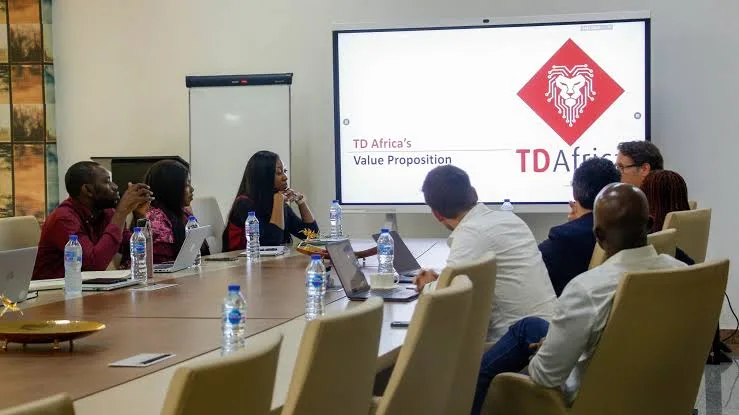
TD Africa earns top AI and data privacy ISO Certifications
TD Africa, a top technology distributor in Sub-Saharan Africa, has made a major stride in the continent’s tech scene. The company just secured two important ISO certifications: ISO 42001 for Artificial Intelligence Management Systems and ISO 27701 for Privacy Information Management. These certifications set global standards for how AI should be used responsibly and how personal data should be protected. Mrs. Chioma Ekeh, the CEO of TD Africa, explains that these are more than just certificates. She says they show the company’s serious promise to build trust, strong governance, and accountability in Africa’s digital growth. She also states AI’s potential in important sectors like finance, farming, health, and governance, pointing out that Africa must be ready to use AI responsibly. Africa should not just consume innovations but also help design solutions that suit our unique needs…the global AI conversation shouldn’t just be for Silicon Valley or Beijing. Cities like Lagos, Nairobi, and Accra must also have a strong voice, and TD Africa is ready to amplify it. We’re not waiting for the future, we’re building it today – Mrs Ekeh ISO 42001 is the world’s first standard that guides companies on ethical and transparent AI use, ensuring AI tools align with human values and global best practices. Meanwhile, ISO 27701 certifies that TD Africa handles personal data with the highest level of security and integrity. This is crucial as data privacy faces rising risks worldwide. For almost 30 years, TD Africa has helped shape how technology spreads across Africa. It works with global tech leaders and supports innovative programs like TecHerdemy, which has trained over 400 women in tech roles. These efforts clearly show TD Africa’s commitment to inclusive digital progress.