The Central Bank of Nigeria’s (CBN) latest Inflation Expectation Survey reveals that soaring energy costs are the primary cause of rising inflation in Nigeria, according to over 90% of surveyed firms. The May 2025 survey highlights that expenses on fuel, diesel, and electricity top the list of inflation drivers, highlighting persistent structural challenges in the country’s energy sector. Despite the CBN’s tight monetary policy, with the Monetary Policy Rate (MPR) at 27.5%, inflationary pressures remain largely fueled by supply-side factors beyond the reach of interest rate adjustments. Following energy costs, firms identified exchange rate volatility (88.5%) and transportation expenses (87.2%) as key contributors to inflation. High interest rates were also cited by 85.5% of respondents as a significant factor, suggesting that monetary tightening may be increasing operational costs for businesses reliant on credit. Other notable inflation drivers include insecurity (84.7%), rising raw material costs (78.3%), and infrastructural deficits (75.0%). Households similarly ranked transportation and exchange rates just behind energy as major inflation pressures. The survey also found growing concern about inflation’s impact, with 75.3% of respondents describing current inflation as high, up from 70% in April. Households earning between N30,001 and N100,000 felt inflation most acutely, with nearly 83% reporting high inflation. Both urban and rural dwellers expressed similar concerns. 43.1% of households and 29.7% of businesses expect inflation to rise in June, while a majority anticipate increased living and operational costs. Reflecting this, nearly 69% of respondents called on the CBN to reduce interest rates to ease financial pressures. The National Bureau of Statistics reported a slight easing of inflation to 23.71% in April 2025 from 24.23% in March, but the CBN’s findings emphasize that Nigeria’s inflation is driven mainly by cost-push factors linked to energy, currency, and transport challenges.
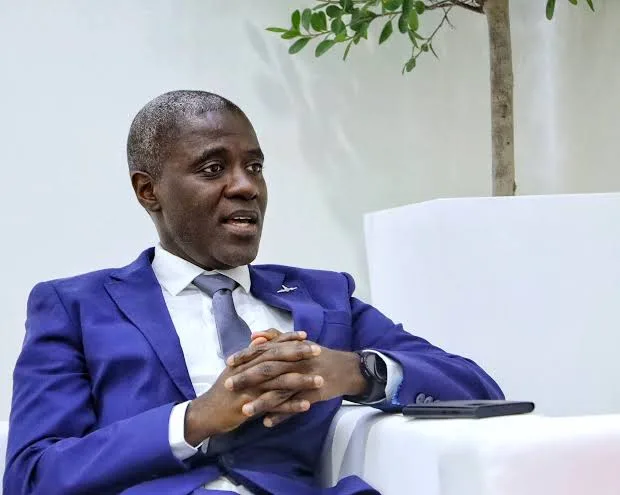
NCC unveils new cybersecurity framework to safeguard Nigeria’s telecom sector
The Nigerian Communications Commission (NCC) has announced plans to roll out a comprehensive cybersecurity framework aimed at strengthening the protection of Nigeria’s booming telecommunications industry against rising digital threats. Dr. Aminu Maida, Executive Vice Chairman of the NCC, revealed the initiative during a regulatory meeting held in Lagos on Wednesday. Represented by Abraham Oshadami, Executive Commissioner of Technical Services, Dr. Maida highlighted the rapid growth of Nigeria’s telecom sector, from fewer than 500,000 lines in 2001 to over 172 million active subscribers and 141 million internet users today. While this growth has fueled economic development and social inclusion, it has also made the sector a prime target for cybercriminals, particularly government infrastructure. “To counter these growing dangers, the NCC is developing a national cybersecurity framework with clear objectives,” Dr. Maida said. “The framework will foster a unified and resilient cybersecurity posture across the industry, enhance protection of telecom infrastructure, safeguard consumer data and privacy, and align with Nigeria’s National Cybersecurity Strategy as well as international best practices.” The framework will establish minimum cybersecurity standards for telecom operators, including incident reporting protocols, risk management guidelines, and mechanisms for information sharing and collaboration with regulatory agencies. It will be guided by existing laws such as the Cybercrime Prevention Act of 2015 and the Nigerian Data Protection Act of 2023. Abraham Oshadami emphasized that cybersecurity is no longer optional for telecom companies but a mandatory requirement. He noted the NCC’s commitment to engaging industry stakeholders to ensure the framework reflects real-world challenges and opportunities. Experts also weighed in on the initiative. Dr. Kazeem Durodoye, CEO of Cybernovr, stressed the importance of considering emerging technologies like Open RAN, network virtualization, and the impact of artificial intelligence on cyber threats. He explained that the framework would categorize telecom licensees into different tiers, ensuring that companies handling critical data receive appropriate attention. Babagana Digima, Chairman of the Committee on Development of the Cybersecurity Framework, highlighted the need for a baseline assessment to accurately understand the current cybersecurity landscape before implementing new safeguards. He assured that the NCC is dedicated to working closely with all stakeholders to create a secure, reliable, and resilient digital environment across Nigeria. According to a report by the UN Economic Commission for Africa cited by Dr. Maida, a 10% improvement in cybersecurity maturity can significantly boost per capita GDP growth across the continent—underscoring the economic importance of this initiative. The NCC plans to share the draft framework with industry players for review in the coming weeks, marking a critical step towards securing Nigeria’s telecommunications infrastructure.
JPMorgan to accept crypto-linked ETFs as loan collateral, signaling growing institutional support for digital assets
JPMorgan Chase & Co., the largest U.S. bank, has announced it will allow its trading and wealth-management clients to use certain cryptocurrency-backed assets as collateral for loans. Starting with BlackRock’s iShares Bitcoin Trust (IBIT), a leading Bitcoin exchange-traded fund (ETF), JPMorgan plans to expand this offering to include additional crypto-linked ETFs over time. This policy formalizes what had previously been handled on a limited, case-by-case basis and applies globally to all client types, from individual retail investors to major institutional traders. Beyond loan collateral, JPMorgan will also begin factoring cryptocurrency holdings into clients’ overall net worth and liquid asset calculations. The bank will treat these digital assets similarly to traditional assets like stocks, luxury vehicles, or fine art when assessing loan eligibility. Since the introduction of spot Bitcoin ETFs in January 2024, the market has seen remarkable growth. These funds now manage a combined $128 billion in assets, marking one of the most successful ETF launches in history. Bitcoin itself reached an all-time high of $111,980 in May 2025, highlighting strong institutional demand. While JPMorgan continues to embrace blockchain technology and digital assets, CEO Jamie Dimon remains publicly cautious about Bitcoin. At the bank’s recent investor day, Dimon stated, “I’m not a fan of Bitcoin,” but emphasized client choice: “I defend your right to buy Bitcoin, go at it.” In related news, JPMorgan is seeking a merchant banking license from the Central Bank of Nigeria to convert its Lagos representative office into a fully operational branch. This move will allow the bank to expand its services in Nigeria, including offering dollar-denominated loans tailored for large corporations. Managed by Dayo Olagunju, head of West Africa, this expansion signals JPMorgan’s commitment to strengthening its presence in the African market.

EFCC adds two more suspects to the wanted list in N1.3 trillion CBEX scam
The Economic and Financial Crimes Commission (EFCC) has declared two additional individuals wanted in connection with the massive N1.3 trillion Crypto Bridge Exchange (CBEX) scam, raising the total number of suspects to eight. Folashade Odelana and Bamidele Ayodele Abiodun are now sought by the EFCC for their alleged roles in orchestrating fraudulent activities that caused significant financial losses to thousands of investors, the commission announced on Wednesday. Previously, six suspects including Seyi Oloyede, Emmanuel Uko, and Israel Mbaluka were declared wanted in the ongoing investigation. A foreign national, Elie Bitar, was also once on the list but has since been removed, as reported by Dailytech. CBEX, a digital investment platform promising 100% returns within 30 days, collapsed in April 2025 after restricting withdrawals on April 9. Many investors found their account balances wiped out, sparking outrage and prompting the EFCC’s intervention. EFCC Chairman Olukayode reaffirmed the agency’s commitment to tracking down all those involved in this cyber-related financial crime and recovering funds for the affected Nigerians. The commission has urged anyone with information on the whereabouts of the suspects to come forward and assist with the investigation.

Osun state launches free train service from Lagos for Eid-el-Kabir celebrations
The Osun state government has announced a free train service to help residents travel from Lagos to Osogbo for the upcoming Eid-el-Kabir festivities. The initiative will run from Thursday, June 5, through Tuesday, June 10, 2025. The “homecoming” train will depart daily at 10 a.m. from the Iddo train terminus in Lagos to Osogbo, with the return journey scheduled for 10 a.m. on June 10. This service aims to ease travel for Osun Muslims living in Lagos and surrounding states, allowing them to celebrate the holiday with family and community members. A government representative confirmed the details and emphasized that the initiative reflects the state’s commitment to supporting its citizens during important cultural and religious events. The free train service is expected to accommodate a large number of passengers, ensuring wide access to the celebrations. This is not the first year Osun has offered such a service; a similar program was launched in 2024 for residents in Lagos, Ogun, and Oyo states. The initiative has been welcomed as a practical step to reduce travel burdens during the festive period and strengthen community ties.

Nigerian military begins local production of APCs, bulletproof glass, and drones
The Nigerian military has started manufacturing key defense equipment locally, including Armoured Personnel Carriers (APCs), bulletproof glass, spare parts, and surveillance drones, Defence Minister Mohammed Badaru Abubakar announced on Wednesday. During a two-day visit to military institutions in Kaduna State, including the Nigerian Defence Academy and Army Command Engineering Depot, Badaru observed significant progress in training, refurbishment, and local production of military assets. He highlighted the development of new combat platforms such as Buffalo APCs and Mine-Resistant Ambush Protected vehicles (MRAPs), some of which are already deployed in operational areas. “The ongoing efforts in training, local production, and refurbishment of military assets are commendable,” Badaru said. “We are witnessing impressive capabilities in repairing and producing essential military equipment that will reduce our reliance on imports.” The Defence Industries Corporation of Nigeria (DICON) Bill, signed into law in November 2023, plays a pivotal role in this initiative by empowering DICON to oversee ordnance factories and establish a Defence Industry Technology, Research, and Development Institute. This institute aims to drive innovation and commercialization of military technology within Nigeria. Badaru also noted ongoing talks to strengthen collaboration between DICON, the Ministry of Defence, and Ajaokuta Steel Company to secure raw materials locally, although steel imports remain necessary for now.