
Elon Musk has unveiled XChat, a new messaging feature integrated within X (formerly Twitter), aimed at transforming the platform into an “everything app” that rivals popular messaging services like WhatsApp, Telegram, and Signal. XChat introduces end-to-end encryption, ensuring that only the sender and recipient can read messages, enhancing user privacy and security. The feature also supports vanishing messages that disappear after a set time, file sharing, and audio/video calls, all without requiring users to share their phone numbers. This marks a significant upgrade from X’s previous direct messaging capabilities. Built on the Rust programming language with what Musk describes as “Bitcoin-style” encryption, XChat offers a fresh architecture designed for secure, private communication. Users who enable XChat must set a four-digit passcode for an extra layer of protection, preventing unauthorized access even if someone gains control of their account. Currently, XChat is in beta testing and available to paid subscribers, with features like group chats and vanish mode already confirmed through leaked screenshots. This rollout is part of Musk’s broader vision to evolve X into a Western super app, akin to China’s WeChat, encompassing messaging, payments, commerce, entertainment, and dating functionalities. With over 600 million monthly active users, XChat could help shift the platform from a public social media space to a daily digital utility, integrating communication and financial services under one roof.
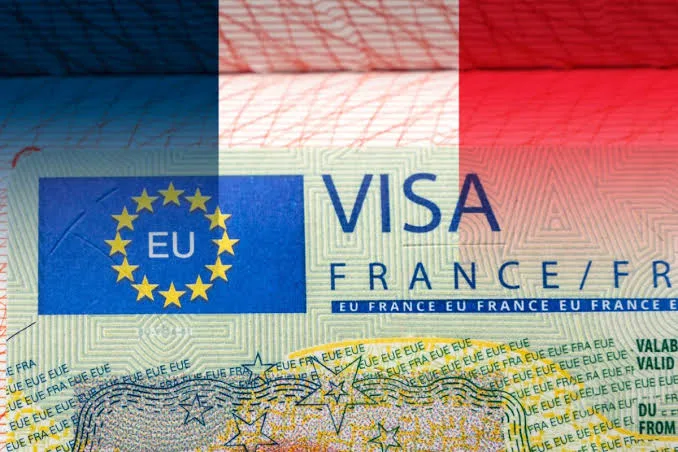
France launches mandatory online visa appointment system for 2025 travelers
France has introduced a new mandatory online system for booking visa appointments starting this year. All international travelers planning to visit France in 2025 must now follow this fully digital procedure to schedule appointments for both Schengen short-stay and long-stay national visas. The French government’s new approach requires applicants to use official online tools, the Visa Wizard and Demarches Simplifiées portals, to determine visa eligibility and book appointments. This multi-step system aims to make the process more efficient, reduce unnecessary bookings, and prevent delays. The process begins with the Visa Wizard, an online tool designed to help travelers find out if they need a visa, identify the correct visa type, and understand the documentation and fees required. For those who have recently spent time in the Schengen Area, the Visa Calculator helps determine how many days they can legally remain. Once eligibility is confirmed, applicants proceed to the Demarches Simplifiées platform to register and submit their appointment request. Here, travelers fill out a detailed questionnaire covering the purpose of their visit, travel dates, and length of stay. Accuracy and completeness are crucial to avoid processing delays. Skipping any step or bypassing the Visa Wizard can result in application delays or outright rejection. The system applies to all nationalities with no exceptions, reflecting France’s commitment to digitizing consular services. Visa rejections in Schengen countries often stem from common errors such as missing documents, unclear travel intentions, lack of accommodation proof, insufficient financial evidence, or incomplete forms. Experts advise applicants to plan ahead, use only official channels, and double-check their eligibility before submitting requests. Facing labour shortages in 38 key occupations, France is actively seeking foreign talent to fill gaps in its workforce. The new visa booking system is part of a broader effort to attract qualified international applicants while improving administrative efficiency. In 2023, EU countries earned over €130 million from unsuccessful visa applications, particularly from Africa and Asia, highlighting the need for clearer guidance and streamlined processes. Travelers planning to visit France this year should familiarize themselves with the new online system and start their applications early. For more information, visit the official Visa Wizard and Demarches Simplifiées websites.

Nigeria launches JusticeTechNG 2025 hackathon to revolutionize justice sector with technology
The federal government today kicked off JusticeTechNG 2025, the country’s first-ever national hackathon and accelerator program dedicated to justice innovation. The event runs from June 3 to 5 in Lagos and brings together developers, lawyers, technologists, civic activists, and entrepreneurs to co-create digital solutions addressing critical challenges in the justice sector. The initiative, spearheaded by Fernandez Marcus-Obiene, Special Assistant to the President on Justice Sector Reform and ICT/Digital and Innovative Technology, aims to tackle issues such as court congestion, delayed access to justice, prisoner rehabilitation, and digital legal education through homegrown technology solutions. “We’re building a pipeline of justice innovations that are locally grown, policy-aligned, and ready for real-world adoption,” said Marcus-Obiene. “If we want the justice system to work better, we must invest in the people building tools to fix it.” From a competitive pool of 82 submissions, 20 finalist teams were selected by a panel of experts across law, technology, and development sectors. These teams will compete for a total prize pool of ₦22 million in cash and services, alongside structured mentorship and opportunities to pilot their solutions with government and civil society partners. Following the hackathon, the top 10 teams will enter a month-long virtual accelerator program, culminating in a Demo Day where finalists will pitch their innovations to a distinguished panel including government officials, judges, investors, and development agencies. The program is coordinated by a multi-disciplinary committee chaired by Abiola Jimoh, a legal technologist and policy strategist, who emphasized the initiative’s transformative potential: “This is not just a hackathon. It’s a coordinated national push to build scalable solutions that justice institutions can adopt and expand for real impact.” JusticeTechNG represents a pioneering model of public-private-civic collaboration, placing technology at the heart of justice reform in Nigeria and potentially across Africa. The high-level advisory board includes senior judges, legal experts, tech entrepreneurs, and policy leaders, ensuring strategic alignment with national reform goals.

Nigeria’s AI ambitions at risk without strong governance and security, experts warn
As Nigeria rapidly embraces artificial intelligence (AI) across various sectors, experts are raising alarms about the country’s lack of robust governance, security, and ethical frameworks to guide this technological leap. Without these critical safeguards, Nigeria risks turning a promising innovation into a potential vulnerability. Speaking at the 2025 Africa’s Beacon of ICT Merit & Leadership Awards (ABoICT 2025), Prof. Peter Obadare, Chief Visionary Officer of cybersecurity firm Digital Encode, highlighted the growing problem of “AI washing”, where companies label simple automation tools as AI to capitalize on the hype, without delivering real technological value or oversight. “Today, everything is being called AI, from photography apps to basic automation, yet no one is seriously discussing AI governance. This gap is dangerous,” Obadare said during his keynote on ‘AI Governance, Standardization and Cybersecurity in the AI Era.’ Drawing lessons from the early internet days, he recalled how the foundational TCP/IP protocols were developed without security in mind, leading to vulnerabilities that persist today. “We must not repeat that mistake with AI. Governance isn’t about slowing progress; it’s about making progress safe,” he added. Prof. Obadare urged Nigeria to adopt global standards such as ISO/IEC 42001 and ISO/IEC 38507 to ensure AI innovation is ethical and trustworthy. He stressed the importance of securing AI’s core components, data, algorithms, and infrastructure, as a matter of national security. Echoing these concerns, Amrich Singhal, Chief Operating Officer of Spectranet, emphasized that the countries that will benefit most from AI are those with trusted systems, not necessarily the most advanced models. “AI can boost productivity, but it can also be weaponized to clone voices, spread disinformation, and threaten democracy. The urgency for responsible AI governance cannot be overstated,” Singhal said. While Nigeria enjoys advantages such as a young, digitally savvy population and growing AI adoption in healthcare, agriculture, education, and energy, Singhal criticized the country’s current regulatory environment. He described the Nigeria Data Protection Regulation (NDPR) and the National Information Technology Development Agency’s (NITDA) 2023 draft AI framework as “underdeveloped, underfunded, and poorly enforced.” Both experts agreed that many global AI failures stem from governance lapses rather than technological flaws. They cited examples like Microsoft’s racist chatbot Tay, Amazon’s biased hiring AI, and fatal accidents involving autonomous vehicles as failures of oversight and design. Recent cybersecurity incidents, including the 2023 breach of OpenAI’s ChatGPT and the leak of DeepSeek’s API keys on launch day, further highlight the risks of deploying AI without rigorous security measures. The United Nations has also expressed concern that only seven countries, Canada, France, Germany, Italy, Japan, the UK, and the US, currently lead AI governance globally, often making decisions that affect other nations. The UN’s High-level Advisory Body on Artificial Intelligence stressed that AI development cannot be left solely to market forces and called for stronger government regulation.

NESREA to launch digital waste marketplace, targets 10,000 users in four months
The National Environmental Standards and Regulations Enforcement Agency (NESREA) is set to launch a groundbreaking digital marketplace for waste transactions, aiming to transform Nigeria’s waste management sector and accelerate the shift to a circular economy. The new platform, called Waste Marketplace Nigeria, is being developed in partnership with technology company Recyclestack. The initiative is designed to digitize waste transactions, streamline the recycling value chain, and create new economic opportunities, especially for informal sector workers who play a crucial role in Nigeria’s waste ecosystem. The Waste Marketplace Nigeria platform will connect producers, recyclers, waste collectors, and other stakeholders, enabling them to buy, sell, and manage waste materials more efficiently. The platform supports the Extended Producer Responsibility (EPR) Programme, which requires producers to take responsibility for their products from creation to disposal. This programme is already active in sectors such as food and beverages, batteries, used tyres, and electronics. NESREA aims to onboard at least 10,000 verified users within the first four months of launch. The project will kick off in Lagos and Abuja, with plans to expand to other major cities across Nigeria in a phased rollout. Benefits for NigeriaDigital Inclusion & Job Creation: The platform is expected to create new green jobs and promote digital inclusion, particularly for informal waste workers. Boosting Recycling Rates: By making waste transactions more transparent and efficient, the initiative will help increase material recovery and recycling rates nationwide. Environmental Compliance: NESREA will use the platform as a data mining tool to strengthen enforcement of environmental standards and reduce illegal dumping. Investment and Growth: The digital marketplace is designed to formalize the sector, attract investment, and align Nigeria with global best practices in waste management and sustainability. Professor Innocent Barikor, Director-General of NESREA, described the initiative as “a transformative opportunity to digitize Nigeria’s waste economy while enabling regulation, accountability, and economic empowerment.” He noted that the project supports Nigeria’s national development goals and could serve as a model for other African countries looking to modernize their waste management systems.

EU hits Delivery Hero and Glovo with €329 million fine for food delivery cartel
brussels
The European Commission has imposed a record €329 million fine on Delivery Hero and its Spanish subsidiary Glovo, two of Europe’s largest food delivery companies, for operating an illegal cartel that stifled competition and limited job opportunities across the continent. The Commission’s investigation revealed that between July 2018 and July 2022, Delivery Hero and Glovo secretly coordinated to avoid competing with each other in several key ways. The companies agreed not to hire each other’s employees, exchanged sensitive business information, including pricing and strategy, and divided up national markets for online food delivery across the European Economic Area (EEA). “Cartels like this reduce choice for consumers and business partners, limit opportunities for employees, and diminish incentives to compete and innovate,” the Commission said in its statement. The scheme began in 2018 when Delivery Hero acquired a minority stake in Glovo. What started as limited “no-hire” clauses for select staff soon expanded into a broad agreement not to recruit each other’s employees at all. The companies also regularly exchanged commercially sensitive information, sometimes over WhatsApp, allowing them to align their market strategies and avoid direct competition. Additionally, Delivery Hero and Glovo agreed to carve up the European market, ensuring they would not compete in each other’s strongest territories and coordinating on market entries elsewhere. This arrangement lasted until Delivery Hero took full control of Glovo in July 2022. This is the first time the European Commission has fined companies for a so-called “no-poach” labor cartel, marking a significant precedent in EU antitrust enforcement. According to EU competition chief Teresa Ribera, “These actions were enabled by the anticompetitive exploitation of Delivery Hero’s minority investment in Glovo. This is the first instance where the Commission is imposing sanctions for no-poach agreements, which hinder companies from competing for top talent and limit job opportunities for workers”. Fines and SettlementDelivery Hero will pay €223 million. Glovo will pay €106 million. Both companies admitted their misconduct and agreed to settle, earning them a 10% reduction in their fines.