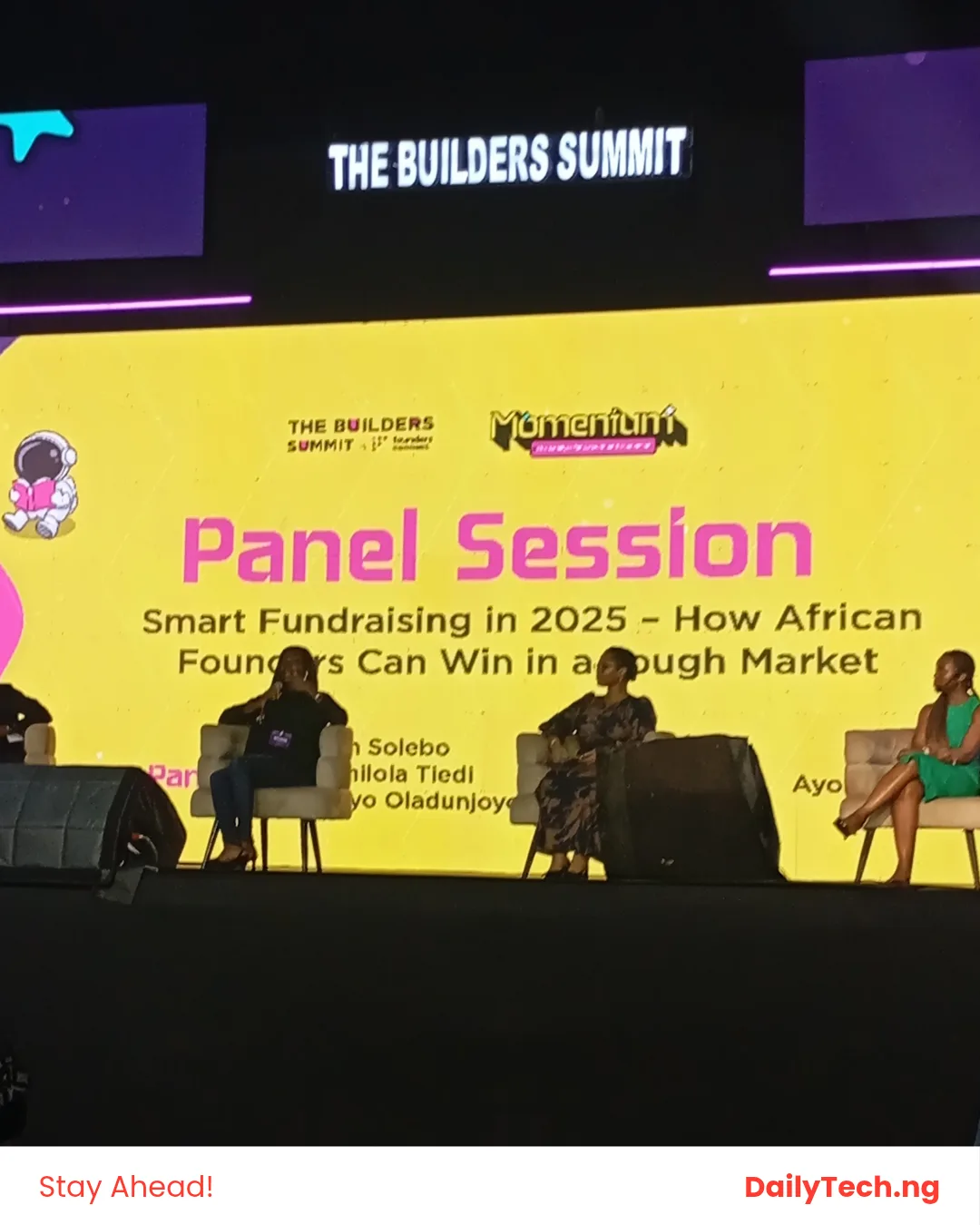
Lagos – At the recently concluded Builders Summit 2025, convened by Peace Itimi, industry experts emphasized that investors are increasingly focusing on startup traction as a critical factor when deciding where to place their funds. Drawing from the panel session moderated by Ayobamigbe Teriba, featuring Oyin Solebo, Damilola Teidi, and Ireayo Oladunjoye – several key points emerged on how startups can attract investment beyond simply having strong teams and promising business ideas. Panelists highlighted that traction, demonstrated by measurable growth indicators such as revenue, user acquisition, and strategic partnerships, serves as concrete proof that a startup’s product or service is gaining market acceptance. This real-world validation significantly reduces investment risk and boosts investor confidence. The discussion also stressed the importance of showing early signs of market fit, customer love, and month-to-month value growth, as well as tracking where customers are coming from and focusing on retention. Other practical advice shared included the benefits of engaging angel investors at the idea or early stage, maintaining transparency, sending out regular investor updates, and demonstrating good governance practices from the outset. In a keynote session, Seye Bandele, founder of PaidHR, advised founders on the art of selling and highlighted the importance of listening in sales, stating that “70% of selling comes from listening.” When asked how he scaled PaidHR, Bandele explained, “We knew that we didn’t have a lot of money to do marketing, so we were going to leverage the founder to do the marketing as organically as possible… Every story I’m telling, I’m depositing something into your mind – either about myself or about the company we’re building,” emphasizing that founders must strategically take advantage of their current reality and resources to succeed. The summit featured additional discussions on the adoption patterns of AI among African tech startups, with a particular focus on Nigeria’s evolving ecosystem. Other sessions included contributions from notable figures such as Fisayo Fosudo, Tomiwa Aladekomo, Njoku Emmanuel, David Adeleke and Douglas Kendyson, founder of Selar. Peace Itimi, the convener, is a prominent Nigerian tech storyteller and growth marketing professional. She created Founders Connect, a platform that began as a YouTube channel documenting African tech entrepreneurs’ journeys through interviews and live events, aimed at building community and preserving the history of Africa’s tech ecosystem. Her work also includes producing “Innovating Africa,” a documentary focused on Nigeria’s tech landscape. Founders Connect has become a vital space for knowledge sharing and networking, with over 70 founder interviews and successful live events in Lagos, Nairobi, and London. The Builders Summit 2025 continues this mission by equipping builders with insights to scale, learn in the curve, and secure funding in a competitive market. The event serves as a vital platform for exchanging ideas and strategies for building and scaling innovative solutions in Nigeria and beyond. Ultimately, the panelists’ advice reinforces the growing consensus that traction is a key ingredient in securing investor funding and driving startup success.

Nigeria’s telecom networks hit by record outages in May 2025
Nigeria’s telecommunications sector experienced an unprecedented surge in network outages in May 2025, with 9mobile and MTN Nigeria bearing the brunt of service disruptions caused primarily by fibre cuts and power failures. From January 1 to May 19, 9mobile reported 31 major outages across several states, while MTN Nigeria recorded 25 incidents, according to data from Uptime, a network monitoring platform. Approximately 70% of these outages were linked to fibre cuts resulting from roadworks or vandalism, severely affecting millions of subscribers nationwide. These outages led to complete shutdowns of critical services such as voice calls, SMS, mobile data, and USSD for hours at a time. Notably, 9mobile suffered the longest service restoration times, including an eight-hour power outage in Lagos on May 14 that impacted multiple local government areas. MTN Nigeria, despite a high number of outages, generally restored services faster. The company is investing heavily in infrastructure improvements, pledging ₦800 billion for network upgrades in 2025, with ₦200 billion already spent in the first quarter. Part of this effort includes deploying motorcycles to help engineers navigate urban traffic and conduct daily fibre inspections to detect issues early. However, MTN also faced regulatory challenges. In April, the Kogi State government sealed 16 MTN sites, disrupting access to 155 additional connected sites. The standoff lasted nearly 23 days before resolution in early May. 9mobile’s performance remains a concern as its subscriber base dwindled to 2.96 million in March 2025 from over 20 million in 2015. Frequent and prolonged outages continue to damage customer trust and hinder recovery efforts. The rising frequency and duration of outages highlight Nigeria’s infrastructure gaps, power instability, and regulatory hurdles. As connectivity becomes vital for banking, education, and emergency services, the reliability of telecom networks is crucial for the country’s digital economy. Ugonwa Nwoye, MTN Nigeria’s Chief Customer and Experience Officer, said the investments aim to “translate this into better customer experience, reduced congestion, faster internet speeds, and wider network reach.” With over 140 million Nigerians relying on mobile networks, the pressure is on operators and regulators to strengthen infrastructure and ensure more resilient service delivery.

UBA and Access Bank lead Nigeria’s strongest brands in 2025
United Bank for Africa (UBA) and Access Bank have emerged as Nigeria’s strongest brands in 2025, according to Brand Finance’s latest “Nigeria 25 2025” report released this week. UBA climbed from ninth place last year to claim the top spot in brand strength, achieving a Brand Strength Index (BSI) score of 92.4 out of 100 and earning the prestigious AAA+ rating, the highest accolade given by Brand Finance. This marks a significant recognition of UBA’s strong consumer trust, brand familiarity, and market positioning both within Nigeria and across Africa. Meanwhile, Access Bank retained its position as Nigeria’s most valuable brand for the fourth consecutive year, with its brand value more than doubling to ₦893.3 billion. The bank’s impressive growth reflects its solid financial performance and strategic expansion efforts. “UBA’s rise to the strongest brand in Nigeria highlights the bank’s commitment to innovation and customer loyalty,” said Israel Ojoko, a financial journalist who covered the report. “Access Bank’s continued dominance in brand value underscores its leading role in Nigeria’s banking sector.” Other financial institutions also featured prominently in the rankings. First Bank of Nigeria moved up to second place in brand strength with a BSI score of 92.1, while Guaranty Trust Holding Company (GTCO) secured third place. Zenith Bank and Stanbic IBTC also recorded notable gains in brand value and strength. The report highlights the dominance of financial services, which account for 59% of the total brand value among Nigeria’s top 25 brands, which shows the sector’s vital role in the country’s economic growth.

OpenAI acquires Jony Ive’s AI hardware startup io for $6.4 billion, names him creative head
OpenAI has announced the acquisition of io Products, the AI hardware startup co-founded by former Apple design chief Jony Ive, in an all-stock deal valued at approximately $6.4 billion. This strategic move marks OpenAI’s largest acquisition to date and signals a major shift toward developing AI-optimized hardware alongside its software offerings. OpenAI already owned a 23% stake in io and will pay about $5 billion in equity to acquire the remaining shares. The startup, founded just last year by Ive and fellow Apple veterans, focuses on creating devices designed from the ground up for artificial intelligence, rather than adding AI as an afterthought. Ive, renowned for his role in designing iconic products like the iPhone, iPad, and MacBook, will take on the role of Creative Head at OpenAI. While he will continue to lead his independent design studio LoveFrom, Ive will now have deep creative and design responsibilities across both OpenAI and io, helping to shape the next generation of AI-powered devices. OpenAI CEO Sam Altman highlighted the significance of the acquisition, saying, “We have the opportunity here to completely reimagine what it means to use a computer.” The company envisions a future where traditional interfaces like screens and keyboards may be replaced by new forms of AI interaction. Though specific details about the hardware remain under wraps, insiders describe the upcoming products as “something totally different to a phone”, a novel platform tailored for the AI-first era. The acquisition aligns with OpenAI’s broader ambition to build a family of products for the artificial general intelligence (AGI) future, where AI systems match or exceed human intelligence. The io team of about 55 engineers and designers will join OpenAI, further strengthening its hardware development capabilities. This deal follows OpenAI’s recent acquisitions of AI-assisted coding tool Windsurf for $3 billion and analytics company Rockset, highlighting its rapid expansion in both AI software and hardware.

Uganda crypto founder forced to transfer $500,000 worth of cryptocurrency at gunpoint
Festo Ivaibi, founder of the cryptocurrency education hub Mitroplus Labs, was kidnapped at gunpoint on May 17 near his home in Kampala, Uganda. The attackers, armed and dressed in military uniforms, forced Ivaibi to transfer $500,000 worth of cryptocurrency from his digital wallets to theirs. According to an official statement from Mitroplus’s Afro Token Project, the kidnappers falsely claimed to be security operatives from the Uganda People’s Defence Forces. They coerced Ivaibi into unlocking his crypto wallets and initiated unauthorized transactions. The attackers also forced the sale of Afro Token, a meme coin linked to Mitroplus Labs, resulting in further financial losses and a sharp decline in the token’s value. Data from DEX Screener showed Afro Token’s market capitalization dropped by 16.7% after the incident, falling to $1.6 million from a $7.3 million valuation in December 2024. Mitroplus Labs alleges this attack is part of a broader, coordinated pattern targeting crypto holders in Uganda. The firm claims at least 48 similar abduction attempts have been identified, often involving informants posing as traders, rogue law enforcement officers, and foreign nationals. “These types of crimes, commonly known as ‘wrench attacks,’ involve physical threats against crypto holders to force them into transferring digital assets,” the Afro Token Project stated. “This is not just an attack on one person, it’s an attack on a growing vision.” The rise in crypto-related kidnappings has alarmed investors and blockchain firms, who are now calling for stronger security measures and safeguards for crypto holders. Authorities are investigating the incident, but many cases reportedly go unresolved due to the influence and reach of the perpetrators’ networks. As the frequency of these attacks increases, industry experts warn that anyone involved in cryptocurrency should be vigilant and take extra precautions to protect their digital assets.
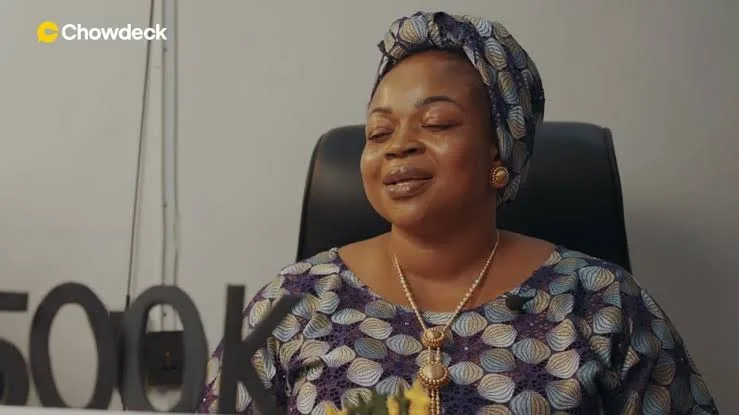
Amoke Oge surpasses N2.3 billion in deliveries on Chowdeck, sets new benchmark for women-led businesses
A local Nigerian food vendor, Amoke Oge, has achieved a major milestone by surpassing ₦2.3 billion in revenue after completing 500,000 deliveries on Chowdeck, one of Nigeria’s leading food delivery platforms. This remarkable achievement was announced by Chowdeck on May 20, 2025, highlighting the vendor’s success in leveraging digital platforms to expand her business. According to Chowdeck, the average order value for Amoke Oge’s deliveries was ₦4,600, a testament to the growing appetite for local cuisine and the effectiveness of online marketplaces in the country. Amoke Oge, owned by Hajia Amoke Odukoya, was among the first 100 vendors to join Chowdeck about two to three years ago. She has now become the first woman-led business on the platform to reach half a million deliveries. Chowdeck’s CEO, Femi Aluko, personally congratulated Odukoya on the achievement, which shows the significance of this milestone for women entrepreneurs in Nigeria. “Amoke Oge just became the first woman-led business to hit 500,000 deliveries on Chowdeck , with an average order value of ₦4,600. We’ll let you do the math,” Chowdeck shared in a celebratory post on X (formerly Twitter). This announcement follows another vendor success story on Chowdeck. Just a week earlier, Korede Spaghetti, a popular vendor at the University of Lagos (UNILAG), crossed the ₦1 billion mark in processed food sales on the platform. Korede, the owner, credited Chowdeck for solving “80% of our logistics problems,” which enabled his business to expand beyond the university community and reach a broader customer base. In October 2024, the company announced it had crossed ₦30 billion in total deliveries for the year and surpassed one million registered users, up from just 319 in its first month of operation. The platform currently operates in eight Nigerian states, serves over 3,000 vendors, and works with more than 10,000 delivery riders. Earlier in 2024, Chowdeck raised $2.5 million in seed funding to fuel its expansion, attracting notable investors such as Y Combinator, Goodwater Capital, and the co-founders of Rappi and Paystack. The company has also recently launched operations in Ghana, introducing referral schemes and tiered rewards to attract new customers. This milestone highlights the immense potential of technology-driven solutions in unlocking opportunities within Nigeria’s informal economy. With continued innovation and strategic expansion, Chowdeck is poised to redefine food commerce across West Africa, inspiring a new generation of business owners to dream bigger and achieve more.