
Tesla’s board of directors has unveiled a compensation scheme for Chief Executive Officer Elon Musk that could reach $1 trillion over the next decade, contingent upon the achievement of a series of ambitious performance benchmarks. This comprehensive compensation proposal aims to secure Musk’s leadership as Tesla pushes the boundaries of innovation, targeting dramatic expansion in multiple sectors. Key performance goals include increasing Tesla’s market valuation from roughly $1 trillion to an extraordinary $8.5 trillion and scaling vehicle deliveries to 20 million units. Additional targets emphasize the growth of Tesla’s robotaxi services and deployment of one million humanoid robots. Under the terms of the arrangement, Musk’s equity stake in Tesla could rise to at least 25%, consolidating his influence in the company. The plan also acknowledges an interim stock award valued around $30 billion granted earlier this year, amidst legal proceedings surrounding a previous 2018 compensation package worth more than $50 billion. Tesla’s leadership reiterates that these incentives are designed to maintain Musk’s focus on the company despite his commitments to other ventures such as SpaceX, Neuralink, and xAI. He has publicly reaffirmed his intention to lead Tesla over the coming years, a commitment made in recent interviews.
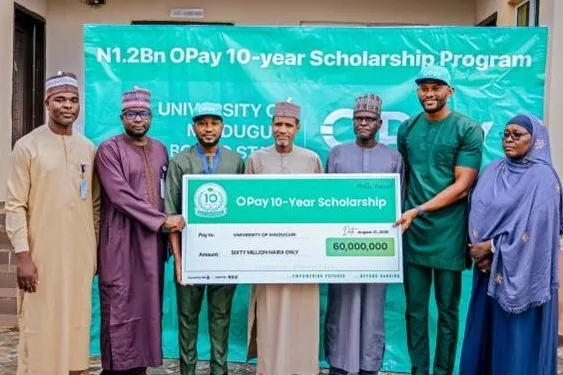
University of Maiduguri joins the beneficiary of OPay’s ₦1.2 billion decade-long scholarship program
The University of Maiduguri (UNIMAID) has recently been included among the beneficiaries of OPay Digital Services’ ₦1.2 billion scholarship drive set to span ten years. This collaboration promises to support talented students financially while fostering innovation and digital empowerment on campus. OPay unveiled a partnership with UNIMAID through a formal Memorandum of Understanding (MoU) and ceremoniously handed over a ₦60 million cheque to fund yearly scholarships for deserving students. Under this generous financial support scheme, 20 students from the university will each receive ₦300,000 annually. The Vice Chancellor of UNIMAID, Professor Mohammed Laminu Mele, shared his appreciation via the Provost of Postgraduate Studies, Professor Yakubu Mukhtar. He described the collaboration as a landmark occasion, expressing pride in having one of Nigeria’s leading digital financial companies commit to the institution’s future. Acknowledging UNIMAID’s stature as one of the country’s largest educational bodies by population, Professor Mukhtar noted the mutual benefits for both the university community and OPay’s customer base. This partnership is viewed not just as a philanthropic gesture but as a strategic investment in human capital development. Representing OPay, Itoro Udo, Head of Corporate Social Responsibility, characterized the effort as a sustained engagement aimed at bridging the gap left by dwindling federal educational subsidies. Beyond the scholarship fund, OPay intends to deepen its involvement through programs centered on innovation, cybersecurity, and youth empowerment. He revealed plans to establish a Cybersecurity Lab at partner universities and pilot programs designed to boost graduate employment, citing examples from current projects at the University of Ibadan and Obafemi Awolowo University. With this new alliance, both OPay and UNIMAID foresee impactful outcomes in academic growth and technological readiness for students.
Bank of Ghana halts operations of eight fintech firms including Flutterwave and Cellulant over regulatory breaches
The Bank of Ghana has suspended remittance activities for eight fintech companies, among them Flutterwave and Cellulant Ghana, effective September 18, 2025, to enforce compliance with the country’s updated inward remittance regulations. In a recent announcement, Ghana’s central bank revealed that the affected firms have fallen short of adhering to the Updated Guidelines for Inward Remittance Services by Payment Service Providers, instituted in 2023. Flutterwave and Cellulant Ghana stand accused of violating key provisions related to licensing, operational standards, and mandatory reporting procedures. The crackdown extends beyond just these two companies, encompassing Tap Tap Send, Afriex, Halges Financial Technologies, Top Connect, Remit Choice, and Send App. While most are facing suspensions lasting one month, Halges Financial Technologies will remain barred from operations indefinitely until it secures fresh approval from the Bank of Ghana. Additionally, the regulator has imposed sanctions on the United Bank for Africa (UBA) Ghana Limited, which functions as the settlement bank for the blocked providers. UBA’s foreign exchange trading license has been revoked for thirty days starting September 18 as a measure of accountability. This action by the Bank of Ghana follows repeated violations in the fintech sector’s adherence to the Payment Systems and Services Act along with the Banks and Specialised Deposit-Taking Institutions Act. These laws require financial entities to submit regular transaction reports and maintain transparent operational practices. The central bank criticized the firms for excessive reliance on informal money transfer methods, unauthorized foreign currency swaps, and the use of unofficial exchange rates. Such practices, the regulator argued, undermined Ghana’s remittance system’s credibility and threatened household incomes, business cash flows, and the country’s foreign currency reserves. The Bank of Ghana hopes to rectify procedural shortcomings and reinforce regulatory compliance, ultimately protecting consumers and promoting stability within the financial ecosystem. These sanctions will temporarily disrupt remittance flows through some of Ghana’s most used fintech platforms, prompting users to seek alternatives during the suspension periods. Nonetheless, the Bank of Ghana anticipates that tougher enforcement will lead to a more secure and accountable remittance network moving forward. The central bank also made it clear that any future partnerships with the suspended entities will require fresh authorization, emphasizing its commitment to fostering a compliant and transparent fintech landscape in Ghana.

FG clarifies CNG price hike as private operators adjust rates, launches free vehicle conversion drive in Lagos
The Federal Government has firmly denied any involvement in raising the cost of Compressed Natural Gas (CNG) pumps, attributing the recent price increases solely to adjustments made by private-sector operators. According to Matilda Johnson, Brands and Corporate Communications Manager at the Presidential Compressed Natural Gas Initiative (PCNGI), no government mandate or subsidy removal prompted the hike from N230 to approximately N380 per Standard Cubic Metre (SCM). Johnson emphasized that the administration continues to support President Bola Tinubu’s directive to promote CNG as an affordable, cleaner, and more sustainable alternative fuel to petrol and diesel. The sector has attracted nearly $1 billion in private investments, showing the growth of CNG adoption in Nigeria. Since its inception in 2023, following the removal of fuel subsidies, the Presidential CNG Initiative has made strides to encourage adoption nationwide. This includes free conversion of commercial vehicles to CNG and deployment of CNG-powered buses in states like Lagos, Ogun, Oyo, and Rivers. However, the uptake is still below target levels, with around 50,000 vehicles converted as of early 2025, short of the one million goal set for 2027. In a related effort, Lagos motorists are offered free CNG vehicle modifications at six centres across the city starting September 13. The first 50 vehicles passing inspections at each site will receive conversion kits that allow refueling at the subsidized N230 rate at NIPCO stations. Locations include Femadec (Lekki-Epe), Portland (Ojota), Mezovest (Ajah), Dana Motors (Isolo), MBH Power (Ikorodu), and Autogig (Gbagada). Similar programs will take place simultaneously in Abuja, Ibadan, Abeokuta, and Kaduna. While pricing adjustments by private players aim to ensure operational viability and attract further investments, authorities affirm that CNG remains a cost-effective and environmentally friendly fuel choice. This comprehensive approach aims to balance sustainability, affordability, and sector growth to meet Nigeria’s energy and environmental goals in the coming years.

OpenAI unveils AI-driven job platform, to transform talent hiring and compete with LinkedIn
OpenAI has stepped into the recruitment arena with a brand-new AI-powered platform designed to connect companies with professionals skilled in artificial intelligence. Launched on September 4, 2025, this new offering aims to redefine the hiring process and create opportunities across industries. The recently introduced OpenAI Jobs Platform serves as a smart matchmaking service, pairing businesses with candidates fluent in AI technologies. Unlike traditional employment websites, this venture leverages cutting-edge algorithms to ensure employers find the most suitable experts for their needs quickly and efficiently. Fidji Simo, CEO of OpenAI’s Applications division, stressed that finding the right AI talent can be challenging, especially when matching specific technical requirements. He said that this platform provides a marketplace filled with experienced professionals ready to contribute at various levels and it is designed to bring AI expertise within reach for everyone, from large enterprises to small local governments. What sets this project apart is its inclusive approach. In addition to catering to global corporations, it offers tailored services for smaller businesses and public sector organizations. This unique focus empowers those typically underserved in the tech hiring landscape, helping them modernize and compete effectively. OpenAI emphasizes skill verification through pre-vetted talent pools and specialized certifications available via its own Academy. This ensures that employers can trust candidates’ capabilities beyond their resumes. According to OpenAI research, over half a billion users engage with its tools, with nearly a third of U.S. workers incorporating ChatGPT into their routines. Sam Altman, CEO of OpenAI, stated that this isn’t just about job postings; it’s about creating an ecosystem where AI talent thrives and drives economic growth. He added that OpenAI want to build tools that help everyone benefit from the AI revolution. Though currently in early rollout stages with wider availability planned for mid-2026, the OpenAI Jobs Platform is ready to shake up traditional hiring processes. Its focus on AI fluency, local businesses, and verified skills positions it uniquely within the competitive landscape. In a market hungry for innovation, OpenAI’s entry may fuel a healthy rivalry, potentially leading to more efficient, AI-powered recruitment tools benefiting employers and job seekers alike.
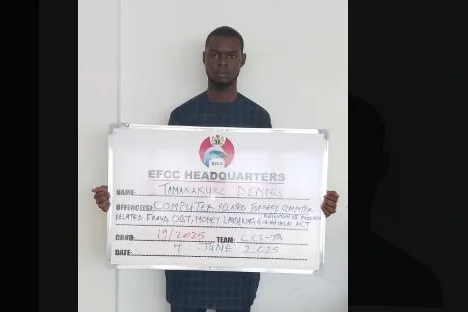
Abuja court sends Dennis Tamarakuro to jail for $71,000 crypto fraud against U.S.-based NGO
The Federal High Court in Abuja has sentenced Dennis Tamarakuro, also known as Keisha Reynolds, to one year imprisonment for cybercrime involving the defrauding of a U.S.-based non-governmental organization out of $71,795.41. The conviction follows Tamarakuro’s admission of guilt to the charges presented. Dennis Tamarakuro was found guilty by Justice Emeka Nwite for impersonating a female private investor from the United States during late 2024. Under this false identity, he managed to swindle funds from an individual named Philbert via the cryptocurrency platform Bybit, in breach of Nigeria’s Cybercrime Act. The prosecution, led by Maryam Aminu Ahmed, called upon EFCC investigator Ogunjobi Olalekan who detailed how U.S. authorities uncovered the scam. The Pregnancy Support Network had its bank details compromised in a romance scam that evolved into a money mule operation funneling stolen assets through intermediaries like Libson Junior. These funds ultimately ended in Tamarakuro’s crypto wallet, where he was able to convert and withdraw a huge portion.Investigations revealed two transfers of 0.27 Bitcoin from the middleman to Tamarakuro, with subsequent withdrawals amounting to $18,000 via Busha exchange. The EFCC successfully reclaimed over $42,000 from these exchanges, while the remainder was blocked by a U.S. financial institution. All investigative documents, including Tamarakuro’s voluntary statement, were presented as evidence. Defence attorney Laye Aeemokoya appealed for leniency citing his client’s role as a father and caregiver, stressing it was Tamarakuro’s first offense and noting the restitution of all misappropriated money. The public is reminded to exercise caution with investment ventures and report suspicious activities promptly to prevent falling victim to such schemes.