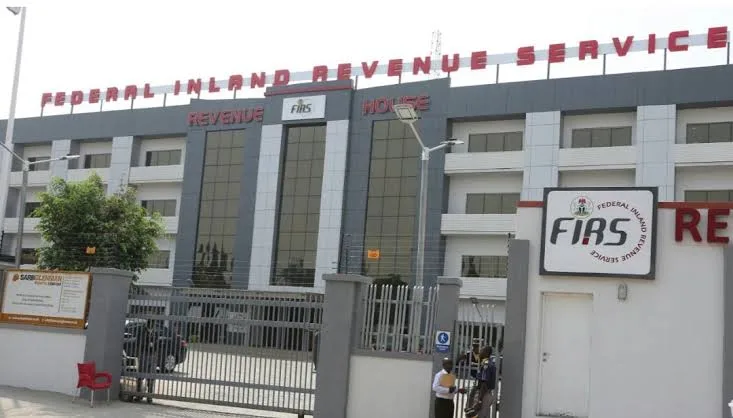
The Federal Inland Revenue Service (FIRS) has launched its new electronic invoicing (e-Invoicing) platform, with over 1,000 companies already integrating their systems within two weeks of the rollout. The platform, aimed at modernizing Nigeria’s tax administration, went live on August 1, 2025. It targets large taxpayers, companies with annual turnovers of ₦5 billion and above, representing more than 5,000 eligible firms nationwide. So far, about 20% of these companies have started using the new system. MTN Nigeria was the first to transmit live electronic invoices to FIRS, officially marking the start of this new tax compliance era. Other major companies like Huawei Nigeria and IHS Nigeria have completed testing and are preparing to go live soon. The e-Invoicing system is developed as an Electronic Fiscal System offering real-time transaction visibility and ensuring invoice accuracy and authenticity. To help businesses adapt smoothly, FIRS is working closely with the National Information Technology Development Agency (NITDA) which has brought in service providers to act as system integrators and access point providers. These partners support companies with onboarding, integration, and managing invoice transmissions. Acknowledging some companies faced difficulties meeting the initial August 1 deadline, FIRS has extended the final deadline for integration to November 1, 2025. The agency plans continued stakeholder engagements such as webinars and workshops to support a smooth transition. Nigeria aims to harmonize revenue reporting, strengthen revenue assurance, and test a single trustworthy source for government income with this technology, which is in line with the Nigeria Revenue Services Reform Act. After large companies are fully onboarded, the system will expand to medium-sized and emerging businesses across the country.
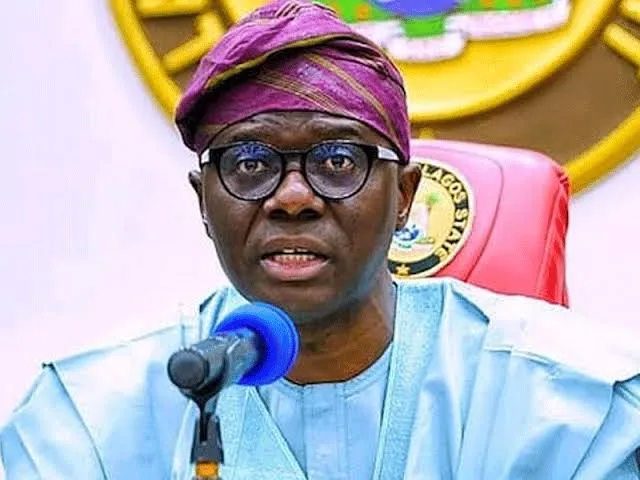
Lagos State Government orders roadworthiness audit for Uber, Bolt, Lagride, and InDrive vehicles
Lagos State Government has ordered all licensed e-hailing drivers from Uber, Bolt, Lagride, and InDrive to bring their vehicles for a mandatory roadworthiness inspection. The announcement came from Lagos State Commissioner for Transportation, Oluwaseun Osiyemi, who made the disclosure on his official X (formerly Twitter) account after meeting with e-hailing operators at the Ministry of Transportation in Alausa, Ikeja. The Ministry has raised concerns about the poor condition of several vehicles used by drivers on these platforms, prompting the new inspection drive. Osiyemi stated that any vehicle failing the inspection will be prohibited from operating within Lagos. Only vehicles registered with the Lagos State Government and driven by drivers certified by the Lagos State Drivers’ Institute (LASDRI) will be allowed on the roads. He also warned that operators who do not comply with the audit risk sanctions, including possible suspension of their licences. The government’s move addresses growing worries over safety risks and the decline in service standards, worsened by many vehicles looking old and poorly maintained. Rising costs and limited financing options have made vehicle upgrades difficult for many drivers. Representatives from major e-hailing companies like Uber, Bolt, Lagride, InDrive, and others were involved in the stakeholder meeting. They shared their efforts to enhance safety, such as adding panic buttons, better driver verification, and strict onboarding processes. Mr. Osiyemi urged Lagos residents to book rides only through official platforms to benefit from traceable trips and in-app safety features, rather than informal offline bookings. This inspection drive is a crucial step toward safer and more reliable urban transportation in Lagos, with authorities pushing to raise the standards and protect both passengers and drivers in the fast-growing ride-hailing industry.
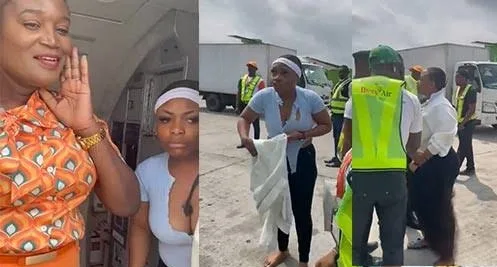
Ibom Air bans female passenger after violent assault on crew and airport staff
Ibom Air has banned a female passenger, Comfort Emmanson, after she assaulted crew members and airport security on a flight from Uyo to Lagos. The incident went through viral videos on social media showing the passenger physically attacking airline staff and clashing with security at Lagos’ Murtala Muhammed Airport on Sunday. Before takeoff, Emmanson refused to switch off her phone despite instructions from the cabin crew and the pilot. Eventually, another passenger switched off the phone, but Emmanson verbally lashed out. The flight proceeded as scheduled. After arriving in Lagos and once other passengers had disembarked, Emmanson confronted the purser who had asked her to turn off the phone. Witnesses say she stepped on the purser, tore off her wig, removed her glasses, threw them to the floor, and assaulted her repeatedly with slaps and her footwear. When another crew member intervened, Emmanson also slapped her. She tried to grab a fire extinguisher, posing a serious safety risk. Airport security, alerted by the pilot, intervened but Emmanson resisted and attacked both Ibom Air and Federal Airport Authority of Nigeria (FAAN) security personnel. She was forcibly removed from the aircraft and taken into custody by police for further investigation. Ibom Air issued a statement confirming the incident and announcing that Emmanson has been banned from flying with the airline. The airline also reported the matter to the Nigerian Civil Aviation Authority. Recall, Daily Tech Nigeria, on the 8th of August, 2025, reported a similar incident where Kwam 1 ( K1 De Ultimate ) reportedly tried to carry an undisclosed liquid onto the plane, which aviation rules forbid unless declared and special permission is given. When security officers asked him to comply, he refused and allegedly spilled what was later confirmed as alcohol on one of the officers. Michael Achimugu, Director of Public Affairs and Consumer Protection at Ibom Air, emphasized that passengers must follow simple safety rules, like turning off phones during takeoff and landing, to avoid such serious incidents. Further updates are expected as investigations continue.
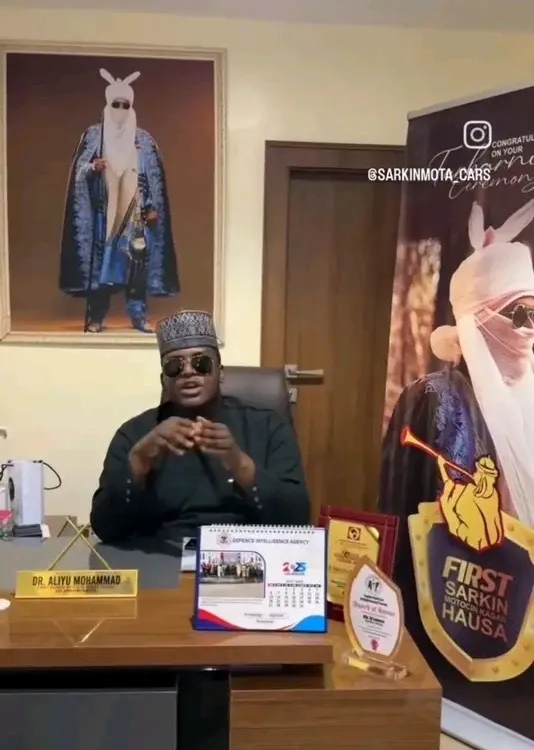
₦100,000 logo contest by Sarkinmota draws sharp criticism from design community
Sarkinmota Autos, a Nigerian car company, is hosting an exciting graphic logo design competition. Dr. Aliyu, the CEO of Sarkinmota, announced the challenge aiming to find fresh creative talent to redesign or create a new logo for the company. The contest is promoted on TikTok using hashtags #logodesignchallenge and #Sarkinmota, inviting graphic designers across Nigeria to join. The winner will receive a cash prize of 100,000 Naira and a chance to become one of Sarkinmota’s official designers. This opportunity offers exposure and a platform for designers interested in automotive branding to showcase their skills. Dr. Aliyu explained that the challenge is designed not only to find the best design but also to boost the company’s brand visibility through the creative energy of Nigerian designers. The winning logo will represent Sarkinmota in future branding and marketing efforts. However, the initiative has drawn significant criticism from within the design community. Illa Bappa Ibrahim, founder of Mediahooch Space and a brand advisor, called the challenge “an exploitative stunt dressed up as an opportunity.” He argued that such logo design contests often undervalue the skill involved. “You throw a crumb of ₦100k in the air and expect serious designers to fight over it like it’s a favor. It’s not. It’s a slap in the face,” Ibrahim said, stressing the need for fair recognition of creative work. He also shared a personal story about his experience with NIMC (National Identity Management Commission), where his design has been used for almost a year without payment. “That’s a national identifier, and yet I’ve not been paid for the rights. What I got was someone in a position of authority looking me dead in the face and saying, ‘Just go home and forget about it.’ Forget what? The value of my work?” Ibrahim said. Adding to the conversation, Safwan Idris revealed his own frustrations, saying he was tagged many times but ignored the challenge. “Many times I’ve got robbed of these so-called challenges and the winner ended up being a mediocre and apprentice in the skill work.” Ahmad Mukhtar also criticized the competition, pointing to a comment claiming someone could “just give ChatGPT to… give me a logo.” Mukhtar said this showed a lack of respect for designers and that challenges like this often have judges who don’t understand good design. “Let’s value what we do and stop falling for such. That way, people will respect what we do,” he urged These voices reflect long-standing challenges Nigerian brand designers face around fair pay, respect, and proper recognition. While Sarkinmota’s contest offers a platform for exposure, the criticism shines a light on the broader issue of how creative talent is valued in the industry.

EFCC storms Obasanjo’s Hotel, arrests internet fraud suspects at pool party
The Economic and Financial Crimes Commission (EFCC) stormed the Green Legacy Hotel inside the Olusegun Obasanjo Presidential Library in Abeokuta, Ogun State, early Sunday and arrested several young people suspected of internet fraud. The raid happened during a pool party on the library premises. The EFCC seized the opportunity to arrest suspected fraudsters who were believed to be involved in online scams. This recent operation follows another arrest last Wednesday by the EFCC’s Ibadan Zonal Directorate. They detained a suspected internet fraudster at K-Hotel, Itori, Ewekoro area, also in Ogun State. The suspect was caught with two locally-made pistols. That raid resulted in 56 arrests in total, including the main suspect. The EFCC continues to intensify its efforts to clamp down on cybercrime, particularly internet fraud, in Nigeria. These coordinated raids show the agency’s persistent actions in targeting suspects in popular social events and entertainment venues to disrupt their activities.

Yoruba king’s palace runs fully on solar, aiming to power community in Abeokuta
The Olowu of Owu Kingdom in Abeokuta, Ogun State, Oba Professor Saka Adelola Matemilola, has fully powered his palace with solar energy and plans to extend this power to his community. Nigeria’s national grid, which serves nearly 200 million people, has faced frequent collapses including 12 times in 2024, causing widespread blackouts and challenges for homes and health services. Many Nigerians are turning to renewable energy as a reliable alternative. The Olowu’s palace operates on a 120kVA solar system, with the first phase of 50kVA already powering the palace. The system is designed to produce excess power that will eventually supply street lights, health centres, and boreholes in the community. Dr. Akintoye Akindele, an Owu indigene, explains that while the palace uses about 25-40kVA, the remaining energy charges batteries to keep key infrastructure running and support community development. In an innovative move, the Olowu is also introducing a 3D-printed cowry shell token system to support a school meal program. Each token is personalised and linked to a cloud-based system to ensure funds given for school feeding reach the intended children. The tokens also aim to evolve into local currency for approved vendors, encouraging local commerce while preserving cultural heritage. “This project is about reducing our carbon footprint, healing the earth, and empowering our people,” said the Olowu. He hopes this model will inspire other traditional leaders and communities to adopt similar technologies for sustainable development.