Nigerians are spending more on mobile data than ever, with MTN and Airtel reporting record earnings as internet use explodes across the country. Recent financial reports show MTN Nigeria’s data revenue soared 85.6% to ₦701billion in Q2 2025, compared to ₦377billion last year. Airtel Nigeria followed closely, with a 60.3% rise to ₦260billion ($168million), showing that data is now the biggest driver of growth for both telecom giants. The Nigerian Communications Commission (NCC) confirmed that data consumption broke new records in May 2025, reaching 1.04 million terabytes, the highest since 2023. MTN said its average user now consumes 13.2GB per month, up over 26% from last year, while Airtel’s smartphone customers used an average of 11.8GB per month, a sharp jump from 9.9GB. Daily life now revolves around digital platforms, for many Nigerians. Social media, video streaming, online gaming, and even work meetings have all shifted online. Abraham Aduloju, a 28-year-old content creator in Lagos, captured this change: “Everything I do is online – Zoom meetings, WhatsApp calls, editing videos. I use at least 30GB a week.” Experts say short-form video apps like TikTok and Instagram Reels are driving usage, while the demand for remote work tools and livestreaming has pushed people to spend more on data. According to Adewale Adeoye, a telecom specialist, “Apps that autoplay videos eat a lot of data. Many people now budget specifically for their internet needs.” The need for reliable connectivity has become so central that some prioritize topping up their data plans over food. Presley Ibadin, CEO of K-Chronos Global Tech Limited, explained: “Data is now a lifeline. Some may not have food at home but will always keep their phones online to stay connected or reach out for help.” To meet the rush, operators are pouring billions into infrastructure. MTN ramped up its capital spending by almost 290% in the first half of 2025, investing ₦565.7billion to add new 4G sites, expand fiber networks, and start a new data centre. Airtel Africa increased its Nigerian capital spending to $39million in the last quarter and has announced bigger investments to push 5G coverage and improve networks, especially in rural areas. Despite the growth, Nigerians still face quality and reliability issues, leading many to keep SIMs from different providers to avoid blackouts. Still, telecom companies are racing to upgrade, hoping to bridge the gap and keep up with the country’s ever-connected youth.
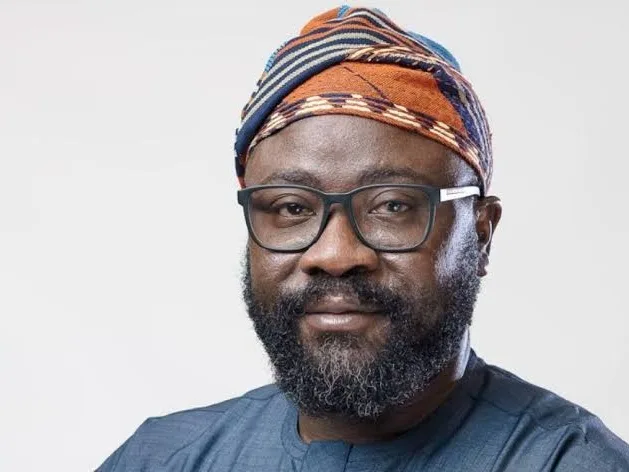
Nigeria to lead global AI innovation with right infrastructure, says Microsoft executive
Nigeria stands on the brink of becoming a global leader in artificial intelligence (AI), if it builds the right infrastructure and develops local talent, according to Mr. Abideen Yusuf, General Manager of Microsoft Nigeria and Ghana. Speaking in Lagos on Tuesday, Yusuf highlighted Nigeria’s growing tech ecosystem and youthful population as key strengths that could transform the country from a consumer of AI technology to a producer of world-class AI innovations. Yusuf emphasized AI’s massive potential for economic growth, with estimates projecting a $15 trillion impact on the global economy by 2030. He said the real economic benefits for Nigeria will come from making AI technology more accessible nationwide through investments in reliable power, data centres, and cloud infrastructure. Microsoft has already made progress in this area by building Africa’s first Microsoft data centres and edge nodes within Nigeria, enabling faster network speeds and better access to cloud services critical for scaling AI applications. Lagos, he noted, is already proving Nigeria’s innovation capabilities as a booming tech hub attracting startups and venture capital. But national progress depends on expanding digital infrastructure beyond the city and fostering strong public-private partnerships, including collaborations between government bodies and tech firms like Microsoft to unlock local data’s full potential. Equally important is developing a skilled workforce that can deploy and maintain AI technologies. With Africa expected to have 42% of the global youth population by 2030, Yusuf sees a demographic advantage for Nigeria’s digital transformation. He praised initiatives such as the Federal Ministry of Communications’ 3 Million Technical Talent program, which aims to create 2 million digital jobs, and Microsoft’s partnership with the Wootlab Foundation to deliver AI training. The Nigerian government has aligned with this vision by drafting a National Artificial Intelligence Strategy and forming the AI Collective, a group tasked with advancing AI research, projects, and inclusive policymaking. Recently, Nigeria also launched its own Large Language Model (LLM), tailored to low-resource languages and accented English, to boost AI development that better represents local languages and contexts. “With the right infrastructure and skilled people, Nigeria can become a global leader in AI innovation and use this technology to drive inclusive economic growth.” – Yusuf This push places Nigeria among the African countries racing to lead the AI frontier, marrying technology with local talent and infrastructure to harness AI’s promise for the continent’s future.
OpenAI launches free GPT-OSS AI models to boost global developer access
OpenAI has announced the launch of GPT-OSS, a new open-weight artificial intelligence model now available free to developers, researchers, and companies worldwide. The release includes two versions: a large model with 120 billion parameters and a smaller 20 billion-parameter model that can run on a laptop with 16GB RAM. The bigger model requires more powerful hardware such as an 80GB GPU. These models are designed to perform complex tasks and mimic human reasoning. They are accessible on popular platforms like Hugging Face, Amazon Bedrock, Groq’s inference cloud, and Saudi Arabia’s Humain AI. This launch marks OpenAI’s first open-weight model since 2019’s GPT-2, allowing developers to access and build upon the models’ underlying parameters, known as weights. However, OpenAI has not made the training data publicly available, so the release falls short of being fully open source. OpenAI CEO Sam Altman said that the company delayed the launch to conduct extra safety reviews after concerns about open-weight AI security risks. He noted the challenge that once weights are released, they cannot be taken back, a first for OpenAI. Despite this, the company anticipates users, including companies such as Orange SA and Snowflake Inc., will experiment and provide feedback to shape future model releases. Chinese firm DeepSeek and Meta with its LLaMA models have also contributed to the open AI ecosystem. OpenAI offers resources including an open model playground and guides for developers to get started with the new models. The ongoing dialogue between AI creators and users will likely influence the next chapter in open AI technology worldwide.
Circuits TV hits 1.3 million streams, launches new FlexiWatch for African film lovers
Circuits TV, Nigeria’s popular streaming platform, has reached over 1.3 million unique streams across 170 countries, boosting its status as a leading home for African movies. Circuits TV has cemented its place as Nigeria’s biggest virtual cinema and one of Africa’s top transactional video-on-demand (TVOD) services. The company is changing how people everywhere can watch African stories, using clever technology to make streaming simple and enjoyable. One of the newest features, FlexiWatch, is set to shake up the movie-watching experience. With FlexiWatch, viewers can pay once for a 7-day or 21-day “Flexi Pass,” giving them unlimited access to a handpicked set of African films, no more waiting for fixed showtimes, and no limits on when to enjoy a movie. This comes alongside Circuits’ Pay-Per-View Premium option, where users buy timed access (from 8 to 48 hours) to exclusive new releases for as low as N1,000 or $1.99, much cheaper than regular cinemas. In a push for inclusion, Circuits now offers not just Nollywood favorites but also movies from Francophone Africa. French-speaking film fans can now stream award-winning films like Souleymane’s Story, part of a growing collection aimed at building a truly Pan-African streaming library. Circuits says it’s not slowing down anytime soon. The platform’s team is working to add more independent films and blockbuster hits. Users can already access Circuits TV on their phones, smart TVs, or directly through its web app.
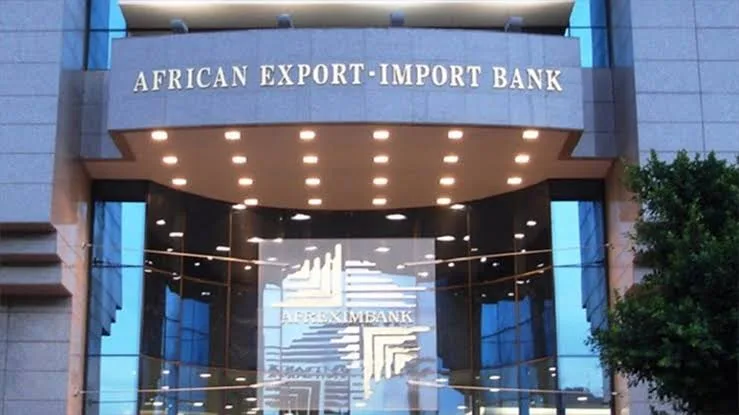
Afreximbank backs Dangote refinery with $1.35 billion in landmark $4 billion deal
The African Export-Import Bank (Afreximbank) has signed a significant $1.35 billion financing agreement with Dangote Industries Limited (DIL), Africa’s largest industrial group. The bank disclosed this on Sunday, revealing that this funding is part of a much bigger $4 billion syndicated arrangement put together by several leading banks. Afreximbank served as the main arranger in this deal, which is one of the largest syndicated loans seen in recent times across Africa’s financial sector. Most of the funds will help refinance money already invested in building the Dangote Petroleum Refinery and Petrochemicals Complex, based just outside Lagos. The site is the world’s biggest single-train refinery, able to process 650,000 barrels of oil every day. This financing will help Dangote Industries manage its running costs and improve its financial foundation. It also keeps the business on track to grow and expand its influence in Africa’s energy sector. According to Afreximbank, this is the largest single contribution from any bank in the loan deal. The bank said its involvement shows a strong commitment to backing major infrastructure projects that can drive Africa’s growth, boost energy security, and support inter-African trade. Speaking on the development, Professor Benedict Oramah, President and Chairman of the Board at Afreximbank, said: “With this landmark deal, we once again demonstrate that Africa’s development can only be meaningfully financed from within. It is only when African institutions lead the way that others can follow… Our energy security is in sight.” Aliko Dangote, founder and CEO of Dangote Industries, added: “Afreximbank’s contribution to this milestone financing underscores our shared vision to industrialize Africa from within. This refinancing strengthens our balance sheet and accelerates the refinery’s supply of high-quality refined petroleum products across Africa.” The deal attracted wide interest from both African and global banks. Since the refinery started operations in February 2024, Afreximbank has been a major partner, offering support for both crude supply and product sales to ensure smooth and steady operations.This new financing is expected to help Dangote Refinery speed up fuel production for Nigeria and the rest of Africa, making the region less dependent on fuel imports.
NOVA Bank plans to shift operating license from national to regional
NOVA Bank has announced plans to change its operating license from a National Commercial Bank to a Regional Commercial Bank. The bank’s management says this strategic move is aimed at improving operational efficiency and focusing more on key regional markets. They believe this shift will help them better manage resources, serve customers effectively, and grow sustainably. Acting Managing Director, Mrs. Chinwe Iloghalu, explained that after reviewing the Central Bank of Nigeria’s recapitalisation directive in March 2024, the bank chose this route to optimize capital and ensure steady growth. She added that the bank’s shareholders are committed to injecting an additional ₦24 billion through a rights issue by the end of 2025. This will help NOVA exceed the capital requirements for regional banks well before the 2026 deadline. The bank also stated that its financial health remains strong, with solid capital buffers and growing profits. Recently, Global Credit Rating reaffirmed NOVA Bank’s BBB rating with a stable outlook, citing good liquidity and asset quality. Despite the license change, NOVA Bank plans to open three new branches soon in Owerri, Port Harcourt, and Abuja. It is also investing in digital banking to ensure customers get fast and secure services across all channels. Chairman Mr. Phillips Oduoza said this is a deliberate step towards sustainable growth. He added that the bank plans to eventually return to national status within the next three years. The change reflects ongoing adjustments in Nigeria’s banking sector, with the Central Bank requiring banks to meet higher capital thresholds based on their license type.