
Airtel Africa has entered a new partnership with Xtelify to roll out advanced AI-powered tools across its operations in 14 African countries. The multi-year, multi-million dollar deal will give 150,000 Airtel field agents access to Xtelify’s software. With this platform, agents can gain key market insights, create targeted strategies, and deliver better customer service. The system will also help detect spam and prevent fraud, making telecom services safer for users. Airtel Africa says this move will help simplify its operations, improve customer experience, reduce customer losses, and raise revenue per user. According to Jacques Barkhuizen, Airtel Africa’s Group Chief Information Officer: “This partnership marks a transformative leap in our mission to build Africa’s digital future. By harnessing Airtel’s AI platforms that have proven scale in India, we are simplifying operations and accelerating personalized experiences across our 14 African markets.” Xtelify, a subsidiary of India’s Bharti Airtel, is bringing in tools that have already worked in India. Bharti Airtel’s Global Business Chief, Binod Srivastava, said: “Combining our Xtelify platform with Airtel Africa’s vision will allow us to address industry-wide challenges like spam and fraud while ensuring customer protection and digital transformation.” Airtel Cloud, another offering from Bharti Airtel, has also been unveiled. The cloud service can handle up to 1.4 billion transactions per minute and gives businesses modern IT and AI features, managed by more than 300 experts. Airtel is not alone in this AI push. MTN Group recently started using AI to improve its service in Nigeria, including smarter network management and energy use. MTN says responsible AI will help transform its entire business, not just in Nigeria but across Africa.

SpaceX rapidly delivers four astronauts to International Space Station in just 15 hours
SpaceX has successfully carried four astronauts to the International Space Station (ISS) only 15 hours after launching from Florida’s Kennedy Space Center. The crew includes NASA’s Zena Cardman and Mike Fincke, Japan’s Kimiya Yui, and Russia’s Oleg Platonov. They will stay aboard the ISS for at least six months, replacing astronauts who arrived in March. SpaceX will likely bring the outgoing crew back to Earth this week. Fincke greeted the space station over the radio shortly after docking over the South Pacific, saying, “Hello, space station!” The journey time is fast by US standards but still slower than the Russian Soyuz’s record 3-hour trip. All four astronauts were originally set for different missions. Cardman’s last-minute move made room for NASA astronauts delayed by Boeing Starliner’s technical issues, while Fincke and Yui shifted from planned Starliner flights due to ongoing delays. Platonov, previously removed from a Soyuz mission for health reasons, was cleared to join this SpaceX flight. With their arrival, 11 people now occupy the ISS. The existing crew welcomed them with cold drinks and hot meals. The mission is a key part of keeping human presence alive in space for scientific research and international collaboration.

NRC refutes claims of vandalism on Lagos–Ibadan standard gauge, assures passengers of safety
The Nigerian Railway Corporation (NRC) says the Lagos–Ibadan Standard Gauge Railway is secure and not affected by vandalism, countering recent online reports that raised safety fears. NRC’s Managing Director, Dr. Kayode Opeifa, spoke through a statement shared in Lagos this weekend. He described the videos and reports making the rounds online as misleading. The corporation clarified that the vandalism incidents making headlines actually happened on the old narrow-gauge railway in Oyo State, not the modern standard gauge connecting Lagos and Ibadan. Opeifa explained that those thefts, where E-clips and short rails were stolen, took place between August 7 and 27, 2024, on the narrow-gauge tracks near Erunmu, Oyo State. He said: “The Nigerian Railway Corporation (NRC) has refuted an online publication claiming that the Lagos–Ibadan Standard Gauge Line has been vandalised and is unsafe for usage.” To address the problem, NRC worked with the village head of Erunmu, local vigilantes, and police right after the incident. They also ran awareness campaigns to stop scrap dealers from buying stolen railway parts. Thanks to these efforts, suspects were arrested and handed over to the authorities. NRC reports that since then, there have been no new cases of vandalism in the area, and train services on the Lagos–Ibadan Standard Gauge remain unaffected. The NRC stressed that damaging railway infrastructure is an act of economic sabotage and warned that anyone caught will be prosecuted. The Lagos–Ibadan Standard Gauge, built by China Civil Engineering Construction Corporation (CCECC), is a crucial transport link officially opened in June 2021. The 157km main line (plus a 7km branch) moves both passengers and cargo between Lagos and Ibadan, with trains running up to 150km/h. Since going into operation, the line has helped millions of Nigerians travel safely and has boosted trade from Lagos ports to the country’s interior. As of March 2024, CCECC reported that the modern railway had safely completed over 1,000 days in service, carrying more than 2 million passengers. NRC urges the public to ignore misleading online reports about the safety of the Lagos–Ibadan Standard Gauge and assures riders that measures are in place to keep the route secure.

Pope Leo XIV urges protection of human dignity amid AI rise
Pope Leo XIV has warned that human dignity must be safeguarded as artificial intelligence (AI) develops rapidly around the world. Speaking at the Vatican’s Jubilee of Youth, the Pope addressed Catholic social media influencers, urging them to use technology responsibly. He stressed that nothing created by humans, including AI, should harm others’ dignity. Instead, such technologies should serve the benefit of all humanity. The event, held in St Peter’s Basilica, drew young worshipers who were reminded to use their platforms to support unity and care for those in need. The Pope highlighted the need to protect our ability to listen and speak in this new era of AI. He encouraged influencers to be “agents of communion,” breaking divisions and promoting love rather than individualism. Since his election in May, Pope Leo XIV has consistently pointed to the Church’s role in defending human dignity and justice as AI and other technologies advance. The Pope, who studied maths in the US and has strong ties to both the US and Peru, called for thoughtful development of AI that respects people and fosters community.
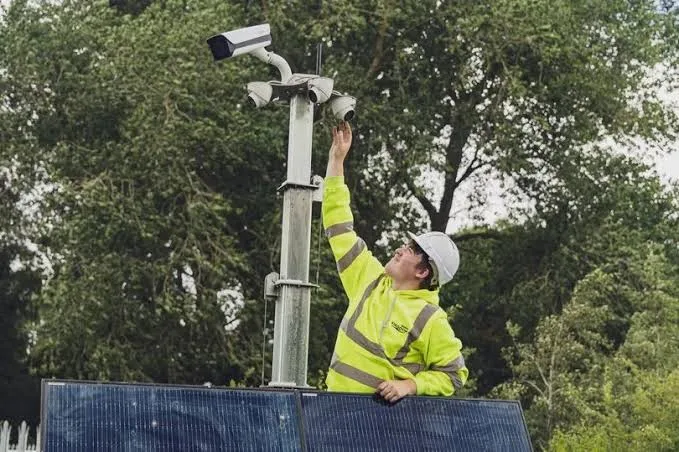
East Yorkshire Council deploys AI-powered CCTV to fight fly-tipping
East Riding of Yorkshire Council has installed CCTV cameras equipped with artificial intelligence (AI) technology in several areas to help reduce illegal rubbish dumping, known locally as fly-tipping. The council has set up CCTV towers in Cottingham, Boynton, Rawcliffe, and Hessle, with a second camera planned for Cottingham. These AI cameras are designed to detect instances of rubbish dumping automatically and alert council enforcement officers for quick action. The council receives about 2,500 reports of fly-tipping every year, a problem that local authorities say has become a serious nuisance, especially in rural communities. Councillor Lyn Healing said the fly-tipping issue had grown into a “blight and a nuisance” in some parts of the county. The new cameras are part of the council’s effort to step up enforcement and tackle the problem more effectively. She also mentioned that this technology has been successfully used by other councils and hopes for the same positive results in East Riding. The AI-enabled CCTV towers will operate for a trial period of 12 months and feature anti-vandal measures to protect the equipment. After the trial, the council will assess how effective the cameras have been before deciding whether to make them permanent. This development follows a smaller 12-week pilot scheme using a similar AI CCTV camera in Willerby aimed at reducing roadside littering. People caught fly-tipping on camera could face fines of up to £1,000 or prosecution in court. The success of this technology could set an example for other local governments battling similar problems.
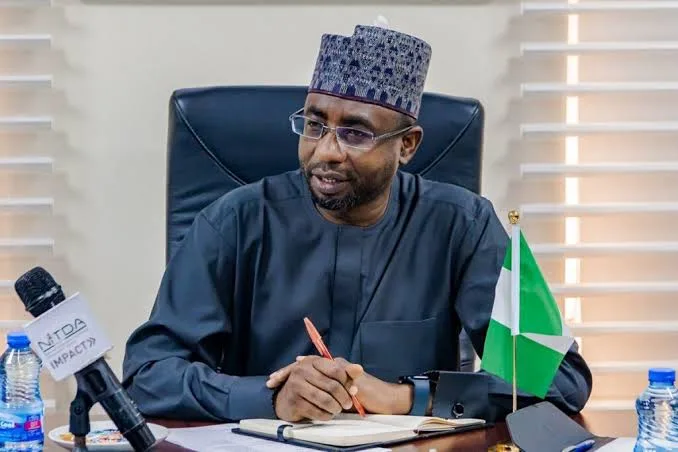
NITDA ramps up push for national data harmonization in Nigeria
Nigeria’s technology agency, NITDA, says Nigeria must urgently unify data systems across government agencies to power digital identity and better planning for the future. At a recent meeting in Abuja, the Director-General of the National Information Technology Development Agency (NITDA), Kashifu Inuwa, called for all government institutions to harmonize their databases. He explained that lack of coordination has slowed evidence-based national development, while a seamless digital system could make government services smarter, faster, and more accessible for everyone. “From birth registration to linking people’s legal identities to national planning, technology can help us bring everything together. Without harmonizing our data, we cannot generate the insight we need for national development.” – Inuwa said He stated that this data harmonization move is in line with President Bola Tinubu’s “Renewed Hope Agenda,” which focuses on building digital public infrastructure and using data for decision-making. Agencies like the National Population Commission (NPC), National Identity Management Commission (NIMC), and National Bureau of Statistics (NBS) are expected to play major roles in this process. Inuwa assured stakeholders that NITDA will set standards and offer support. “Our goal is to make sure every institution involved in civil registration and vital statistics (CRVS) has the right digital tools and advice. We want every process to be digital, seamless, and secure—nobody wants to fill out endless forms or move from office to office,” he stated. Fragmented data systems have been a major challenge for years, leading to repeated identity registrations and wasted resources. The recent push is not the first time officials are highlighting this problem. Olubunmi Tunji-Ojo, Minister of Interior, also recently stressed the benefits of harmonization, noting it would save costs and make things easier for both citizens and government. “When we harmonize our data, there will be seamless data exchange among government agencies. With their National Identification Number (NIN), citizens will be able to access passport services and bank registration without submitting the same data again and again,” Tunji-Ojo said. He promised that the Ministry of Interior would back the project fully. While progress has been slow in the past, both NITDA and the Ministry of Interior now say they are committed to making data harmonization a reality. If successful, Nigerians could look forward to faster, simpler digital services and an end to repeated paperwork, a major step toward a more efficient, digital future.