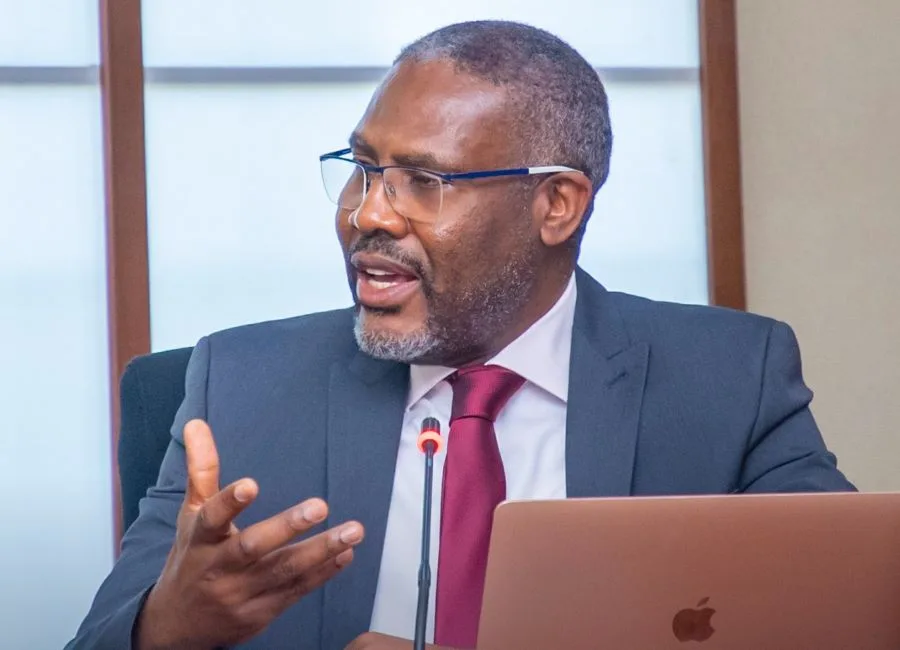
By Aminu Umar Turaki Nigeria’s telecommunications sector is to move from a period of consolidation in 2025 into a phase of expansion in 2026, according to projections by the Association of Telecommunication Companies of Nigeria (ATCON). The ATCON President, Mr Tony Emoekpere, disclosed this in an interview with the News Agency of Nigeria (NAN) in Lagos, making reference to renewed investor confidence, growing digital demand, and improved coordination between industry players and government agencies as key growth drivers. Emoekpere said the sector is entering 2026 on stronger footing, following collaborative efforts among telecom operators, regulators, and the Federal Government aimed at deepening digital inclusion across the country. Thee ATCON President described the year as one of stabilisation and disciplined capital management. He stressed that despite significant challenges, including high energy costs, foreign exchange volatility, expensive equipment imports, and persistent Right-of-Way (RoW) issues, industry players remained committed to operations. According to him, telecom operators, tower companies, and internet service providers focused on strengthening networks in high-traffic areas while accelerating the adoption of solar and hybrid energy solutions to reduce dependence on diesel. He added that data from the Nigerian Communications Commission (NCC) shows Nigeria’s broadband penetration surpassed 50% in 2025, driven largely by increased data consumption. Services such as digital payments, streaming platforms, cloud computing, and other online applications have become central to daily life, boosting demand for reliable connectivity. Emoekpere also commended the NCC for sustaining investor confidence through transparent reporting, enforcement of Quality of Service (QoS) standards, and effective spectrum management. He stated that the growing demand from fintech, artificial intelligence, and other data-intensive industries will fuel further expansion. Emoekpere said telecom operators plan to ramp up investments in data centres and last-mile broadband infrastructure. This will include expanded deployment of fibre-to-the-home (FTTH) networks and fixed wireless access (FWA) solutions. He stated that the effective enforcement of telecom infrastructure as critical national assets will be crucial to achieving growth targets in 2026. He called for stronger collaboration to protect fibre routes and telecom towers from vandalism, alongside the harmonisation of Right-of-Way charges across states. The ATCON President also emphasized that the continued burden of multiple taxation on operators, urging authorities to address the issue to support sustainable sector growth. Nigeria recently crossed the 50% broadband penetration threshold for the first time since the implementation of the National Broadband Plan (2020-2025). However, the country is still expected to fall short of the Plan’s 70% target by the end of 2025. NCC data shows that Nigeria recorded 109.6 million broadband subscriptions as of November 2025, translating to a penetration rate of 50.58%, up from 49.89% in October. Despite this progress, broadband penetration has grown by just over 6% so far in 2025, compared to 44.43% at the end of 2024.

Nigerian banks deposits ₦3.7 trillion at CBN as liquidity surges on Christmas Eve
By Aminu Umar Turaki Nigerian commercial banks deposited an estimated ₦3.7 trillion into the Central Bank of Nigeria’s (CBN) Standing Deposit Facility (SDF) on December 24, highlighting one of the strongest liquidity buildups in recent months. CBN financial data covering December 22 to 24, 2025 shows a sharp rise in idle funds placed with the apex bank just ahead of the Christmas holiday, despite earlier efforts by the CBN to withdraw excess cash from the system. On December 22, the CBN had conducted an ₦1.7 trillion Open Market Operation (OMO) auction to mop up liquidity. However, the latest figures suggest that banks remained heavily cash-laden. What the data showsCBN records indicate that deposits placed in the SDF rose from ₦2.47 trillion on December 23 to ₦3.67 trillion on December 24, representing an increase of about ₦1.2 trillion in just 24 hours.Banks’ opening balances at the CBN also climbed from ₦163 billion to ₦223 billion, further confirming that the banking system entered the festive period with excess cash. This comes despite the CBN having raised more than ₦11.2 trillion through OMO bills since November, while repaying approximately ₦11.1 trillion, suggesting that liquidity pressures remain elevated. Analysts say the trend reflects a risk-averse lending environment, with banks preferring to earn a relatively safe overnight return of about 22.5% via the SDF rather than expand credit under tight monetary conditions. Inside the liquidity surgeThe data also points to a possible shift in the CBN’s liquidity management strategy. Rather than issuing new short-term debt aggressively, the apex bank appears to be allowing market forces to rebalance after weeks of intense OMO activity.On December 23, the CBN processed an OMO repayment of ₦1.14 trillion, part of a broader issuance-repayment cycle that saw roughly ₦22.3 trillion move through the system within eight weeks. OMO stop rates during the period ranged between 19% and 22%, but the CBN has increasingly relied on the SDF to absorb excess funds—an approach that tightens liquidity without adding to interest costs.Interest payments on OMO auctions for November and December alone reportedly approached ₦2 trillion, making passive liquidity control a more cost-efficient option. Market watchers believe the CBN may return to more aggressive OMO interventions in early 2026, particularly to rein in inflation, support foreign exchange stability, and manage government funding needs. The surge in SDF deposits highlights weak credit expansion, rising caution among banks, and limited investment opportunities in the real economy. For policymakers, it signals the need to balance liquidity control with economic growth. For investors, it suggests a banking sector adopting a wait-and-see stance as macroeconomic uncertainties persist heading into 2026. The Standing Deposit Facility (SDF) allows banks to earn interest on excess overnight funds, currently around 22.5%.The Standing Lending Facility (SLF) serves as the opposite window, offering short-term loans to banks at higher rates. Rising SDF usage indicates high liquidity but weak lending appetite.The CBN raised over ₦11.2 trillion in OMO bills between November and December 2025 and repaid nearly the same amount. Recent trends show a shift toward passive liquidity management by the apex bank.

FG cracks down on bandits social media accounts
The Federal Government has launched a campaign against the online activities of criminal networks, announcing on Tuesday, December 23, that it has pinpointed and removed multiple social media accounts operated by bandits and terrorists. Major General Adamu Laka, Director-General of the National Counter Terrorism Centre (NCTC), stated that sites used to flaunt stolen goods and broadcast live criminal discussions are being dismantled one after the other. There was a time when bandits flaunted their loot on TikTok. We’ve shut those accounts down, you don’t see it anymore. They even went live… but we’ve tackled all that – Maj.-Gen. Adamu Laka This is aimed towards addressing the rising pattern of non-state actors, leveraging on social media platforms to boast about attacks, collecting ransom payments, and sometimes for recruitment. For years now, bandits leaders like Bello Turji have turned to platforms like TikTok and Facebook to terrorize vulnerable communities, display ransom money stacks and arsenals to lure new members. Security forces are partnering closely with TikTok, Meta (Facebook and Instagram), Snapchat, and X to flag and suspend unverified profiles linked to terror groups. The security forces have been victorious in tracking ransom transactions from Point-of-Sale (POS) operators. Criminals often use POS terminals to receive ransom transfers and withdraw cash, making it more difficult to trace than traditional bank transfers. The NCTC plans to enforce key strategies in dismantling the online activities of criminal groups in 2026, under its new Strategic 2025-2030 plan, which utilizes AI-driven tools and network analysis to foresee and disrupt terror funding at the POS stage. The public is encouraged to flag any social media accounts suspected of promoting banditry or fundraising for crimes.

Nigeria and Google in advanced talks for new subsea cable
The Federal Government of Nigeria is currently in talks with Google Alphabet Inc., to deploy a new undersea fiber-optic cable. This was announced on Tuesday, December 23, marking a transition by the National Information Technology Development Agency (NITDA) to eliminate a single point of failure in the digital infrastructure of the country.According to NITDA Director General Kashifu Inuwa Abdullahi, Nigeria currently relies on subsea cables that follow identical geographic paths to Europe. This concentration makes the $1 trillion digital economy target of Nigeria vulnerable to disruptions if a single cable is damaged.In September 2025, Google unveiled its intention to expand its footprint in Africa by announcing plans for four new infrastructure hubs, cutting across the North, South, East, and West of the continent. These hubs include landing stations and data centers designed to link its newest cables, Equiano and Umoja, to local markets. The new cable will follow a different path than existing links to Europe, in order to provide a backup that will ensure connectivity even if primary cables are damaged.A Google spokesperson confirmed that talks are at an advanced stage, building on Google’s surpassed $1 billion investment pledge for African digital transformation. Nigeria’s current reliance on cables that follow the same path is a ‘single point of failure.’ We want to increase our existing links… to help transform Nigeria into a digital hub – Kashifu Inuwa Abdullahi, DG of NITDA The new Google cable and its associated infrastructure hubs are to be completed within the next three years. This would lower the cost of wholesale data for local providers like MTN and Airtel, leading to cheaper data plans for consumers. NITDA is also working with the World Bank on a 90,000km terrestrial fiber rollout to ensure this subsea capacity reaches the last mile in rural Nigeria.

Behind The Scenes becomes fastest film to hit ₦500M
Nollywood’s “Detty December” has reached a pitch as Funke Akindele’s Behind The Scenes solidified its status as a box office juggernaut, crossing the ₦500 million mark in record time. According to data released on Tuesday, December 23, the film achieved this milestone in just 12 days, surpassing the previous record for the fastest Nollywood film to reach a half-billion naira.Meanwhile, Toyin Abraham’s “Oversabi Aunty” made a grand entrance, with approximately ₦100 million during its opening weekend. Following closely on December 19, Toyin Abraham released Oversabi Aunty. The comedy-drama focuses on the interference of a well-meaning but meddlesome relative, a theme that resonated with local audiences.Funke Akindele, who currently holds the record for the highest-grossing Nollywood film of all time, “Everybody Loves Jenifa” at ₦1.88 billion, released “Behind The Scenes” on December 12. The film explores the “black tax” and the hidden burdens of a successful entrepreneur.Behind The Scenes reached ₦514 million faster than any previous Nollywood title, including Akindele’s own 2024 hit, Everybody Loves Jenifa.Funke Akindele has produced the highest-grossing film of 2025, dethroning the heist thriller Gingerrr, which peaked at ₦509 million.Despite the heavy competition, Toyin Abraham’s Oversabi Aunty secured the number two spot on the charts.

Google delays full switch from Assistant to Gemini on Android
By Oluwatunmise Omoseyin Google has delayed its plan to fully replace Google Assistant with its Gemini AI on Android devices, pushing the transition into 2026. The company had earlier indicated that Gemini would become the default assistant on most Android phones by the end of 2025. However, Google says it needs more time to ensure a smooth and reliable experience for users before completing the switch. Gemini, designed to handle voice commands, app controls and smart home tasks, has already been set as the default assistant on new devices such as the Pixel 9 series. Still, Google Assistant continues to run alongside Gemini on many Android phones. Google explained that replacing Assistant, which has been part of Android for nearly a decade, is more complex than expected. Gemini requires more processing power and memory, and only devices running Android 10 or later with at least 2GB of RAM will be eligible for the upgrade. This means some older and low-end phones, especially in developing markets, may not support Gemini fully. Google said it wants to avoid performance issues that could affect everyday tasks like setting alarms, navigation and voice dictation. Google aims to improve Gemini’s speed, accuracy and reliability, by extending the timeline, before making it the sole assistant on Android. For now, both services will continue to coexist, with Gemini gradually taking on more responsibilities as updates are released.