
Okitipi Samuel, also known as Moses Felix, an international cybercrime syndicate has been arrested for allegedly being the developer behind the Raccoon 0365 phishing toolkit. The Nigeria Police Force National Cybercrime Centre (NPF-NCCC) announced the breakthrough on Thursday, December 18, after a year-long investigation involving the FBI, Interpol, and Microsoft’s Digital Crimes Unit.Raccoon 0365 operated as a Phishing-as-a-Service (PhaaS) model, allowing low-skilled criminals to rent sophisticated hacking tools for approximately $355 per month. Between January and September 2025, the toolkit was used to harvest over 5,000 Microsoft 365 credentials from 94 countries, targeting healthcare providers, financial institutions, and government agencies.The operation gained global attention for its ability to bypass Multi-Factor Authentication (MFA) using deceptive Cloudflare Turnstile CAPTCHAs to trick users into feeling secure. In September 2025, Microsoft successfully seized 338 domains linked to the infrastructure, leading investigators directly to the digital footprints of the developer in Nigeria.While three individuals were initially detained in Lagos and Edo states, police cleared two suspects Joshua and James, ruling that they were victims of identity theft, whose details were used by Samuel to register malicious infrastructure without their consent.Investigators used advanced blockchain forensics to trace cryptocurrency wallets used to sell phishing links on Telegram. Samuel allegedly managed a channel with over 850 members, receiving over $100,000 in digital payments.Despite the global scale of the crime and involvement of the FBI, Nigeria has opted to prosecute Samuel locally under the Cybercrimes Act, 2024, which carries a maximum sentence of 10 years for attacks on critical infrastructure.Force PRO Benjamin Hundeyin lauded the arrest as a testament to Nigeria’s growing digital sovereignty and technical capacity. The NPF-NCCC claims to have “cut the head off the snake”, by unmasking the developer rather than just the end-users, and also disabling a tool that was sending up to 9,000 malicious emails daily.Okitipi Samuel remains in custody and is to be arraigned in a Federal High Court by early January 2026. Meanwhile, Microsoft has begun a mass-notification process for the 5,000+ compromised account holders to reset their security protocols.
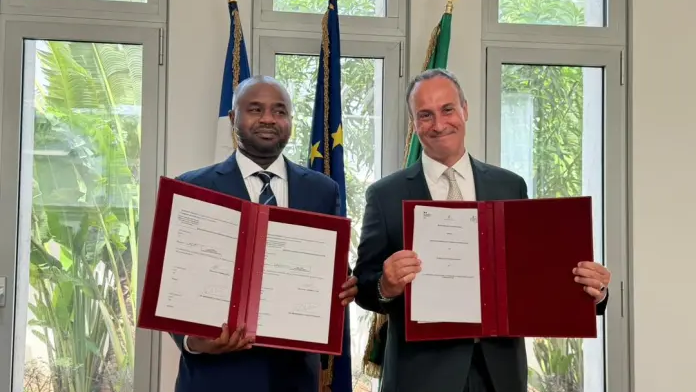
Legal Experts slam FIRS MoU with France over economic data exposure fears
A debate has erupted following the signing of a Memorandum of Understanding (MoU) between the Federal Inland Revenue Service (FIRS) and France’s Direction Générale des Finances Publiques (DGFiP) on December 10. While the FIRS stated that the deal is a critical step toward digital tax administration, legal experts and opposition figures are raising alarms over data sovereignty.The partnership aims to leverage on the decades of experience in AI-powered audits of France and the automated compliance systems as the FIRS plan to adopt this into the Nigeria Revenue Service (NRS) in January 2026.Oladipupo Ige, a legal expert argued that even advisory access can lead to data exposure, potentially giving a foreign power visibility into Nigeria’s economic heartbeat.Dr. Segun Adebayo warned that aggregated data, though anonymized, can reveal vulnerabilities, industry-specific compliance gaps, and revenue dependencies, providing France with leverage in future trade and loan negotiations.Meanwhile, the FIRS maintains that no raw taxpayer data will leave the country.The Nigeria Data Protection Commission (NDPC) is expected to conduct an independent review of the MoU. Meanwhile, opposition parties and the Northern Elders Forum are calling for the suspension of the deal until full public disclosure of the terms is made to the National Assembly.

Airtel to boost Nigeria’s mobile coverage with Starlink satellite service
By Aminu Umar Turaki Airtel Africa has partnered with SpaceX to use Starlink’s Direct-to-Cell satellite technology to improve mobile coverage in Nigeria and other African countries. The deal will allow people in remote and rural areas, where there are no mobile towers, to connect their smartphones directly to satellites, without needing special devices. According to a statement released on Tuesday, the service will first support text messages and limited data services. Faster internet and full broadband services will be added later, after regulators in each country give approval. Starlink’s new satellite system is designed to offer higher speeds and better reliability than older satellite networks. This makes it useful in places where building mobile towers is difficult or too expensive. Airtel Africa has about 174 million customers, many of whom live in areas with weak or no network coverage. The company says the partnership will help improve access to education, business, and digital services. Airtel Africa’s Managing Director, Sunil Taldar, said the deal will help set a new standard for network availability. SpaceX’s Vice President of Sales, Stephanie Bednarek, added that people will be able to stay connected without changing their phones. The system uses about 650 satellites and is meant to support existing mobile networks, not replace them.The service will be launched in 2026, starting with basic features like texting and limited data use.

Australia enforces new law banning social media use for children under 16
By Aminu Umar Turaki Australia has introduced a new law that bans children under the age of 16 from using social media platforms. Following the implementation of the law, many teenagers discovered that their social media accounts were no longer accessible.The law places responsibility on major social media companies, including Meta, TikTok, and YouTube, to ensure that users under 16 do not have accounts on their platforms. Companies that fail to comply could face heavy financial penalties.Prime Minister Anthony Albanese said the law is designed to protect children from harmful online content. He described it as a necessary step that could encourage other countries to take similar action.Australia is the first country to introduce such a strict nationwide ban. Unlike in some other countries, parents are not allowed to give consent for children under 16 to use social media. The online safety regulator of the country, Julie Inman Grant, said authorities will begin monitoring social media companies to ensure compliance. She stressed that parents and children will not face punishment, as enforcement will focus solely on the companies.Many parents have welcomed the ban, believing it will help reduce cyberbullying and to protect the mental health of their children. However, critics argue the ban may make it harder for teenagers to stay connected with friends, especially those living far away. The Australian government has acknowledged that the law may face challenges in its early stages but stated that it is important to ensure safer online spaces for children.

Fidelity Bank to restrict transactions, without TIN or NIN from Jan.
By Oluwatunmise Omoseyin Fidelity Bank has announced that it will begin restricting transactions on accounts that are not linked to a Tax Identification Number (TIN) or a National Identity Number (NIN) from January 1, 2026. The bank confirmed that the move is in line with the Nigerian Tax Administration Act (NTAA) 2025, which requires all bank accounts to be connected to a valid tax identity. Customers without a TIN will be required to use their NIN instead. Fidelity Bank, in a message sent across to all customers, warned that accounts without the required details may face transaction limits if the information is not updated before the deadline; Accounts that do not have a tax ID or NIN will be restricted from transacting starting January 1, 2026 – the bank stated The directive follows the federal government’s push for stronger tax compliance across the financial system. Taiwo Oyedele, Chairman of the Presidential Committee on Fiscal Policy and Tax Reforms, stated that the National Tax Administration Act (NTAA) provides the legal backing for banks to enforce full compliance nationwide. The government aims to improve tax collection, strengthen financial transparency, and reduce unreported income, by making it mandatory for all bank customers to link their bank accounts to their respective TIN or NIN. Fidelity Bank advised individuals and small business owners who have not registered a TIN or linked their NIN to do so as soon as possible, warning that failure to comply could result in limits on transfers, withdrawals, and other banking services.

STMicro ships over 5 billion chips to Starlink, deliveries to rise by 2027
By Oluwatunmise Omoseyin STMicroelectronics has shipped more than 5 billion radio frequency antenna chips to Elon Musk’s SpaceX for use in the Starlink satellite internet network. Remi El Ouazzane, the president of STMicro’s microcontrollers and digital integrated circuits division, in an interview, stated that shipments linked to Starlink could double within the next two years and that Starlink’s technology is likely to be adopted widely across the industry; The past 10 years of user terminals in terms of volume could actually double over the next two years. I expect many lower-orbit satellite players to leverage the technology – El Ouazzane The chips supplied by STMicro are radio frequency front end modules used in Starlink user terminals. They are designed to handle high data speeds and operate reliably in tough space conditions. STMicro has been working with SpaceX since around 2015, supplying components as Starlink expanded into a global satellite internet service. Starlink currently operates in more than 150 markets worldwide and serves around 8 million users, according to information published on its website. The network relies on thousands of low Earth orbit satellites to deliver broadband internet, particularly in areas with limited traditional connectivity. The space sector is moving from government led projects towards commercial networks. Companies such as SpaceX, OneWeb, Eutelsat and Amazon are investing heavily in low Earth orbit satellite systems, thereby increasing the demand for specialised chips that supports high data rates and withstand extreme environments. The company is also working with European partners including Thales and Eutelsat on projects like the Iris 2 satellite constellation by the European Union.