
Google has rolled out its experimental AI app-building tool, Opal, to 15 additional countries as of October 2025, offering non-technical creators a simple way to build mini web apps using natural language prompts. However, Nigeria is notably absent from this expansion list. Originally launched in the United States in July 2025, Opal enables users to create, edit, and share AI-powered mini-applications without coding skills. Users describe the app they want, then Opal generates a functional prototype with editable visual workflows. The newly added countries include Canada, India, Japan, South Korea, Vietnam, Indonesia, Brazil, Singapore, Colombia, several Central American nations, Argentina, and Pakistan, according to Google’s official announcement. Megan Li, Senior Product Manager at Google Labs, expressed surprise at the sophistication of apps created by early adopters, stating, “We didn’t expect the surge of sophisticated, practical and highly creative Opal apps we got instead. The ingenuity of these early adopters made one thing clear: we need to get Opal into the hands of more creators globally”. Opal’s no-code approach, coupled with a visual editor that enables step-by-step debugging and customization, aims to democratize app development by supporting creators without technical backgrounds. Users can also publish their apps online and share them with others to test. The platform complements Google’s broader AI developer ecosystem, which includes offerings like Gemini Code Assist, an AI-powered coding assistant available in Nigeria that helps developers with code generation and review. Despite Nigeria’s vibrant and rapidly growing tech ecosystem – with over 500,000 developers and a strong focus on AI innovation – Opal has not yet been launched locally. This contrasts with Google’s recent investments in Nigeria, such as the “Build with AI” training program developed in partnership with GOMYCODE to empower 1,000 Nigerian developers with generative AI skills. For Nigeria, gaining access to tools like Opal could further accelerate digital innovation by enabling a broader segment of creators, startups, and enterprises to develop functional AI applications without deep programming expertise. The absence of Opal in Nigeria highlights the nuanced pace of global tech expansion and suggests a potential opportunity for Google to address local demand for accessible AI tools. As AI and no-code platforms gain traction worldwide, Nigeria’s tech community remains poised to adopt such innovations, bolstered by growing government and corporate support. Google’s Opal expansion marks a significant milestone in democratizing app creation, and a Nigerian launch would likely be met with enthusiasm from the nation’s burgeoning tech talent pool.

Lagos retains IKEDC and EKEDC as licensed DisCos amid power sector shake-up
Lagos State has confirmed the continued licensing of Ikeja Electric Distribution Company (IKEDC) and Eko Electric Distribution Company (EKEDC) as the official electricity distributors serving the region, solidifying their position amid ongoing power sector reforms in Nigeria. The Ministry of Energy, confirming the licenses this week, emphasised the crucial role both IKEDC and EKEDC play in ensuring reliable electricity supply to Lagos, Nigeria’s commercial hub and most populous state. This decision follows recent reviews of the distribution company (DisCo) operations across Nigeria to boost efficiency and service delivery. IKEDC and EKEDC are responsible for power distribution to Lagos’s millions of residents and businesses, handling a consumer base that represents one of the largest electricity markets in Africa. Lagos’s dense population, economic activities, and rapid urbanisation have made consistent electricity supply a top priority for state authorities. According to the Nigerian Electricity Regulatory Commission (NERC), these two DisCos collectively serve over 5 million customers, covering roughly 90% of the state’s power consumers. Energy experts have welcomed the move, noting that maintaining licensed, experienced DisCos is vital to improving service standards. Dr. Ayo Adekunle, an energy analyst based in Lagos, told Daily Tech Nigeria, “The decision to keep IKEDC and EKEDC licensed reflects confidence in their continued ability to manage complex urban power distribution. However, ongoing infrastructure upgrades and customer service improvements are needed to meet Lagosians’ growing energy demands.” This license confirmation coincides with the Federal Government’s broader power sector reforms aimed at addressing distribution inefficiencies, reducing technical losses, and tackling revenue collection challenges that have long plagued Nigeria’s electricity market. IKEDC and EKEDC have both announced recent initiatives to deploy smart meters and enhance grid infrastructure, signaling alignment with national efforts to modernise electricity distribution. For Nigerians and businesses in Lagos, the licensing stability offers some assurance amid concerns over erratic power supply, frequent outages, and escalating electricity tariffs. As Nigeria’s economy increasingly depends on reliable power, effective distribution will continue to shape productivity and living standards.
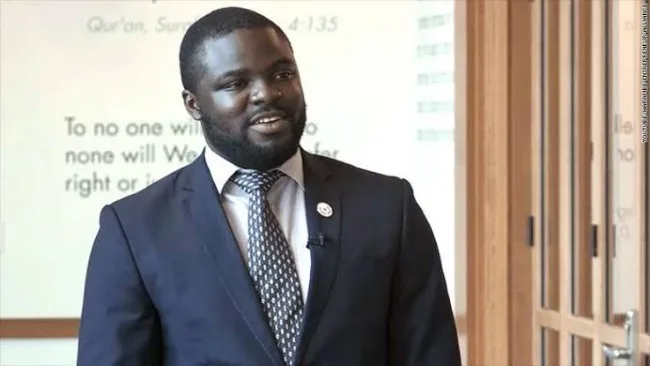
Nigeria names four startup leaders to National Innovation Council to accelerate Startup Act Implementation
In a significant step toward operationalizing the Nigeria Startup Act, the National Information Technology Development Agency (NITDA) has appointed four prominent startup ecosystem leaders to the National Council for Digital Innovation and Entrepreneurship (NCDIE). The appointments, announced on October 5, 2025, aim to ensure that founders and innovators have a direct voice in shaping Nigeria’s startup policies and digital innovation landscape. The named representatives are Iyinoluwa Aboyeji, co-founder of Andela and Flutterwave and founding partner at Future Africa; Victoria Ojoagefu Manya, executive director of Advocacy for Policy and Innovation; Charles Uchenna Emembolu, founder of TechQuest; and Abba Ibrahim Gamawa, founder of Go Agent Limited. They were elected through the Startup Consultative Forum (SCF) and will serve two-year terms on the council, charged with contributing to policy formulation and monitoring the implementation of the Startup Act’s objectives. The Nigeria Startup Act, signed into law in October 2022, provides a legal and institutional framework to drive the growth of tech startups, promote investment, reduce regulatory burdens, and foster capacity building and innovation. The formation of the NCDIE and inclusion of startup leaders on the council mark critical milestones in bringing Nigeria’s fast-growing tech ecosystem into policy and regulatory alignment. According to NITDA, the council’s work will help guarantee that innovation efforts translate into meaningful social and economic impacts nationwide. “The four representatives will ensure that ecosystem voices are heard directly in national policymaking,” NITDA said. “This progress underlines the agency’s commitment to enhanced collaboration among government, private sector, academia, and stakeholders to build a brighter digital future.” The appointments come as the Office for Nigerian Digital Innovation (ONDI), under NITDA, reports progress on startup labelling – with 75 startups registered on the government portal – and the establishment of a $40 million Startup Investment Seed Fund to bridge funding gaps. The fund has secured $20 million from the Japan International Cooperation Agency (JICA), with the Nigeria Sovereign Investment Authority expected to match the remaining amount.

Airport drama: singer Portable demands government action against pranksters after Port Harcourt incident
Nigerian singer Habeeb Okikiola Badmus, popularly known as Portable, has called on the federal government to ban prank videos following a chaotic altercation at the Port Harcourt International Airport on Sunday, October 5, 2025. The incident, which quickly went viral, involved Portable and a group of individuals he described as “death pranksters” who staged a dangerous prank against him. The tense 53-second video circulating on social media shows Portable dressed in beige attempting to confront an unidentified person amid pushing, shoving, and restraint by security personnel. At one point, a man appears barefoot, while another wields what looks like a belt or whip, intensifying the chaotic scene. Airport security guards eventually pulled Portable toward a waiting vehicle, diffusing what could have escalated into a violent confrontation. In a video response posted on his Instagram page the following day, Portable alleged that he was targeted by “death pranksters” – pranksters who stage extreme, often life-threatening hoaxes for online content. He said, “Those people came to prank me. They were death pranksters. It almost turned to cultist level. Ten yellows no fit stand one blue,” blending English and Yoruba to emphasise the severity of the incident and his resilience. Portable claimed that these pranksters had been tarnishing his reputation for social media fame and warned that the situation was beginning to resemble a cult-related conflict. The “Zazu Zeh” crooner urged the government to put a stop to such dangerous pranks and fake news spread by bloggers on social media platforms. “Make government stop all those prankers and some fake bloggers. Make them stop all this fake news post just because of small fame. Why una dey spoil person wey get glory name with una platforms?” he appealed. Portable also revealed he had checked the TikTok account of one of the pranksters, which contained multiple prank videos, some involving fake deaths staged to elicit prolonged emotional responses. He described the prank team as consisting of six individuals, some of whom had placed a price tag on him following these viral episodes. This incident is the latest in a series of public controversies involving Portable, including previous legal issues and police attention. His demand for government intervention highlights rising concerns about the impact of reckless prank culture on public safety and personal reputations in Nigeria. For Nigerians and the broader African tech ecosystem, Portable’s call shines a light on the growing challenge of regulating online content, especially prank videos that blur the line between entertainment and harm. With social media platforms serving as primary content distributors, deliberate misinformation and dangerous stunts pose risks that national agencies must address to protect citizens and public order. As the debate on content regulation continues globally, Nigerian authorities face pressure to impose stricter controls on prank videos and online hoaxes that escalate into real-life dangers. Portable’s public outcry could be a catalyst for renewed focus on legal frameworks governing digital content and social media ethics in Nigeria.

Payaza redeems investors’ ₦20.3 billion debt, secures triple credit rating upgrades
Payaza, a leading Nigerian fintech, has fully repaid N20.3 billion ($13.5 million) of its commercial paper obligations ahead of schedule using internal cash flow, while securing triple credit rating upgrades from top agencies. This news marks a milestone in African fintech financial discipline and operational excellence. Payaza’s landmark achievement of redeeming N20.3 billion ($13.5 million) debt entirely from internally generated revenue challenges the common narrative that African fintechs rely on external funding. This sets a new standard for sustainable growth within the continent’s fintech ecosystem and reflects strong financial discipline amidst broader economic challenges. In conjunction with the debt redemption, paying off its commercial paper obligations ahead of schedule, Payaza secured triple investment-grade credit ratings – upgraded to an “A” long-term and “A1” short-term rating by Nigeria’s DataPro, a “BBB-” long-term and “A3” short-term rating from Global Credit Ratings (GCR), a Moody’s affiliate, and a solid “Bbb” rating with stable outlook from Africa’s largest rating agency, Agusto & Co. These ratings underscore broad international and local confidence in Payaza’s accountability, resilience, and capacity to meet obligations. Founded by Nigerian entrepreneur Seyi Ebenezer, Payaza has grown from a regional payments provider to a pan-African fintech infrastructure company operating in 21 countries. The company offers innovative payment collections, cross-border disbursements, and embedded finance APIs, benefiting SMEs, traditional merchants, and digital startups. For Nigeria and Africa at large, Payaza’s success demonstrates that indigenous fintech companies can achieve global standards of governance, financial sustainability, and operational discipline.
OpenAI and Jony Ive face technical challenges on secretive ‘screenless AI device’, launch delay likely
OpenAI and renowned designer Jony Ive are encountering big engineering and design hurdles in developing a groundbreaking screenless AI device, potentially delaying its planned launch beyond 2026. The device is described as a palm-sized, continuously listening assistant that understands audio and visual environmental cues without a traditional screen. The collaboration between OpenAI and Ive’s startup, acquired for $6.5 billion in May 2025, seeks to create a new generation of AI-powered computers. This pioneering gadget is designed to operate via cameras, microphones, and speakers, responding intuitively and building contextual memory over time. However, technical issues around software behavior, device “personality,” privacy safeguards, and backend computing capacity have proved unexpectedly complex. The key challenges include defining when and how the device should speak or interrupt users and ensuring privacy with continuous audio-visual sensing. OpenAI is also grappling with how to distribute the massive computing power required to serve millions of always-on devices without compromising performance or cost. Sources familiar with the project told the Financial Times and other outlets that OpenAI’s aim is to design a device that feels more like a “friend-like computer” rather than a quirky AI, setting it apart from existing assistants like Amazon’s Alexa, which require wake words for activation. The device’s continuous listening capability raises privacy concerns, as constant ambient sensing can be intrusive if not handled properly. Moreover, OpenAI faces budget and infrastructure constraints to support the immense data processing for the AI’s real-time contextual awareness, unlike tech giants Amazon and Google which have vast computing resources. This innovation is set to be carried or placed nearby rather than worn, differing from recent AI gadgets like the Humane AI Pin. The original plan targeted a late 2026 release, but sources suggest delays could push this timeline further due to unresolved critical issues.