
Alphabet, Google’s parent company, yesterday 15th September, 2025, officially reached a market valuation of $3 trillion, marking the achievement as the fourth U.S. corporation to hit this mark alongside Apple, Microsoft, and Nvidia. This financial leap shows Alphabet’s transformation from a search engine pioneer to a dominant player in cloud computing and artificial intelligence. Alphabet’s valuation surge follows more than two decades since Google’s initial public offering and a decade since the formation of Alphabet as a conglomerate. In recent years, the firm’s expansion into new territories, including cloud infrastructure, AI development, hardware, and enterprise services, has cultivated fresh revenue streams. These advancements helped mitigate regulatory challenges and maintain steady financial growth. A notable factor contributing to this milestone was a favorable antitrust ruling in the U.S., which averted any drastic measures such as breaking up the company or dismantling vital products like Android and Chrome. The court’s decision targeted specific exclusivity agreements and mandated more openness in certain search-related functions, allowing Alphabet to sustain its core operations with minimal disruption. Furthermore, Alphabet’s cloud division has been pivotal in driving growth. The segment recorded a 32% revenue increase year-over-year to $13.6 billion as of July, fueled largely by adoption of advanced AI technologies such as Tensor Processing Units and Gemini models. To accommodate rising demand, the company expanded its capital expenditure plan for 2025 by $10 billion, bringing the total to $85 billion. This financial commitment aims to boost data center capacity and support cloud expansion, which industry watchers predict could yield annual revenues surpassing $50 billion. Google Cloud and AI form the backbone of Alphabet’s strategic growth blueprint. This blend of technological investment and market diversification keeps the firm competitive against peers like Microsoft, Apple, and Nvidia, who are also ramping up their AI and cloud offerings.
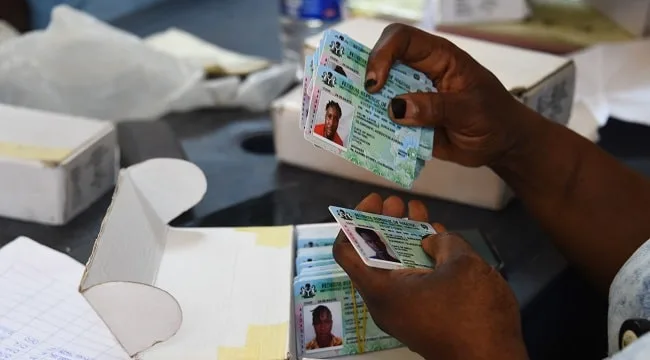
Osun leads as INEC reports over 4.4 million Nigerians pre-registered online for voter’s card in four weeks
The Independent National Electoral Commission (INEC) announced that more than 4.4 million Nigerians have completed their online pre-registration for voter cards within a month since the Continuous Voter Registration (CVR) began on August 18, 2025. Osun State records the highest number of pre-registrants nationwide. Data released by INEC’s National Commissioner for Information and Voter Education, Sam Olumekun, shows that as of September 14, 2025, a total of 4,445,505 Nigerians had registered through the online platform. Of these, females slightly outnumber males, at 51.83% and 48.17% respectively. Young adults aged between 18 and 34 led the registration figures, making up 65.79% with almost 2.9 million participants. The commission also detailed the demographic spread across age groups. The middle-aged segment (35-49 years) accounted for nearly 23%, while those between 50 and 69 years constituted 10%. Adults aged 70 and above formed the smallest group at just over 1%. Occupational data revealed that students dominate the registrants, comprising 25.02%, followed by business owners (22.18%) and those engaged in farming or fishing (13.06%). Other professions recorded smaller proportions, including housewives, traders, artisans, and public or civil servants. Special focus is given to persons with disabilities, who represent over 2% of registrants; within this group, individuals living with albinism and physical impairments have the highest participation rates. INEC emphasized that online pre-registration in the Federal Capital Territory (FCT) concluded on September 15, with physical registration centers now open to complete the voter window. The commission reminded Nigerians that online registration is invalid without completing the in-person process. The FCT voter registration will officially close on October 8, 2025, in compliance with electoral laws ahead of the FCT Area Council elections set for February 21, 2026. Regionally, Osun State maintains the front position with over half a million online pre-registrations, followed by Lagos and Borno states. The states with the fewest registrations include Enugu, Abia, Edo, Ondo, and Adamawa. Online and physical registrations combined stand at over half a million completed by mid-September, with females again leading the gender distribution slightly. INEC continues nationwide physical registration and encourages Nigerians to visit the official portal to register online. However, Anambra State was exempted from the current voter registration due to its gubernatorial election scheduled for November 8, 2025. With key deadlines approaching, Nigerians are urged to take prompt action to secure their voting rights in upcoming elections.

Nigerian man arrested in India for fake marriage scam defrauding woman of nearly N9.5 million
Authorities in India have apprehended a Nigerian national, Oliver Ugwu Okechukwu, 47, for deceiving a woman from Ilkal town in Karnataka’s Bagalkot district, stealing approximately Rs 5.5 lakh (around N9.5 million) through a fraudulent marriage scheme. According to Siddarth Goel, Superintendent of Police in Bagalkot, officers from the Cyber Economic and Narcotics (CEN) unit captured Okechukwu in Mumbai after an extensive inquiry. Reports from the Times of India reveal that Okechukwu resided in Mumbai’s Shivaji Nagar Bonkode Ganv area, Khairane Thane, and operated by tricking women on matrimonial websites. He fabricated multiple false identities, specifically targeting divorcees or vulnerable women desiring new relationships. In this case, the suspect impersonated a man named “Satya Amit”, who claimed to live in London and portrayed himself as a prosperous professional eager to marry. After establishing trust with his victim online, he convinced her of his intentions. About 18 months ago, Okechukwu contacted the woman, stating he had arrived in India but was trapped by customs officials, who allegedly confiscated foreign currency valued at Rs 1 crore. He begged for her assistance to pay Rs 5.5 lakh urgently to resolve the problem. Believing his story, the woman transferred the funds through RTGS to a bank account he provided. Following receipt of the money, the fraudster immediately cut off all communication and vanished. The victim later reported the scam to cybercrime authorities in Bagalkot. SP Goel confirmed the defendant used various bank accounts under false names to carry out his fraudulent operations. Investigations are underway to ascertain whether Okechukwu victimized others across the country. Officials say enhanced cyber surveillance measures are being implemented in response to a surge in foreign-related fraud cases. Currently detained, Okechukwu faces prosecution under India’s cybercrime and fraud statutes.

Microsoft Azure Services Experience Delays Following Red Sea Undersea Cable Damage
Microsoft’s cloud computing platform, Azure, is facing interruptions due to damage to undersea cables in the Red Sea, impacting internet traffic flows through the Middle East, the company announced over the weekend. Users relying on Microsoft’s Azure platform may experience slower response times because of disturbances caused by breaks in fiber-optic cables submerged beneath the Red Sea. These vital cables serve as conduits for data transmission between continents, often described as the internet’s backbone. While Microsoft did not specify the cause of the damage, it assured customers that alternative routes have been established to minimize disruptions. The company emphasized that only traffic routed through the Middle East would see increased latency; connections elsewhere remain unaffected. Reports earlier this week indicated that cable interruptions have also impacted connectivity in the United Arab Emirates and parts of Asia. The Pakistan Telecommunication Company confirmed on social media that the faults occurred near Jeddah in Saudi Arabia and cautioned about potential slowdowns during busy periods of internet use. Undersea cables can suffer harm accidentally, such as from ship anchors, yet there have been cases of deliberate sabotage. A similar incident took place in February 2024 when cables in the Red Sea were severed, affecting communication between Asia and Europe. That event followed warnings by Yemen’s government of possible attacks from Iran-aligned Houthi forces, who denied responsibility. Parallel concerns about underwater infrastructure security have arisen in the Baltic Sea. Since the Russian invasion of Ukraine, cables and gas pipelines in the region have experienced damage believed to be intentional. Earlier this year, Swedish authorities detained a vessel suspected of inflicting harm on a fiber line to Latvia. These repeated vulnerabilities underline how crucial and yet fragile the global network connecting continents has become. Microsoft and regional authorities continue to investigate the incidents while striving to reduce impact on users and ensure system resilience.

UBA extends N157 billion rights issue deadline to September 19
United Bank for Africa Plc has prolonged the deadline for its N157 billion equity offer, now closing September 19, 2025, instead of the initially planned September 5. The extension is part of UBA’s strategy to meet the Central Bank of Nigeria’s directive that banks increase their capital base to N500 billion. The latest rights offer involves the issuance of approximately 3.16 billion ordinary shares at N50 each, representing one new share for every thirteen shares currently held by shareholders as of July 16, 2025. This follows a successful previous tranche in November 2024 where UBA raised N239 billion at a lower price per share . In the first quarter of 2025, the bank posted a pre-tax profit of N204.27 billion, reflecting a 30.65% increase over the same period the previous year. Net profit grew by 33.15%, reaching nearly N190 billion, driven mainly by a 36% jump in interest income from loans and investments. These impressive results increased investor confidence and set the stage for the current capital enhancement effort . With the deadline extension, shareholders now have until September 19, 2025, to subscribe to the rights offer, reinforcing their investment in Africa’s leading financial institution. This expanded timeline aims to ensure robust participation, helping UBA meet the CBN’s recapitalization threshold and continue its growth trajectory.

DSS orders X to remove Omoyele Sowore’s account over anti-Tinubu post
The Department of State Services (DSS) has demanded that X, formerly known as Twitter, deactivate the account of Omoyele Sowore, publisher and former presidential hopeful, within 24 hours. This action follows a controversial tweet deemed threatening to Nigeria’s national security. Sowore posted a message, on August 25, 2025, at about 11:38 PM local time, criticizing President Bola Tinubu. The secret police flagged the remark for its potential to incite unrest. According to an official letter signed by B. Bamigboye on behalf of the DSS Director-General, the tweet accused the President of dishonesty regarding corruption claims. The message emphasized concerns that the content might provoke violent reactions, particularly from Tinubu’s supporters who had already begun public demonstrations. Government officials argued that the post disrespected the President’s reputation and jeopardized the nation’s image internationally. The petition referenced several sections of Nigerian law, emphasizing that spreading false information and inflammatory statements online is illegal. They cited the Criminal Code Act, the Cyber Crimes Act 2025, and the Terrorism (Prevention and Prohibition) Act 2022 as relevant legal frameworks that criminalize such behaviour and hold both the author and the hosting platform accountable. Despite the seriousness of the allegations, Sowore had yet to respond to the government’s request by the time this report was published. The DSS stressed that failure to comply could lead to comprehensive enforcement actions to uphold security and public order. This development raises eyebrows about freedom of expression and the limits of online speech in Nigeria’s digital landscape.