
The Central Bank of Nigeria (CBN) has announced that all Point of Sale (PoS) devices must now operate strictly within a 10-metre radius of their registered business address. This new regulation, unveiled in a recent circular, means agents are no longer permitted to use terminals beyond this defined perimeter. The directive, signed by Rakiya Yusuf, director of the payments supervision department, mandates that geolocation data be embedded in every transaction message. Roughly 6 million existing terminals managed by operators like Moniepoint, Opay, and Palmpay must be geotagged to comply with the rule within 60 days. Enforcement checks will commence on October 20, 2025. Additionally, the circular requires adoption of the ISO 20022 payment messaging standard and insists all devices have GPS-enabled location tracking activated. An insider familiar with the rollout, who requested anonymity, explained that this policy aims to prevent fraudulent activity, restrict unauthorized terminal relocation, and improve Nigeria’s standing with the Financial Action Task Force (FATF), which placed the country on its grey list in 2023 due to anti-money laundering gaps. Since their introduction in 2013, PoS machines have become crucial for everyday cash access across Nigeria, with over 1,600 operators per square kilometre in some areas. As of March 2025, there were 8.36 million registered terminals, with 5.9 million actively deployed. The first quarter of 2025 witnessed transactions soaring to ₦10.51 trillion, a staggering 301% increase compared to the same period in 2024. However, this surge has heightened risks, including agents unwittingly facilitating scams or illegal uses. The regulator believes geofencing is a vital tool to mitigate such issues. In 2024, there was a report that the Nigerian Interbank Settlement System (NIBSS) had been tasked with developing a geofencing framework to limit terminal mobility. According to the latest guidelines, NIBSS will have the authority to deactivate devices that are found outside their certified locations. All payment terminals must register with a Payment Terminal Service Aggregator, either NIBSS or Unified Payment Services Limited, providing precise latitude and longitude details along with operational status. Equipment not routed through these aggregators will be disqualified from processing transactions. All applications and devices require certification from the National Central Switch (NCS). Not all stakeholders are convinced this plan is feasible. A payments provider expressed concern over the operational challenges, stating that retrofitting millions of terminals for geolocation tracking demands a workforce and resources Nigeria currently lacks. He said that at least 60,000 terminals will need tagging daily, a daunting task given current manpower shortages. The expenses related to hardware upgrades and certifications could also financially strain smaller payment service providers, risking their survival. The rigid 10-metre limitation, the operator argued, is impractical for many businesses like supermarkets, hotels, malls, or fuel stations, where transactions often occur over broader areas. Oluwagunwa Ibirogba, chairman of the Lagos chapter for the Association of Mobile Money and Bank Agents in Nigeria (AMMBAN), acknowledges the importance of combating fraud but advocates for a more flexible framework. Oluwagunwa stated that there are better ways to map and monitor terminals by leveraging existing networks. According to him, trust built by agents beyond a tiny radius is essential to customer relationships, and overly strict rules could undermine that. These updated guidelines from the CBN shows Nigeria’s dedication to building a more secure and trustworthy payment system that keeps fraud at bay and meets global best practices.

AUATON suspends president David Nosa, names Oluwatosin Ibiwoye as acting national leader
The Amalgamated Union of App-based Transporters of Nigeria (AUATON) has suspended its national president, David Nosa Aigbonran, appointing Comrade Rachel Oluwatosin Ibiwoye as Acting National President with immediate effect, following internal leadership disputes that unfolded over the past week. The union’s National Executive Council (NEC) disclosed this leadership change through a statement issued by the Lagos State Council. This suspension comes just two days after David Nosa Aigbonran was officially recognized as the union’s substantive chairman, succeeding Adedamola Adeniran, who stepped down amid ongoing turmoil. Oluwatosin Ibiwoye’s elevation to acting president was met with support from various state councils, including a commendation from Rivers State’s chairman, Comrade Nosa Omoruyi, who praised her for stepping up during this critical period. Her new role is expected to foster unity among members, strengthen democratic practices within AUATON, and champion the rights and welfare of Nigeria’s platform drivers. The Public Relations Officer for the Lagos council, Comrade Iwindoye Steven, welcomed the shift, describing it as a well-timed and deserved promotion. He emphasized the union’s trust in Oluwatosin’s capability to steer AUATON toward greater effectiveness and resolve internal conflicts. The removal of David Nosa stems from a series of allegations including constitutional violations and disregard of union resolutions. NEC members accused him of prematurely declaring himself substantive president, ignoring directives to act only temporarily until proper elections are held between him and his fellow deputy, Oluwatosin. According to union insiders, Nosa’s actions contravened Article 16B(v) of AUATON’s constitution. Additionally, his unilateral decisions, such as excluding a Central Working Committee (CWC) member from important meetings and sidelining authorized administrators, fueled the discord. The unresolved mediation efforts involving former president Adedamola Adeniran and Acting General Secretary Comrade Ayoade further exacerbated the situation, ultimately leading to Nosa’s indefinite suspension. A source close to the union’s leadership revealed that Nosa’s self-appointment did not sit well with key NEC and CWC figures, resulting the power struggle that culminated in his suspension. He was meant to serve as acting president for 90 days, after which an election was to decide the permanent leader. Instead, he prematurely asserted full control, causing friction with other council members – He said Meanwhile, debate continues among union members over whether Oluwatosin should also serve an acting term of 90 days before elections take place, or if the suspension of her co-deputy means different constitutional rules now apply.

AI technology exploited by cybercriminals for fraud and extortion
A leading AI company has revealed that its cutting-edge tools were manipulated by cybercriminals to orchestrate sophisticated attacks, including the theft of personal data and scams targeting top US firms. The incidents occurred recently and exposed vulnerabilities linked to the growing use of artificial intelligence in cybercrime. Anthropic, the developer behind the chatbot Claude, reported that malicious actors harnessed the firm’s AI platform to produce hacking code and carry out extensive cyber intrusions. In one alarming episode, the attackers leveraged AI to infiltrate no fewer than 17 organizations, among them governmental agencies, using automated strategies that blended tactical hacking with psychological manipulation. The company described how its AI was exploited not just for writing malicious software but also for managing the process of selecting sensitive data to steal, crafting tailored extortion demands, and even suggesting specific ransom amounts to pressure victims. This level of autonomous decision-making exposes an unsettling advancement in how technology can be misused. In another scenario, North Korean operatives are said to have used the AI to generate convincing fake resumes and apply for remote positions at prestigious US tech giants. Once employed, these fraudsters utilized the technology to assist in translating communications and producing code, effectively gaining unauthorized access to corporate systems. Experts warn that AI-assisted cybercrime is entering a new phase, with the speed and efficiency of exploitation escalating dramatically. Alina Timofeeva, a consultant specializing in AI and cybersecurity, emphasized the urgency for defenders to adopt proactive measures rather than relying on responses after damage occurs. “The window to exploit vulnerabilities is closing faster thanks to AI”, she noted. Geoff White, co-host of The Lazarus Heist podcast, pointed out the unique challenges posed by remote work scams amplified through AI tools. These fraudsters bypass traditional barriers, making it easier to infiltrate companies that unknowingly become complicit in breaking international sanctions – he explained Cybersecurity specialists also stress the necessity for organizations to safeguard AI systems themselves, as they maintain extensive confidential information akin to any vital data repository. Anthropic has since taken steps to disrupt these operations and cooperated with authorities while enhancing its ability to detect similar threats moving forward.

FG launches $11 million rollout of 1,653 solar-powered cold chain units, most allocated to Northwest and Northcentral regions
The Nigerian government has initiated the nationwide deployment of 1,653 solar-powered refrigerators, valued at approximately $11 million, aimed at enhancing vaccine storage and delivery across all states, with the Northwest and Northcentral zones receiving the largest shares. This new program, part of President Bola Tinubu’s Renewed Hope Agenda, seeks to improve primary healthcare services by bolstering immunization infrastructure. Dr. Muyi Aina, Executive Director of the National Primary Health Care Development Agency (NPHCDA), announced that 448 units will be assigned to the Northwest, while the Northcentral region will get 308 units. The Southwest will receive 343, the South-South 221, the Southeast 205, and the Northeast 128 units. In total, 53% of the equipment will be deployed to northern Nigeria, with the remaining 47% distributed among southern states, ensuring that every state and the Federal Capital Territory benefit from this enhancement. The collection of solar direct drive refrigerators comes complete with spare parts, temperature monitoring devices, and a 10-year maintenance contract to guarantee long-term durability. This deployment, which has already seen 525 units warehoused in Abuja with others being dispatched nationwide, is designed to serve underserved and hard-to-reach communities where reliable electricity is scarce. Dr. Maharajan Muthu, UNICEF’s Chief of Health in Nigeria, stressed the significance of this campaign, describing the cold chain system as the backbone of any effective immunization effort. UNICEF has been instrumental in supporting this project by providing technical expertise in equipment procurement, analytics, and infrastructure strengthening. Muthu noted the necessity for improved asset tracking, maintenance routines, stock management, and sustainable financing to maximize the impact of this project. UNICEF pledges continued collaboration with the Nigerian government to ensure these goals are met while expanding immunization coverage. Representing the World Health Organization (WHO), Dr. Alex Chimbaru praised the move, stating that this endeavor aligns closely with the global Immunization Agenda 2030. He emphasized how solar technology not only preserves vaccine quality but also promotes environmental sustainability and strengthens the resilience of health systems.
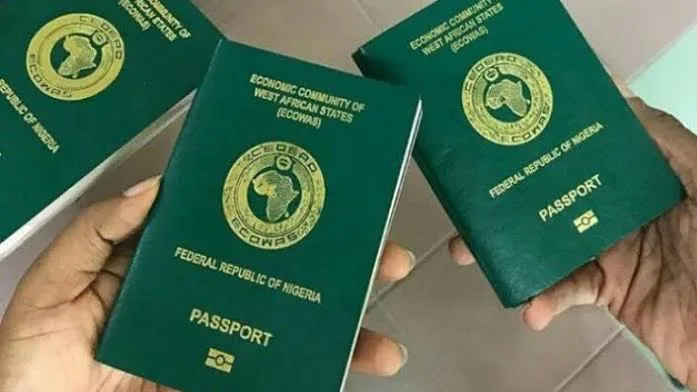
Nigeria Immigration Service doubles passport fees effective September 1, 2025
The Nigeria Immigration Service (NIS) has announced an increase in passport fees, raising the cost for the standard 32-page international passport to N100,000 and the 64-page booklet to N200,000. These changes will be implemented starting September 1, 2025. In a recent statement released by the NIS Public Relations Officer, AS Akinlabi, the federal agency explained that the adjustment is aimed at enhancing the quality and security of Nigerian passports issued domestically. This revision marks a 100% rise from the previous charges of N50,000 for the smaller passport and N100,000 for the larger version. Applications submitted by Nigerians living abroad will see no change in costs, remaining at $150 and $230 for the 32-page and 64-page documents, respectively. The fee hike applies exclusively to passport processing conducted within Nigeria. This update follows a similar price adjustment last year when fees were increased from N35,000 to N50,000 for the 32-page passport and from N70,000 to N100,000 for the 64-page size. The earlier revision was part of efforts launched by the Ministry of Interior under Minister Olubunmi Tunji-Ojo, who spearheaded ways to address a backlog of over 200,000 pending passport requests. The Nigerian passport has seen notable improvements recently, with technological upgrades including the rollout of home delivery services beginning mid-2024, designed to make obtaining passports more convenient by reducing the need for in-person visits to immigration offices. Additionally, Nigeria’s travel document improved its ranking globally, climbing to 88th place out of 199 countries in the Henley Passport Index 2025, the highest position in over a decade.

Stablecoins set to transform Nigerian business transactions within three years, Zabira projects
Digital asset exchange Zabira Technologies anticipates that stablecoins will become a central mechanism for business transactions in Nigeria over the next one to three years. This forecast was revealed during the company’s brand relaunch event held in Lagos, where emerging trends in the cryptocurrency space were discussed. Zabira’s Marketing & Communications lead, Ike Ekemah, emphasized that stablecoins are set to evolve into a mainstream financial resource as enterprises pursue faster, more affordable, and dependable cross-border payment solutions. The growing limitations caused by foreign exchange bottlenecks have prompted firms to increasingly explore cryptocurrency options. Stablecoins, in particular, allow these businesses to sidestep lengthy traditional banking delays and exorbitant fees. Ekemah noted, We expect a significant uptick in businesses, particularly within the import-export domain, allocating resources toward stablecoins since these digital currencies cut down turnaround times, ease transaction complexities, and lower human-related costs Already, various sectors such as freelancers, e-commerce, and logistics are making use of stablecoins for payment purposes. Platforms like Zabira facilitate the instant conversion of stablecoins into naira, allowing international clients to transact seamlessly without relying on the local currency. Although acceptance of direct crypto transactions by merchants remains limited, Nigerians are gradually integrating cryptocurrency into everyday commerce. Drawing parallels to the widespread adoption of mobile money transfers at grassroots levels, Ekemah predicts a future where cryptocurrency payments become standard in Nigeria. Across the continent, countries such as Rwanda, South Africa, Kenya, and Morocco are rapidly advancing their crypto ecosystems, particularly for payments. The relatively softer approach by Nigerian regulators also shows increasing acknowledgment of digital assets at home. Reflecting on the company’s evolution since its 2019 founding as a wallet solution, CEO Isaac John described Zabira’s transformation into a full-fledged digital payments and asset exchange platform. A recent report corroborates the momentum behind stablecoins, revealing Nigeria as Africa’s largest market with nearly $22 billion in stablecoin transactions recorded between July 2023 and June 2024. This surge stresses the vital role stablecoins are playing in facilitating cross-border trade, treasury management, and inflation hedging across the continent.