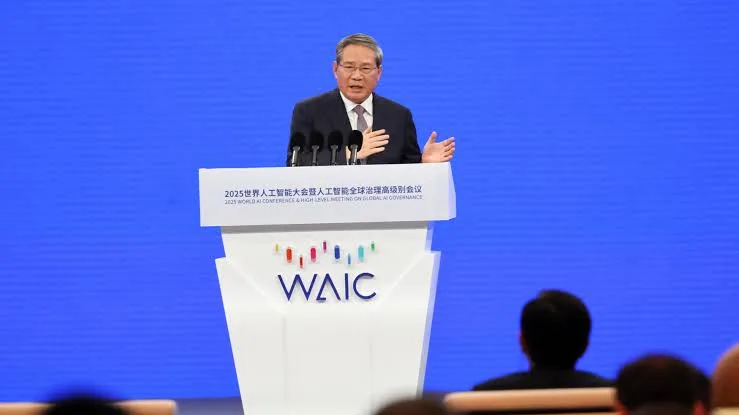
China is proposing a new international organization to oversee the use and sharing of artificial intelligence worldwide, aiming to rival the United States in the fast-moving tech arena. At the World Artificial Intelligence Conference in Shanghai on Saturday, Chinese Premier Li Qiang called for the creation of a global AI governance body. He said the new group would help countries work together, open access to AI technologies, and manage the risks that come with them. Li also stressed the need for fair participation, saying, “We advocate for open sharing of AI technologies, where every country and enterprise has equal rights to participate. China is open to sharing its experience, products, and platforms with others, particularly developing nations.” While Li didn’t mention the United States directly, he criticized efforts by “a few countries and companies” to control AI. This comes just days after the U.S. rolled out a plan to boost AI exports to its allies, strengthening its own advantage while restricting China’s access to advanced AI chips and tech over security concerns. Despite these U.S. curbs, China has kept up steady progress in AI, even as American regulators keep a close eye on its activities. At the conference, Vice Foreign Minister Ma Zhaoxu said China is considering making Shanghai the headquarters for the new global AI group. Representatives from more than 30 countries, including South Africa, Russia, Qatar, South Korea, and Germany, joined the talks. China’s Ministry of Foreign Affairs also rolled out a fresh “Action Plan for Global AI Governance.” The plan asks governments, companies, and research groups to join hands, encourage open-source cooperation, and make international data sharing easier. Premier Li pointed out there are still challenges, like shortages of computer chips and skilled workers. He urged countries to close the gap in rules and work towards a shared system for responsible AI development. The three-day Shanghai summit conveyed China’s ambitions not just to catch up with the U.S., but to shape how AI is rolled out and governed worldwide.

Canelo Alvarez wins big with N476 million bet on Usyk’s knockout at Wembley
Canelo Álvarez, the famous Mexican boxing champion and 1win global ambassador, has made headlines again, this time for a massive win outside the ring. On July 19, 2025, Alvarez placed a $500,000 bet with 1win on Ukrainian heavyweight Oleksandr Usyk to defeat Daniel Dubois at Wembley Stadium in London. After Usyk delivered a dominant performance and won by knockout in the fifth round, Canelo’s decision paid off. He walked away with a $630,000 prize, about N476 million. Canelo made his bet live on air, confidently saying, “Over the past five years, Usyk has beaten the best, including Joshua and Fury. Oleksandr has very strong stamina; he’s very technical and smart. His maturity in sports helps him mobilize under pressure. When I see someone with that kind of focus, I back them. That’s why I placed a big bet on his victory. Oleksandr, you do you.” The fight added another milestone to Usyk’s career. With this win, he kept his WBA, WBC, WBO, IBF, IBO, and The Ring belts, remaining unbeaten with a perfect 24–0 record and 15 knockouts so far. Dubois, meanwhile, struggled to keep up with Usyk’s speed and tactics, leading to an early finish. Alvarez’s victory on 1win comes just months after he became an official brand ambassador for the gaming platform. 1win, founded in 2016, operates across Asia, Africa, and Latin America, offering sports betting, casino games, and even cryptocurrency payment options. Other big names like cricket legend David Warner have also signed on as global ambassadors.
Jeff Bezos cashes in $5.7 billion from Amazon shares
Amazon founder and chairman Jeff Bezos has just wrapped up one of the biggest stock sales of 2025, pocketing nearly $5.7 billion as the e-commerce giant’s shares soar. Bezos began selling his Amazon stock after his wedding in Venice last month. He kicked things off by unloading $737million worth of shares. Now, based on new filings with the U.S. Securities and Exchange Commission, Bezos has completed the spree by selling about 4.2 million more shares, valued at $954 million, within just two days this week. In total, he has sold 25 million Amazon shares this year, all under a pre-arranged 10b5-1 trading plan. This plan is used by top company leaders to sell shares over time without breaking insider trading rules. Amazon’s stock has surged 38% since April’s slump, as investors get excited about the company’s big push into artificial intelligence. The company is set to report earnings next week, with a lot of attention expected on its progress in AI. Despite selling a large chunk, Bezos is still Amazon’s single biggest shareholder. He holds around 884million shares, over 8% of the company, keeping most of his $252.3 billion fortune locked into Amazon. He continues to rank as the world’s third-richest person, according to the Bloomberg Billionaires Index. This isn’t Bezos’s first big cash-out. In 2024, he sold 75 million shares for $13.6 billion, with much of that money backing his other projects like Blue Origin, his space company. He has also donated about $190million worth of Amazon shares to charity just this year. Other tech leaders have also sold shares recently, but none come close to Bezos’s big payday. Oracle’s CEO Safra Catz, for example, sold $2.5billion in shares so far this year, while Dell Technologies founder Michael Dell sold a $1.2billion stake. Earlier in May, Bezos announced he planned to gradually sell up to 25million Amazon shares by May 2026. This strategy helps him avoid shaking up the market while funding his ventures and philanthropy.
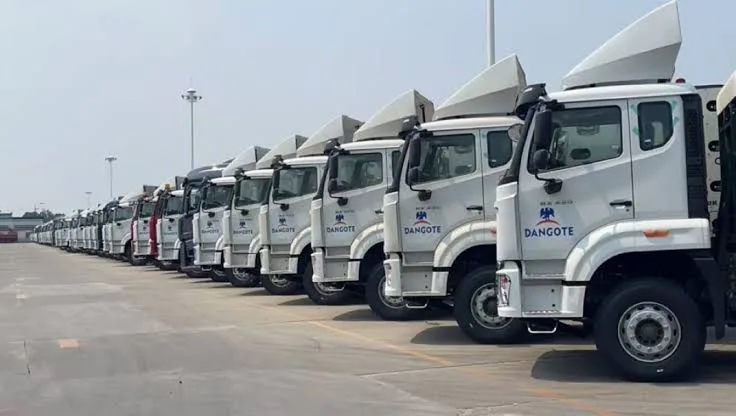
Dangote refinery welcomes 4,000 new CNG trucks in Lagos, set for August fuel rollout
Dangote Petroleum Refinery has taken delivery of 4,000 brand-new Compressed Natural Gas (CNG) trucks at the Lagos Port. The trucks arrived on Saturday, July 26, and were unveiled through a video posted on the Dangote Group’s official social media. The footage showed cranes unloading the trucks and hundreds of the new vehicles lined up, ready for action. According to Dangote Group, these CNG trucks will power a huge fuel distribution rollout set to start on August 15. The company said, “We are delighted to receive 4,000 brand-new CNG trucks as part of our bold distribution strategy to champion cleaner energy and more efficient transportation across Nigeria and beyond.” By mid-August, the refinery plans to start delivering petrol and diesel directly to filling stations, industrial sites, and major fuel users. This will cut out middlemen, solve logistics bottlenecks, and bring fuel directly to where it’s needed most. Earlier reports showed that Dangote’s new distribution model could help Nigeria save over N1.7trillion a year in energy costs. The trucks are expected to serve more than 42million small businesses, revive dormant filling stations, and create upwards of 15,000 jobs in the logistics industry. The CNG trucks will also help reduce emissions, supporting federal efforts to promote cleaner and greener energy. Stakeholders like the Independent Petroleum Marketers Association of Nigeria, energy experts, and government officials have praised the project, calling it a move that could stabilize fuel prices and modernize the sector. With the new trucks, Dangote Refinery aims to meet Nigeria’s daily need for 65million litres of refined petroleum products, including petrol, diesel, and aviation fuel. The new fuel delivery system will be up and running from August 15, offering cheaper fuel distribution, better distribution, and new job opportunities in months to come.
Eko electricity announces 24 days of planned power outage in Lagos
Eko Electricity Distribution Company (EKEDC) has announced a scheduled power outage affecting much of Lagos for about 24 days starting Monday, July 28, 2025. The outage is due to critical maintenance work on the Omotosho – Ikeja West 330kV power line by the Transmission Company of Nigeria (TCN). According to EKEDC’s public notice to customers, the work will take place daily from 8 a.m. to 5 p.m. until Thursday, August 21. During this period, residents and businesses across EKEDC’s network, which includes areas like Victoria Island, Lekki, Apapa, Surulere, and Lagos Island, should expect intermittent power cuts and load shedding. EKEDC explained the exercise is essential to ensure the long-term stability of the electricity grid but admitted the outages would cause some inconvenience. The company apologized and urged customers to bear with them as the work is carried out safely. Reactions online have been mixed but mostly concerned. Some Lagosians expressed frustration on social media, especially about tariff adjustments during the downtime, asking whether billing bands would be revised fairly since full electricity supply would be unavailable for nearly a month. Others compared the outage management positively against past experiences with NEPA’s unpredictable power cuts. Industry observers note that while maintenance is vital, frequent disruptions and lack of backup plans add to customers’ difficulties, especially in Lagos, where many depend on generators because of unreliable grid power. EKEDC has committed to keeping consumers updated through its official channels and urged them to stay informed. The hope is that the maintenance is underway and will improve the grid’s reliability once completed.
EFCC raises alarm as 12,000 Nigerian youths sell personal data for N5,000
The Economic and Financial Crimes Commission (EFCC) has revealed that around 12,000 young Nigerians are selling private information like Bank Verification Numbers (BVN) and National Identification Numbers (NIN) to fintech companies for as little as ₦5,000. According to a statement released by the EFCC on Friday, these youths, known as “Account Suppliers” or “KYC Group”, are paying victims between ₦1,500 and ₦2,000 to hand over their personal identification details. They then sell this data to some fintech organisations, which use it to open accounts for scams and other fraudulent activities. The Commission described this as a growing fraud trend, especially worrying because many of the youths are targeting unsuspecting Nigerians nationwide. The information they collect is used to set up accounts with fintech firms, which in turn become tools for investment scams and laundering money, often by moving it into cryptocurrency. The EFCC also stated a recent case where scammers ran a fake promo, promising a 50% discount on a popular airline’s tickets. Victims were told to pay ₦500 for charity and install an airline app. This gave fraudsters access to their bank details, allowing them to move victims’ money to accounts in a microfinance bank. Some arrests have been made, and the Commission is working to recover stolen money. The EFCC warned the public to avoid becoming “Account Donors”, stressing that selling such details is dangerous, illegal, and poses a threat to national security. “We are committed to protecting Nigeria’s financial system in the interest of every citizen,” the EFCC stated, urging everyone to stay alert and not fall for suspicious offers or promos.