
South Korea’s highest court has declared Samsung Electronics Chairman Lee Jae-yong not guilty of fraud, ending years of legal drama around a major 2015 business merger. Lee Jae-yong, who heads the world’s biggest smartphone maker, was found innocent on Friday after the Supreme Court dismissed all fraud claims. This verdict lets Lee focus on Samsung’s future without further courtroom distractions. Lee became Samsung’s top leader in 2014 after his father, Lee Kun-hee, suffered a stroke. In 2015, Lee pushed forward a big merger between Samsung C&T and Cheil Industries, two major Samsung units. Prosecutors said Lee and his team illegally boosted the value of Samsung Biologics, part of Cheil, by more than $2.8 billion. They argued this move gave Lee tighter control over Samsung C&T, strengthening his grip on the company at the expense of investors. But courts remained on Lee’s side. He was cleared of all 19 charges, including stock manipulation and accounting fraud, by two lower courts earlier this year. After a long appeal, the Supreme Court agreed there was no evidence of wrongdoing. “Today, the Supreme Court has clearly confirmed that the merger … and the accounting treatment of Samsung Biologics were lawful,” Lee’s legal team said. “We sincerely thank the court for its wise judgment following a thorough five-year trial process.” This isn’t Lee’s first run-in with the law. In 2017, he was jailed for bribery to secure his place at the top of Samsung after his father’s illness. He served 18 months before being released on parole in 2021, receiving a presidential pardon so he could help South Korea recover from COVID-19. The verdict comes when Samsung is facing big threats, from falling sales to rivals like SK Hynix, TSMC, and Apple. Lee admitted in court this year that things “are harder than ever,” but promised to push forward. .

Bolt launches Family Profile, letting Nigerians book and pay rides for up to 9 people
Bolt has rolled out a new Family Profile feature that allows users in Nigeria to book rides and pay for up to nine family members or friends from one account. This new option is designed to make ride-hailing easier for families and caregivers who want better control over spending and trip management. Users can add loved ones, inclusive of older relatives or anyone less familiar with apps, to a shared account, monitor trip activity live, and set monthly spending limits. The Family Profile simplifies the current process, which requires separate arrangements every time someone else needs a ride. Country Manager Osi Oguah said the feature reflects Bolt’s aim to fit real-life movement patterns. “It’s about control, visibility, and freedom in one feature. We’re excited to bring this to Nigerians,” he explained. Each member added must be over 18 and have their own Bolt account. While the main user oversees payments and trip notifications, individuals can still book rides independently. Booking rides for unaccompanied minors is not permitted under this feature, ensuring safety and compliance with Bolt’s rules. Bolt points out that 2-6% of rides were already booked for others on its platform, but the Family Profile makes this smoother and more secure. It is particularly helpful for parents, caregivers, or those supporting relatives who might not use smartphones regularly. Real-time trip alerts and live location sharing also offer peace of mind to account holders, who can quickly react if anything unusual happens during a ride. This launch ties into Bolt’s ongoing improvements to its app’s safety and usability, which include emergency assistance and trip verification codes. The Family Profile could encourage more Nigerians to adopt ride-hailing, especially among older adults who face barriers with tech and payments. Bolt’s new feature changes how Nigerian families manage their daily transportation, making it more practical and safer for everyone involved.
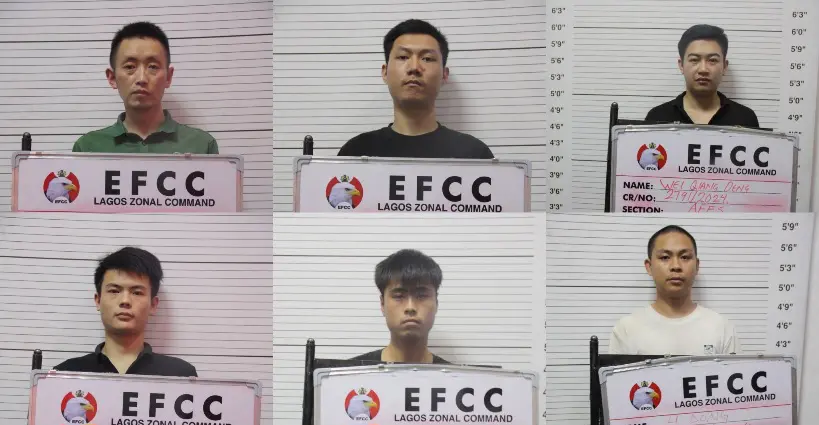
Nigeria deports 15 Chinese nationals convicted of cybercrime
Lagos Federal High Court recently sentenced 15 Chinese nationals to one year in prison for cybercrime and internet fraud offenses. After serving their terms and paying fines, they will be deported back to China within seven days. The Economic and Financial Crimes Commission (EFCC) arraigned the suspects on charges related to identity theft, online dating scams, and cyberterrorism. The court proceedings took place before two judges in Ikoyi, Lagos, and the convictions reflect Nigeria’s toughened legal stance following amendments to the Cybercrimes Act in 2024. The arrested Chinese nationals include Ling Yang, Xiao Hong Will, and Wang Zheng Ming, among others. They were linked to syndicates involved in large-scale cryptocurrency investment fraud and romance scams, uncovered during the EFCC’s ‘Eagle Flush Operation’ in Lagos in December 2024, which also implicated foreigners from the Philippines and many Nigerians. Cybercrime remains a serious challenge in Nigeria. In 2022 alone, more than 3,455 convictions were recorded. According to a 2024 World Cybercrime Index report, Nigeria ranks fifth globally as a source of cybercrime. The country loses approximately $500 million annually to cybercrime activities like phishing and identity theft. Over 25 million Nigerians have been victims, suffering estimated losses of over N250 billion yearly. Experts say socio-economic issues such as unemployment and poverty fuel the rise of cybercrime. With limited job opportunities, many young people are tempted by the quick money offered by online fraud, using easy access to hacking tools and internet anonymity. The recent convictions and ongoing government crackdowns show intensified efforts to fight cybercrime, protect Nigeria’s economy, and uphold the country’s reputation internationally. This strike against cybercriminals sends a clear message that Nigeria will rigorously enforce laws against internet fraud and work to safeguard its digital space.

Tanker drivers, Dangote, and Lagos seal ₦10,000 e-call-up deal, preventing fuel shortage
Fuel supply in Lagos and beyond will remain steady after the Lagos State Government, leading transport unions, and Dangote Industries reached a new agreement for truck operations along the Lekki-Epe Corridor. A potential crisis was averted this week after all sides agreed on a ₦10,000 fee for trucks to access the corridor’s e-call-up system. The deal means scheduled enforcement of the new system will begin on August 1, 2025. Truck and tanker operators will now pay a ₦10,000 enforcement fee, lower than the earlier proposed ₦12,500.Full enforcement of the new system begins August 1, 2025. The agreement was signed off by the Lagos State Commissioner for Transportation, the presidents of the main transport and petroleum unions (NUPENG, NARTO, and IPMAN), and Dangote Industries. The e-call-up system uses technology to schedule truck entry, reducing the notorious gridlock and safety issues in the Lekki-Epe axis, home to the Dangote Refinery and Lekki Deep Sea Port. No revenue from the fee will go to the Lagos State Government; all funds are meant for parking, logistics, and enforcement infrastructure. For months, the fate of Lagos fuel supply hung in the balance. Tanker drivers threatened to boycott loading after the former ₦12,500 e-call-up fee was introduced, saying it was too expensive and unclear. With the Lekki corridor serving as a key channel for fuel distribution from Dangote’s new refinery, any disruption could have caused a major fuel shortage. Protests and traffic jams around ports drew concern from residents and businesses alike. Negotiations followed. Unions pushed back, demanding fairness and proper facilities for their members. Now, the agreed ₦10,000 fee will support a new tech-driven call-up system for truck movements. The system stops trucks from jamming city streets or showing up without a scheduled time, ending the chaos that once crippled Apapa. Only trucks with approved business and verified documents get a digital “call” to enter the corridor. Seven supported truck parks with security and driver lodges are in place to reduce road-side parking. Seun Osiyemi, Lagos State Commissioner for Transportation, said the deal is about balance and “making Lagos a smarter, safer city.” Residents in the Lekki area, who have long complained about truck traffic and accidents, have welcomed the move for its expected boost to road safety and local business. A union rep added: “We don’t want trouble. Trucks just need instructions and a fair deal. If the system works, everybody benefits.” All truck operators must register on the new e-call-up platform before the August 1 start. The Ministry of Transportation will run awareness campaigns for drivers and union members to explain how the system works and why it matters. Only approved trucks on a special entry list will be allowed into the Lekki Free Zone. This high-stakes deal is expected to keep fuel flowing across Nigeria and prevent the repeat of the Apapa gridlock nightmare, supporting the rapidly growing economy in Lagos and beyond
Five Nigerian fintechs make CNBC’s list of world’s top startups in 2025
Five Nigerian fintech companies have been named among the world’s top 300 fintechs for 2025 by CNBC.PalmPay, Moniepoint, OPay, Piggyvest, and Interswitch earn global recognition for growth and innovation. CNBC, in partnership with Statista, released its latest list of the world’s top fintech firms for 2025. PalmPay, Moniepoint, OPay, Piggyvest, and Interswitch, all Nigerian brands, secured spots based on their strong business growth, revenue, and company size. PalmPay, Moniepoint, OPay, and Interswitch feature under the payments category, which covers companies that help people and businesses send and receive money with ease. Piggyvest is the standout in wealth technology, recognized for helping Nigerians manage savings and investments online. According to CNBC, the final 300 were selected through detailed research and editorial review by Statista and the CNBC editorial team. The focus was on companies showing solid growth, high revenue, and notable impact in financial services. Nigeria, despite having more than 200 fintech startups, had only four names on the list. Notably, Moniepoint was officially listed as a UK company due to its incorporation in the United Kingdom. The United States dominated the rankings, with 126 companies making the list. The UK followed with 38, and Singapore ranked third with 16 top fintechs. Speaking after the announcement, Sofia Zab, PalmPay’s Founding Chief Marketing Officer, said, “To be recognized as one of the world’s top fintech companies by CNBC and Statista is a powerful affirmation of our mission to build a more inclusive financial system. As we scale PalmPay to more emerging markets, our focus remains on closing financial access gaps for everyday consumers and businesses.” PalmPay, which now handles 15 million daily transactions and has more than 35 million registered customers, says the recognition reflects its ongoing drive to expand in Africa and beyond. Moniepoint’s Group CEO, Tosin Eniolorunda, described the company’s selection as, “An honour and a testament to the hard work and success of the entire team while highlighting our emergence as a key player shaping the future of fintech worldwide.” CNBC’s annual list launched in 2023 to help spotlight leading players in financial technology worldwide. For Nigerian fintechs, making the cut means global attention and, potentially, more trust from investors and users at home and abroad. The recognition shows how Nigerian startups are making real strides on the global stage, even as competition remains fierce.

Meta battles $32.8 million data privacy fine as NDPC seeks dismissal of lawsuit
The Nigeria Data Protection Commission (NDPC) has told a Federal High Court in Abuja to throw out Meta’s challenge to its $32.8 million data privacy fine, insisting the tech giant broke the rules. Federal regulators and Meta Platforms Inc., the company behind Facebook and Instagram, are in a legal fight over one of the largest data privacy fines in Nigeria’s history. NDPC fined Meta $32.8 million earlier this year and demanded the company follow eight corrective orders for allegedly mishandling the personal data of Nigerian users. The trouble started after a civil society group, Personal Data Protection Awareness Initiative (PDPAI), petitioned NDPC. PDPAI accused Meta of running targeted ads on Facebook and Instagram without clear permission from local users. NDPC’s investigation dug up several serious issues, like using sensitive personal details, including information about minors, changing journalists’ profiles, and circulating explicit childbirth videos without consent. The Commission also slammed Meta for not submitting a required compliance audit from 2022, breaking rules on moving user data abroad, and even collecting details on people who don’t use its platforms. Meta disagrees with both the findings and how the case got to this point. The company took NDPC to court, saying they were not given a fair hearing or enough warning to respond before the ruling. Their legal team is arguing that the orders go against the Nigerian Constitution’s guarantee of fair process. NDPC, on its part, asked the court to end Meta’s case right away. Their lawyer, Adeola Adedipe, SAN, said Meta’s court filings don’t add up and break the court’s rules for such lawsuits. He claimed Meta is trying to change what it is asking for under the cover of an amendment, which isn’t allowed. Meta’s lawyers responded in April, asking for permission to tidy up and match their documents. They say this correction would clear things up but would not harm NDPC’s position. Justice James Omotosho allowed Meta to start its judicial review but refused to pause NDPC’s enforcement orders. He set a faster timetable for hearings and adjourned to October 3, when he will give a combined ruling on the main points. NDPC said Meta’s actions were a serious threat to the data rights of Nigerians, and the fine is part of wider efforts to protect users since the Nigeria Data Protection Act became law in June 2023. “Meta’s suit is grossly incompetent,” NDPC argued in court. Meta’s team insists they deserve a fair hearing: “We were denied due process and an opportunity to respond before these orders were made,” the company’s lead counsel said. On October 3, 2025, the court will decide if Meta’s case moves forward or if NDPC’s fine stands. NDPC has already shown it means business, it recently fined Multichoice Nigeria over similar privacy breaches.