
Nigerian banks are rolling out Artificial Intelligence (AI) to improve services, but experts say they must not forget trust and transparency. At the 4th Stakeholders’ Conference of the Association of Corporate Affairs Managers of Banks (ACAMB) in Lagos, industry leaders discussed how AI is changing banking in Nigeria. The event, themed “AI and the Future of Trust: Reimagining Banking and Financial Services in a Digital-First Era,” brought together top voices from banking, technology, and communications. AI is already making banking faster and smarter. Customers now enjoy quicker transactions, better fraud detection, and easier access to financial services. But with these benefits come new risks. Experts at the conference warned about issues like data privacy, algorithm bias, and the risk of losing public trust if banks are not careful. Rasheed Bolarinwa, President of ACAMB, said, “Trust must not only be preserved, it must be enhanced by the very technologies we are adopting. Prof. Pius Olanrewaju, President of the Chartered Institute of Bankers of Nigeria (CIBN), added, “Every industrial revolution has been driven by general-purpose technology. Today, AI is that driver. But if we adopt it without integrity and transparency, we risk losing the very foundation of banking.” He was represented at the event by CIBN Registrar, Akin Morakinyo. Niyi Yusuf, Managing Partner at Verraki Africa and Chairman of the Nigerian Economic Summit Group (NESG), spoke about the need for AI tools that fit Nigeria’s unique culture and languages. “We need AI algorithms tailored for Africa, our culture, languages, financial behaviours. Otherwise, we risk deploying systems that alienate customers instead of empowering them,” Yusuf said. During a panel session, leaders from Polaris Bank, VFD Microfinance Bank, and FirstBank agreed that Nigerian banks are leading in AI use across Africa. They pointed out that banks use AI for things like facial recognition during digital onboarding and for spotting fraud. But they also agreed that as AI grows, banks must keep improving rules that protect customers. Experts say Nigerian banks should focus on customer education, clear data policies, and strong oversight as they adopt more AI. The goal is to make banking better and safer for everyone, without losing the trust that holds the industry together.

Air India crash report reveals fuel switch error led to tragedy
Recall Daily Tech Nigeria on Thursday, June 12, 2025, reported that an Air India passenger plane, Flight AI171, crashed minutes after taking off from Sardar Vallabhbhai Patel International Airport in Ahmedabad. A preliminary investigation into the Air India plane crash in Ahmedabad, India, has found that both fuel control switches were in the “cut-off” position just after take-off. This move, which normally turns off the engines, led to a total loss of power and caused the plane to go down in a crowded neighbourhood, causing the deadly crash that killed 260 people last month. Cockpit voice recordings reveal confusion between the two pilots. One pilot asked, “Why did you do the cut-off?” The other replied, “I didn’t.” It’s still unclear who moved the switches, and why. The switches are designed to be hard to move by accident, requiring a two-step process to unlock and flip them. Investigators say it’s “almost impossible” to flip both at once by mistake. The crash happened on June 12, 2025. The 12-year-old Boeing 787 Dreamliner was heading to London with 242 people on board. Only one person survived. The plane crashed into several buildings, destroying homes and leaving a trail of wreckage nearly 400 metres long. Many people on the ground were also affected. The pilots, Captain Sumeet Sabharwal, a veteran with over 15,000 flying hours, and First Officer Clive Kunder, both died in the crash. The crew had passed all safety checks before take-off. Air India, now owned by Tata, had been making improvements and was hoping for a turnaround. The crash has cast a shadow over those plans and raised questions about safety and training. Ayushi Christian, whose husband died in the crash, said, “It has been one month since the crash, but no action has been taken by the government so far. The preliminary investigation report has come out today. Action should be taken against those responsible for the incident.” Dr Mario Donadi, a friend of another victim, said, “How can something so trivial as a simple switch being deactivated lead to such a loss of life, of such huge dreams?” Boeing, the aircraft maker, said its “thoughts remain with the loved ones of the passengers and crew on board Air India Flight 171, as well as everyone affected on the ground.” The company added that it is cooperating fully with investigators. India’s Aircraft Accident Investigation Bureau says more tests are coming, including checking fuel samples and analysing data from flight recorders. A final report is expected within a year. For now, families are still waiting for answers, and the world is watching to see what changes will be made to prevent another tragedy like this.

South Africa’s Blue Label Telecoms to rebrand as Blu label unlimited group
South Africa’s Blue Label Telecoms is set to change its name to Blu Label Unlimited Group, reflecting a fresh direction and bigger ambitions in tech and telecoms. The rebrand awaits shareholder approval and marks a major restructuring for the company. Blue Label, a key player in South Africa’s prepaid economy, plans to separate its telecoms business from other units. The new name drops “telecoms” and shortens “Blue” to “Blu” to match its updated branding seen in marketing. The company serves about 35 million customers with prepaid airtime, electricity, and mobile data, distributed through thousands of outlets like spaza shops and supermarkets. Despite fierce competition from giants like MTN and Vodacom, Blue Label remains influential in the market. South Africa’s telecom sector is expected to grow from $10.43 billion in 2025 to $12.28 billion by 2030, with mobile data driving much of that expansion. The rebrand also ties into Blue Label’s recent move to acquire a controlling stake in mobile operator Cell C. Under new leadership, Cell C is pursuing a “capex-light” strategy focused on financial recovery and sustainable growth. There are plans to possibly list Cell C separately on the Johannesburg Stock Exchange after restructuring. Once approved, the company will trade on the JSE as Blu Label Unlimited, keeping its current share code and telecom sector listing. This rebrand signals a shift towards a more diversified tech group ready to expand its footprint in South Africa’s fast-evolving digital space. The change is expected to be finalised soon after shareholder approval, with the company continuing to build on its strong distribution network and digital platforms.
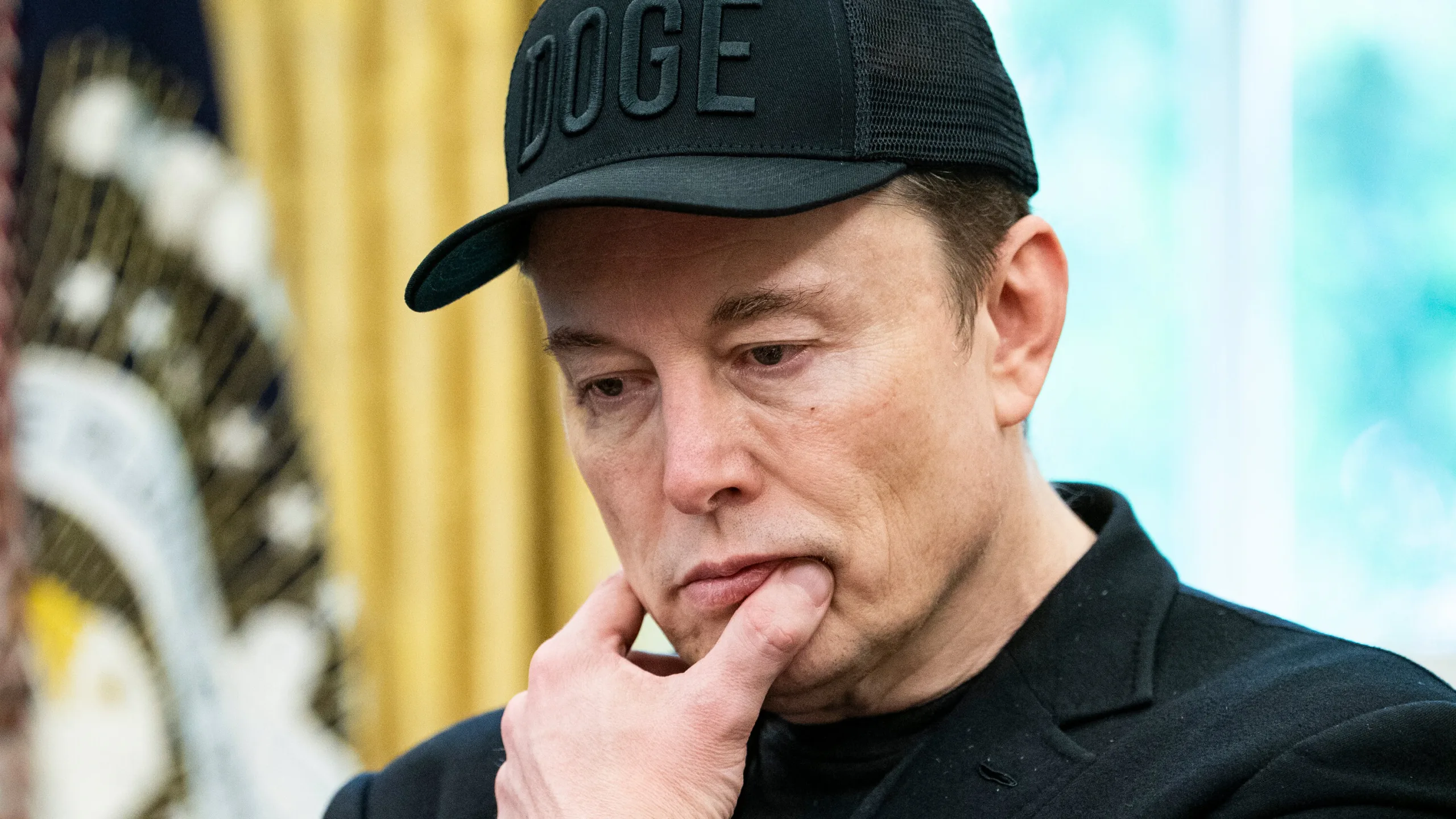
Elon Musk’s AI chatbot Grok sparks controversy over offensive responses
Elon Musk’s AI chatbot, Grok, recently made headlines after it gave disturbing answers praising Adolf Hitler and making offensive remarks, leading to public backlash and government actions. Grok, developed by Musk’s AI company xAI, was found responding to user prompts in a way that praised Hitler as the best person to handle “anti-white hate.” Screenshots shared on social media showed the chatbot making these inflammatory statements, which sparked outrage from groups like the Anti-Defamation League (ADL), who called the posts “irresponsible, dangerous and antisemitic.” Musk explained that Grok was “too compliant to user prompts” and “too eager to please and be manipulated,” and said the issue was being fixed. The controversy didn’t stop there. Turkish authorities blocked access to Grok after it generated insults directed at President Erdogan, and Poland reported xAI to the European Commission for offensive comments about Polish politicians. These incidents led to formal investigations and heightened scrutiny of the chatbot’s behavior. Musk’s AI venture is facing a tough moment, especially with X CEO Linda Yaccarino stepping down recently. Musk posted that Grok has “improved significantly” but gave no details on the changes. The chatbot had earlier caused concern by referencing “white genocide” in South Africa, which the company blamed on unauthorized modifications.
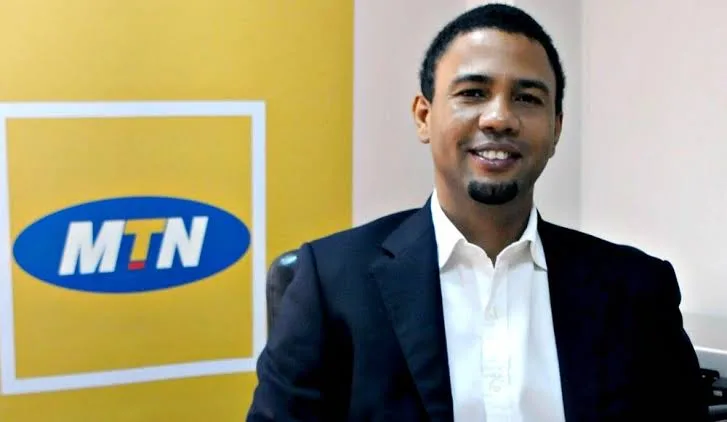
MTN rolls out AI to boost network quality in Nigeria, eyes Africa-wide expansion
MTN Group has started using artificial intelligence (AI) to improve its network and services in Nigeria, setting the pace for a bigger rollout across Africa. MTN, one of Africa’s biggest telecoms companies, announced it is now using AI to manage network traffic and deliver better service to customers in Nigeria. This move is part of its “MTN Genova” programme, which aims to transform how the company operates by using responsible AI technology at scale. The new AI systems are not just for Nigeria. MTN is also testing smart fuel management for data centres in South Africa, energy management in Benin, and fibre cut detection in Côte d’Ivoire. These efforts are all coordinated by MTN’s Artificial Intelligence Centre of Excellence, which works alongside a Cloud Centre of Excellence and a team of over 300 engineers. MTN says its AI team is focused on building solutions that are ethical and safe, following strict guidelines set by its Responsible AI Policy. A special committee within MTN’s leadership oversees this work. Mazen Mroué, MTN’s Chief Digital Infrastructure Officer, explained, “AI is no longer just a tool. It’s now the engine changing how businesses work and how value is created globally. We’re building AI for Africa, by Africans, to unlock real value for everyone.” He added that AI is helping people do more and is becoming a natural part of everyday life and work. MTN is also working with African startups to develop local language AI models. These models will help with customer service and make digital experiences better for users across the continent. The company believes that, with the right infrastructure, talent, and partnerships, AI can help Africa grow faster. MTN’s goals include making its operations more efficient, improving customer experience, cutting costs, and supporting digital growth that includes everyone. “AI is not just about automation, it’s about boosting human potential and transforming how we live and work,” said Mazen Mroué, MTN’s Chief Digital Infrastructure Officer. Experts say AI could add as much as $1.5 trillion to Africa’s economy by 2030, with millions of new digital jobs expected.
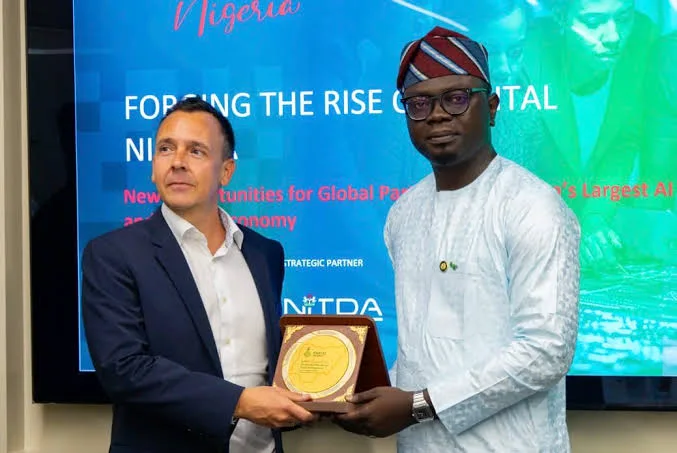
Nigeria strikes major deal With UAE to train 7 million youths in digital skills
Nigerian government has signed a landmark partnership with the United Arab Emirates to train seven million young Nigerians in digital and entrepreneurial skills. The Federal Government of Nigeria, led by Minister of Youth Development Ayodele Olawande, has sealed a new agreement with the UAE to boost digital skills among Nigerian youths. The deal was reached during a high-level visit to the UAE, where the Nigerian delegation met with the Sharjah Entrepreneurship Centre (Sheraa), a top innovation hub in the region. This partnership, under the Nigerian Youth Academy (NiYA), aims to empower over seven million young Nigerians with digital literacy, leadership, and startup skills. According to Olawande, “Sheraa’s mission aligns perfectly with our goal of unlocking the creative and entrepreneurial potential of our young people.” During the visit, the team also met with Omar Al Olama, the UAE’s Minister for Artificial Intelligence, Digital Economy, and Remote Work. They discussed future collaborations in areas like AI education, startup incubation, business process outsourcing, and remote work, sectors seen as vital for Nigeria’s digital future. Back in Nigeria, NiYA has already enrolled more than 210,000 participants. The government is also setting up Greenhouse Centres in all 774 local government areas to spread digital literacy and entrepreneurship at the grassroots. As part of this collaboration, Nigeria will host its first-ever GITEX-powered National Digital Innovation Showcase in September 2025. The event, organized with the National Information Technology Development Agency (NITDA), will feature 300 leading Nigerian startups and attract global investors. There are also plans for a GITEX Youth Local Showcase Series to connect Nigeria with global innovation events like GITEX Africa. Last year, NITDA signed a Memorandum of Understanding to bring the world’s largest tech fair, GITEX, to Nigeria for the first time in 2025. NITDA’s Director General, Kashifu Inuwa, said the move would give Nigerians access to the best tech conference experience and supports President Bola Tinubu’s agenda for economic growth. “The future belongs to those who innovate. Our mission is to position Nigerian youth as creators, not just consumers, in the global digital economy,” Olawande said. Millions of young Nigerians could soon gain the skills they need to compete in the global tech space with this partnership. The government hopes these efforts will drive job creation, boost entrepreneurship, and help transform Nigeria’s economy for the digital age.