
The Nigerian Communications Commission (NCC) has approved a three-year national roaming agreement allowing 9Mobile subscribers to use MTN’s network across Nigeria. This new deal means 9Mobile customers can now access MTN’s extensive network in areas where 9Mobile’s coverage is weak or unavailable. It offers a cost-effective way for 9Mobile to expand its reach without building new infrastructure. In return, MTN gains access to 9Mobile’s underused spectrum in key frequency bands, which can help improve MTN’s network capacity. The agreement is seen as a major step toward better collaboration in Nigeria’s telecom sector, which has long discussed infrastructure sharing but rarely implemented it at this scale. MTN Nigeria’s CEO, Karl Toriola, said the deal supports the NCC’s vision of a fully connected Nigeria and shows what can be achieved through partnership between private and public sectors. 9Mobile’s market share has dropped sharply in recent years, from 6.6% in 2020 to just 1.72% in April 2025, due largely to poor service quality and customer loss. This roaming deal could help 9Mobile win back subscribers by improving network reliability. The NCC has encouraged telecom companies to share infrastructure to reduce costs and expand mobile access nationwide. This agreement follows a successful pilot roaming trial between MTN and 9Mobile in Ondo State in 2020, which tested the impact on service delivery. Karl Toriola, MTN Nigeria CEO, said:“This agreement represents a significant step in our commitment to driving industry collaboration, improving customer experience, and supporting the NCC’s vision of a fully connected Nigeria.” “Now that 9Mobile will have access to MTN’s national footprint, it’s all about how well they can package and market their services.” This national roaming deal could reshape Nigeria’s telecom landscape by making services more reliable and affordable, especially for 9Mobile users. It also sets a model for smaller operators to survive and thrive in a market dominated by giants like MTN and Airtel.

Cloudflare’s Pay per Crawl marketplace lets websites charge AI bots, backed by big media names
Cloudflare has launched Pay per Crawl, a new marketplace that lets website owners charge AI bots for scraping their content. This move gives publishers control over AI crawlers and opens a fresh revenue stream as AI companies increasingly rely on web data. The platform is currently in private beta and allows site owners to set micropayments for each AI crawl, block bots, or allow free access. This is a response to the surge in AI bots scraping websites without permission, causing high server costs and unlicensed content use. Cloudflare protects about 20% of the internet and has been rolling out tools to help publishers manage AI crawlers. According to reports, several major publishers have already signed on or expressed support for this initiative, including Gannett, Time, BuzzFeed, The Atlantic, The Associated Press, and Stack Overflow. These big names are backing Cloudflare’s push to block AI crawlers by default and promote a permission-based approach to content access. Cloudflare CEO Matthew Prince said the goal is to put power back in the hands of creators while still allowing AI innovation. He envisions a future where AI agents could even be given budgets to buy access to the best content automatically, creating a fair marketplace between AI firms and publishers. For Nigerian content creators and digital businesses, this development could help protect local content and create new income opportunities as AI scraping grows worldwide. Cloudflare’s Pay per Crawl requires both publishers and AI companies to have Cloudflare accounts to set and negotiate crawl prices. The company acts as the intermediary, charging AI firms and paying publishers. The platform currently does not use cryptocurrencies or stablecoins. This launch comes at a critical time as many publishers face declining traffic due to AI chatbots providing direct answers instead of sending users to original sites. Cloudflare’s marketplace could redefine how content is shared and monetized in the AI era.

House Committee questions N24 billion proposal for Rivers State CCTV project
The House of Representatives Ad-hoc Committee overseeing Rivers State has challenged the state government’s plan to allocate N24 billion for Closed Circuit Television (CCTV) in its 2025 budget. The committee chairman, Julius Ihonbvere, on Monday gave the Rivers State Sole Administrator, Vice Admiral Ibok-Eke Ibas (retd), 48 hours to provide a detailed breakdown of the major items in the 2025 Appropriation Bill. He also demanded the submission of the 2025-2027 Medium Term Expenditure Framework (MTEF), which is constitutionally required before the budget presentation. This move shows the committee’s insistence on transparency and accountability in the use of public funds, especially for large security-related expenditures. The MTEF is crucial as it outlines the government’s medium-term fiscal strategy and ensures that budget proposals align with broader economic goals. The Rivers State government has yet to respond publicly to the ultimatum. Observers say the outcome will affect how security infrastructure projects are funded and monitored in the state. The next steps will depend on the Rivers State administration’s response within the given timeframe and whether the committee will approve or further question the budget proposal.

CAC launches AI-powered business registration portal, promises certificates in 30 minutes
The Corporate Affairs Commission (CAC) has introduced a new AI-driven portal that will make registering a business in Nigeria faster and easier, with certificates delivered in under 30 minutes. At the CAC’s 2025 Stakeholders Forum in Port Harcourt, Registrar-General Hussaini Ishaq Magaji, SAN, announced the launch of the AI-powered registration system. This new portal is designed to replace the old Company Registration Portal (CRP) with smarter technology that speeds up name approvals and registration processes. With the AI system, business owners can reserve company names instantly. If a preferred name is taken, the system suggests alternatives automatically. Registration now only requires the National Identification Number (NIN) of a director or proprietor. Once the NIN is verified, the system generates and sends the certificate of registration directly to the applicant’s email, usually within 30 minutes. Magaji explained that while some delays may happen due to external checks with the National Identity Management Commission (NIMC), the portal uses AI-powered photo ID matching to reduce these hold-ups. “Our goal is to make business registration fast, smart, and reliable,” he said. The CAC also revealed plans to add Two-Factor Authentication and OTP verification to secure company records. A mobile app is expected by the end of 2025, allowing users to manage registrations and track applications on their phones. However, starting August 1, 2025, the CAC will increase some service fees to support these technological upgrades and maintain quality service. Industry leaders at the forum, including representatives from the Nigerian Bar Association and Nigerian Association of Small and Medium Enterprises, praised the CAC’s efforts to modernize business registration. This AI-powered portal is a major step toward simplifying business startup in Nigeria, saving entrepreneurs time and effort. The CAC’s innovation could boost Nigeria’s business environment and encourage more formal entrepreneurship.
Elon Musk’s xAI secures $10 billion to boost AI innovation
Elon Musk’s artificial intelligence company, xAI, has raised $10 billion in a mix of debt and equity financing to accelerate its AI projects and expand infrastructure. The funding includes $5 billion in secured notes and term loans arranged by Morgan Stanley, and another $5 billion from strategic equity investors. The debt portion was oversubscribed, showing strong confidence from global investors. xAI plans to use the new capital to build one of the world’s largest data centres and enhance its Grok AI chatbot. Grok is designed to compete with AI platforms from OpenAI, Google, and Anthropic, with a unique edge through integration with Musk’s social media platform, X (formerly Twitter). Morgan Stanley said this financing structure lowers xAI’s cost of capital and gives it flexibility to scale operations and infrastructure. The firm called the deal a “vote of confidence” in xAI’s mission to advance scientific discovery and humanity’s understanding of the universe. Last year, xAI raised $6 billion, valuing the company at about $24 billion. This latest $10 billion round signals bigger ambitions as competition in AI heats up. OpenAI, for example, raised $40 billion earlier this year to push AI research and infrastructure for its 500 million weekly users. With this funding, xAI is set to deepen its role in the AI race, aiming to deliver powerful, real-time AI tools that could reshape how people interact with technology. This development matters because AI is rapidly becoming central to global tech innovation, and Nigeria’s growing tech ecosystem can benefit from breakthroughs and investments in AI infrastructure worldwide.
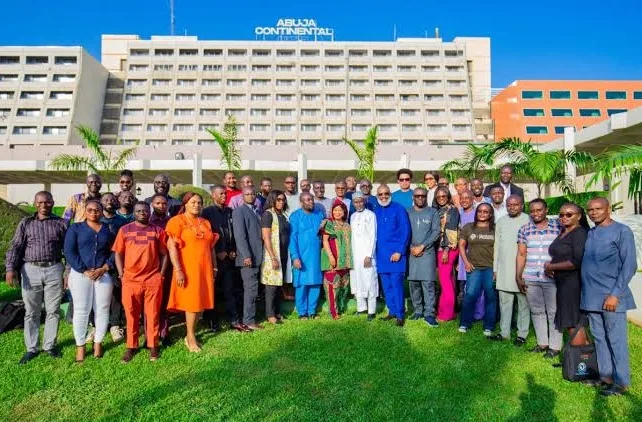
Seplat energy trains 50 Nigerian journalists on media entrepreneurship in Lagos
Seplat Energy Plc recently held a two-day training programme in Lagos, equipping 50 editors and correspondents with essential skills in media entrepreneurship. The training, held on June 25-26, 2025, targeted journalists covering the Capital Market, Judiciary, Finance, and Business sectors from print, online, and electronic media. Organised in partnership with ELOH Consulting Limited, the programme aimed to build participants’ business acumen and leadership capabilities to thrive as entrepreneurs and future business leaders. Stanley Opara, Seplat’s Manager of Corporate Communications, said the initiative seeks to nurture a new generation of media professionals ready to create sustainable businesses and take on larger roles in Nigeria’s evolving business landscape. The event also included sessions with officials from Nigeria’s anti-corruption and security agencies to deepen journalists’ understanding of governance and operational frameworks. The training featured notable facilitators such as Professor Pat Utomi, who discussed the entrepreneurial potential of professionals like journalists, and Dr. Solomon Avbioroko, who shared insights on business management. Leadership perspectives came from Mr. Olu Onakoya, former Mobil Nigeria MD. Other sessions covered media technology and business model development. Key speakers from anti-corruption agencies included the EFCC Chairman Ola Olukoyede, ICPC Chairman Dr. Musa Adamu Aliyu (SAN), and DSS Director-General Oluwatosin Ajayi. They engaged participants on topics like fighting insecurity and corruption, intelligence gathering, and legal frameworks. Participants praised Seplat Energy for organising a relevant and impactful programme that equips media professionals to navigate the changing media landscape and explore entrepreneurial opportunities.Such efforts are vital as the media sector adapts to new business realities and governance challenges.