Mellon and Standard Bank Group have launched global depositary notes (GDNs) backed by Nigerian government debt, all denominated in naira. This new program is designed to make it much easier for international investors to tap into Nigeria’s high-yielding local bonds and Treasury bills, some of the most attractive in emerging markets. Nigeria’s sovereign debt is known for its strong returns. Just this month, the country’s 182-day Treasury bills were sold at a yield of 18.5%, while its 2033 benchmark bond was trading at 19.33%. These elevated yields have long attracted attention, but access for foreign investors has been limited, until now. With the new GDNs, investors around the world can buy into Nigerian debt through major international clearing systems like Euroclear and Clearstream. This means broader participation from global institutions and a smoother, safer way to settle transactions. Chris Kearns, BNY Mellon’s global head of depositary receipts, says the initiative “unlocks investment potential across Africa and contributes to the development of capital markets on the continent.” Standard Bank’s Sola Adegbesan adds that the program offers “a simplified entry point into Nigeria’s debt market,” making the country’s dynamic economy more accessible than ever. For investors seeking high returns and new opportunities, Nigeria’s doors just opened a little wider.
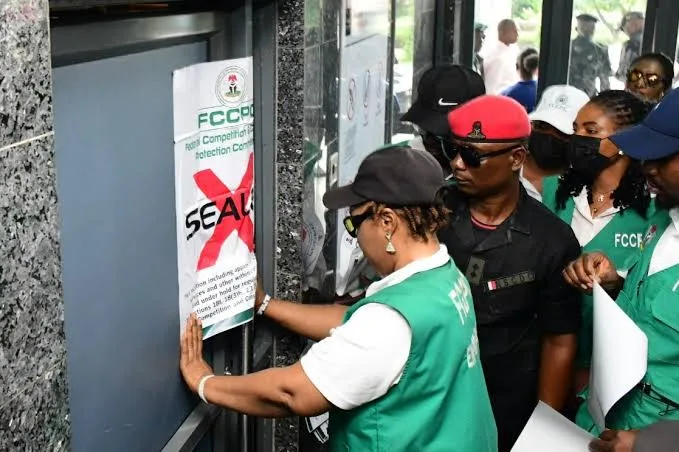
FCCPC shuts down Abuja visa centre over alleged obstruction, consumer complaint
The Federal Competition and Consumer Protection Commission (FCCPC) has sealed the TLSContact Visa Application Centre in Abuja after allegations of obstructing an official investigation into a consumer complaint. The enforcement action, which took place on June 19, 2025, was carried out with police and security operatives present. According to FCCPC officials, the incident began when a consumer reported not receiving visa processing services they had paid for. The Commission said it sent a letter to TLSContact on March 25, 2025, seeking an amicable resolution. However, FCCPC alleges that TLSContact staff refused to accept the complaint and assaulted officers attempting to deliver it. The situation escalated when the company’s staff reportedly assaulted both FCCPC and police officers during a subsequent visit. In response, the FCCPC issued a formal summons to TLSContact’s management, requiring them to appear before the Commission and provide documents related to the investigation. Under Nigerian law, specifically Section 33 of the Federal Competition and Consumer Protection Act, failure to comply with such a summons or obstructing an investigation can result in up to three years in prison or a fine of up to ₦20 million. As of now, the allegations against TLSContact remain unproven until a court or regulatory authority makes a formal determination. The company has not issued a public statement on the matter.
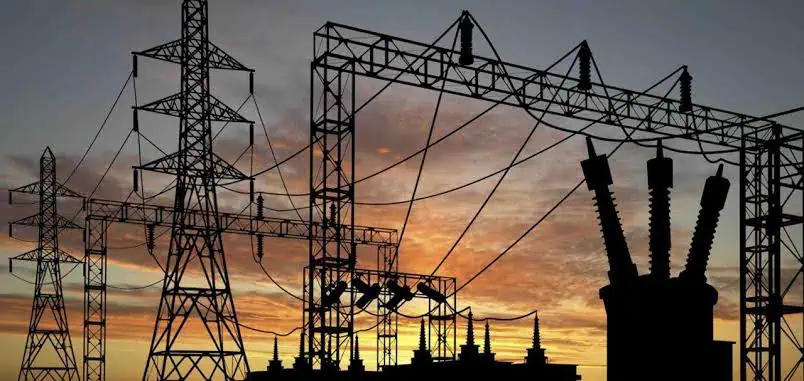
Nigeria’s power grid faces new threat as tower vandalism surges
Nigeria’s power sector is facing a serious challenge as the Transmission Company of Nigeria (TCN) reports a sharp increase in vandalism of its transmission towers in the first half of 2025. According to TCN officials, 42 incidents of vandalism were recorded between January and June, affecting 178 transmission towers across the country. The General Manager of Transmission Service at TCN, Ali Sharifa, revealed these figures during a recent workshop in Keffi. He described 2024 and 2025 as the most difficult years for the company, citing repeated attacks by non-state actors targeting critical power infrastructure. “These acts of sabotage are driven by political and economic motives,” Sharifa said. The consequences have been severe: power supply disruptions, increased repair costs, and delays in expanding the national grid. In 2024 alone, 86 towers were vandalized, with 26 collapsing completely and plunging affected states into darkness. Beyond vandalism, natural disasters have also taken a toll. In May, six towers along the Kainji-Birnin Kebbi line collapsed due to windstorms and heavy rain. TCN is responding by working with local communities and the Office of the National Security Adviser to protect vulnerable lines. The company is also investing in new technology to monitor and deter attacks, and running public awareness campaigns to encourage Nigerians to see TCN property as a shared national asset. Sharifa noted that these efforts have led to the arrest and prosecution of several vandals. However, he emphasized that community support and continued vigilance are essential to safeguarding Nigeria’s power infrastructure and ensuring stable electricity supply for all.

SEC issues strong warning against unlicensed crypto assets Zugacoin and Samzuga GPT in Nigeria
The Nigerian Securities and Exchange Commission (SEC) has issued a stern warning to the public against investing in two cryptocurrency products, Zugacoin and Samzuga GPT, highlighting that these digital assets are not licensed or approved to operate within Nigeria’s financial market. In an official statement released on Wednesday, the SEC revealed that it had identified online promotions marketing Zugacoin, including its variants SZCB and SZCB2, alongside Samzuga GPT. The commission clarified that none of these assets have received regulatory approval for issuance or trading in Nigeria. “The promoters or issuers of Zugacoin and Samzuga GPT are not registered to operate in any capacity in the Nigerian capital market,” the SEC emphasized. “These coins are not approved by the commission for public issuance.” Following a preliminary investigation, the SEC classified both Zugacoin and Samzuga GPT as meme coins—digital currencies typically lacking a clear use case, intrinsic value, or a solid project foundation. Instead, their value often depends on community hype and the influence of promoters, making them highly vulnerable to manipulative market practices. The commission also warned of the risks associated with “pump-and-dump” schemes, where promoters artificially inflate the price of a coin through misleading marketing to lure investors. Once prices peak, the promoters sell off their holdings, causing the value to plummet and leaving many investors with significant losses. To protect Nigerians from such fraudulent schemes, the SEC urged the public to exercise caution and conduct thorough due diligence before investing in any virtual assets. It advised investors to verify the legitimacy of cryptocurrency platforms and digital assets through the SEC’s dedicated portal. “Investing in unapproved crypto assets like Zugacoin and Samzuga GPT is done at one’s own risk,” the commission warned. This announcement follows similar warnings issued recently against other unlicensed platforms such as Risevest, Stecs, and the meme coin $PUN. The SEC continues to strengthen its regulatory oversight to safeguard investors and maintain the integrity of Nigeria’s capital market.
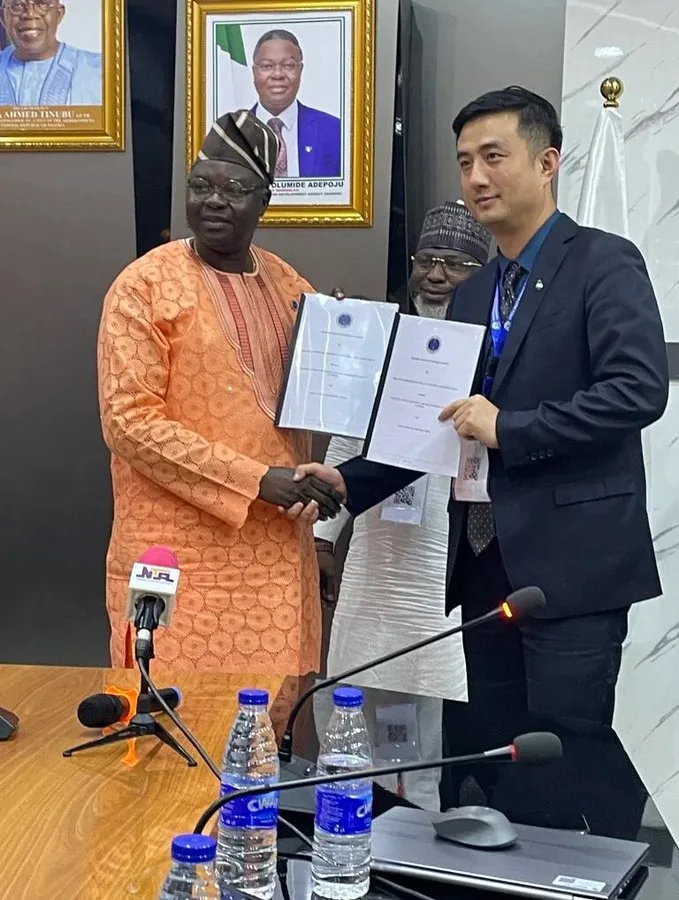
Nigeria partners with Chinese firm to roll out direct-to-device satellite connectivity
Nigeria’s push to close the digital divide took a major leap forward this week as the National Space Research and Development Agency (NASRDA) signed a landmark agreement with Chinese satellite company Galaxy Space. The deal, announced Wednesday in Abuja, will see the deployment of Direct-to-Device (D2D) satellite connectivity across the country before the end of 2025. D2D technology allows ordinary smartphones and laptops to connect directly to satellites, bypassing the need for cell towers or traditional network infrastructure. NASRDA’s Director-General, Dr. Matthew Adepoju, described the agreement as a “major milestone,” promising seamless communication even in Nigeria’s most remote and underserved regions. “This means your phone, laptop, or workstation can connect directly to satellites, enabling communication even in areas without network coverage,” Adepoju said. The partnership is also expected to bring technology transfer and training opportunities for Nigerian engineers, with plans to jointly build a miniaturized satellite, or CubeSat, in Nigeria. While the technology promises to eliminate network blind spots and boost digital inclusion, it also raises important privacy and security questions. With data potentially routed through foreign-owned satellites, experts say there is a need for strong regulatory oversight and robust encryption to protect user information. Galaxy Space’s representative, Mr. Sam Xiao, praised NASRDA’s leadership and suggested Nigeria could become a launchpad for D2D technology across Africa.

NUPRC launches a tech-driven system to track Nigeria’s crude oil exports
The Nigerian Upstream Petroleum Regulatory Commission (NUPRC) has unveiled a new technology-driven system designed to track crude oil shipments in real time. The initiative, introduced under the Nigerian Upstream Petroleum Advance Cargo Declaration Regulation 2024, requires all exporters to secure an export permit, vessel clearance, and a Unique Identification Number (UIN) through NUPRC’s digital platform before any shipment can take place. This UIN must be included on all key export documents, including the bill of lading, certificate of origin, and cargo manifest, ensuring every shipment is traceable and compliant with regulatory standards. According to the NUPRC, this system integrates seamlessly with other government export platforms to provide a comprehensive and transparent view of Nigeria’s crude oil and petroleum product exports. The commission emphasized that any incomplete or inaccurate vessel clearance applications will be rejected, and violators will face sanctions. Gbenga Komolafe, CEO of NUPRC, highlighted that the new regulations align with the commission’s mandate to increase government revenue, reduce waste, and strengthen oversight in the oil sector, in line with the Petroleum Industry Act 2021. This move comes at a crucial time, with Nigeria exporting crude oil and petroleum products worth nearly N13 trillion in the first quarter of 2025 alone, representing over 60% of the country’s total exports. Leveraging advanced technology and rigorous validation processes, NUPRC aims to tackle long-standing challenges of opacity and inefficiency in the oil export business.