
Nigerian singer Darlington Okoye, popularly known as Speed Darlington, has issued a public apology after a viral video in which he claimed to have slept with a 15-year-old girl sparked widespread outrage on social media. The controversial footage, which quickly drew condemnation and calls for legal action, was later revealed by the artist to be a publicity stunt aimed at promoting his latest music release. In a follow-up video posted on his Instagram page on Wednesday, Speed Darlington addressed the backlash, saying, “All my followers pissed off about the video I recorded in which I spoke about me sleeping with a 15-year-old, I am an artist. I need controversy to eat. If you are not trending, you are not getting booked. Simple! Nobody is booking something that is not trending.” He further explained that his new song contains explicit content consistent with his genre and that the provocative video was meant to draw attention to it. “When I dropped my song, I needed f#ck contents to push it. That is what I was doing. Don’t give it more than it is supposed to have. If any of you are offended, it’s alright. Apologies,” he added. The original video, delivered in Igbo and since removed from his social media pages, detailed an alleged encounter with a teenage girl, which many found disturbing and unacceptable. The backlash intensified with hashtags like #ArrestSpeedDarlington and #ProtectOurGirls trending on Twitter, as rights groups and members of the public condemned the use of child abuse as a marketing tactic. Authorities including the Lagos State Domestic and Sexual Violence Agency (DSVA) and the National Agency for the Prohibition of Trafficking in Persons (NAPTIP) reportedly launched investigations into the matter, though no official statement on charges or arrests had been made at the time of reporting. Speed Darlington’s history of controversial behavior has further fueled public concern. In 2022, he was filmed holding a knife while accusing women of harassment, and in 2023, he publicly declared his intention to seek a second girlfriend aged between 16 and 20 during an Instagram live session. These incidents have contributed to a pattern of provocative antics that many critics say undermine ethical standards in the entertainment industry. Despite his comedic and erratic public persona, child rights advocates have condemned the singer’s actions, stressing that exploiting sensitive issues like child abuse for publicity is dangerous and unacceptable. The controversy raises broader questions about accountability and responsible influence in the age of viral content. As the story continues to unfold, fans, industry stakeholders, and regulatory bodies are watching closely to see how the situation will be resolved. The incident serves as a cautionary tale about the risks of using shock value to gain attention in a highly competitive entertainment landscape.

Lagos state launches ambitious plan to phase out slums with urban regeneration projects
The Lagos State Government has unveiled a comprehensive initiative targeting a 50% annual reduction in slum settlements across the state through extensive urban regeneration and infrastructure upgrades. The move aims to improve living conditions, enhance infrastructure, and foster sustainable development in some of Lagos’s most challenged communities. Speaking at a ministerial press briefing in Ikeja, Dr. Olajide Babatunde, Special Adviser to the Governor on e-GIS and Urban Development, detailed the government’s progress. “Our urban regeneration efforts, led by the Lagos State Urban Renewal Authority (LASURA), have resulted in the upgrading of 36 roads across key local government areas including Somolu, Bariga, Surulere, and Ifelodun,” he said. “We are also implementing comprehensive drainage solutions and water reticulation projects to support these communities.” The regeneration program targets nine major slum communities identified as grossly deficient in essential facilities. These include Ilasan Housing Estate, Ikota Housing Estate, Adeniji-Adele Housing Estate, Makoko, parts of Shomolu/Bariga, Ifelodun/Ijora-Badia, Obalende, Isale-Eko, and Ebute-Ero. The initiative is part of the broader Lagos State Development Plan (2015-2025) and the T.H.E.M.E.S. Agenda, which envisions a sustainable and smart megacity. Mrs. Ajibike Shomade, General Manager of LASURA, emphasized the legal backing for the project: “The Lagos Urban Regional Planning and Development Law empowers LASURA to prepare and implement improvement plans aimed at rehabilitating and upgrading blighted communities to ensure provision of infrastructural facilities and amenities.” One of the flagship projects is the regeneration of the Otumara slum in Ebute Meta. LASURA has engaged residents directly in the planning process to ensure inclusive development. Olajide Abiodun, Special Adviser on Urban Development, assured affected residents of fair compensation and urged them to regularize land documents to benefit fully from the redevelopment. The government’s approach balances upgrading existing structures with necessary clearance of dilapidated buildings, aiming to create vibrant, safe, and economically viable neighborhoods. Dr. Babatunde added, “Additional urban renewal efforts are underway in areas such as Lakowe Phase II, Adeniji Adele Low-cost Housing Estate, Jakande Estate, Ilasan, Lekki, Ipodo-Olowu, Ikeja, and informal communities across Ajegunle, Alimosho, Agege, and Ajeromi-Ifelodun.” Commissioner for Information, Gbenga Omotosho, reassured Lagosians that the plan prioritizes improving living standards rather than displacing residents. “We are committed to building new houses, schools, and health centers to make these communities more comfortable and sustainable,” he said. The urban renewal drive also includes upgrading drainage systems to mitigate flooding, road rehabilitation to improve accessibility, and water projects to enhance sanitation. These infrastructure improvements are expected to stimulate local economies and improve residents’ quality of life. This ambitious project aligns with Lagos State’s vision to reduce slum prevalence by 5% annually and transform informal settlements into well-planned urban communities. It also addresses long-standing challenges such as overcrowding, poor sanitation, insecurity, and inadequate social amenities. Residents and developers are encouraged to liaise with LASURA to ensure their activities align with the state’s urban renewal objectives. The agency has invited town planning professionals to participate in consultancy roles to guide the regeneration projects. As Lagos continues its rapid urbanization, this phased approach to slum upgrading represents a critical step toward inclusive and sustainable city development.
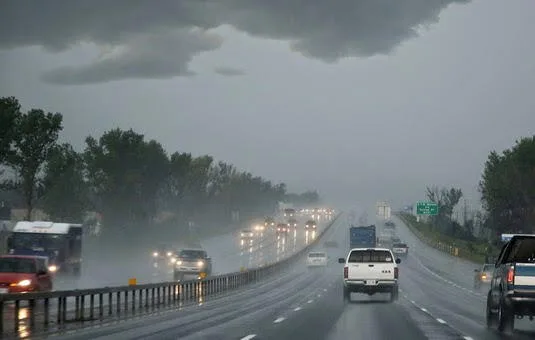
NiMet forecasts three days of heavy rainfall across 14 Nigerian states
The Nigerian Meteorological Agency (NiMet) has issued a weather bulletin predicting three consecutive days of heavy downpour affecting 14 states across the country starting from May 27, 2025. The forecast aims to alert residents and authorities to prepare for potential flooding and other weather-related disruptions. According to NiMet’s latest bulletin released on May 26, 2025, states expected to experience significant rainfall include Plateau, Nasarawa, Federal Capital Territory (FCT), and several others in the central and southern regions. The agency warns that the heavy rains may be accompanied by thunderstorms and gusty winds in some areas. NiMet’s Director General and CEO, Prof. Charles Anosike, emphasized the importance of preparedness: “Disasters pose significant challenges to our nation, and we must work together to enhance coordination mechanisms for disaster risk reduction and climate change adaptation. Accurate weather forecasts like this help communities and governments plan effectively to minimize loss of life and property,” he said. The forecast is based on advanced meteorological models and long-term climate data, which NiMet continuously analyzes to provide timely and reliable weather information. The agency’s Central Forecast Office, responsible for issuing such bulletins, noted that the heavy rainfall is part of the seasonal climate pattern typical for this period in Nigeria. Residents in the affected states are advised to take precautionary measures such as clearing drainage channels, avoiding flood-prone areas, and staying indoors during severe weather. Authorities, especially in urban centers, are urged to activate emergency response plans to mitigate the impact of potential flooding. NiMet also highlighted that this forecast aligns with the broader 2025 Seasonal Climate Prediction, which anticipates variable rainfall patterns across Nigeria this year, influenced by global climatic factors. This weather alert comes amid growing concerns over climate change and its effects on Nigeria’s weather systems, underscoring the need for enhanced climate services and public awareness. NiMet continues to provide daily updates via its official website and social media channels to keep Nigerians informed. In summary, the next three days will see heavy rainfall across 14 states, with possible thunderstorms and localized flooding. NiMet urges vigilance and cooperation from all stakeholders to ensure safety and resilience during this period.
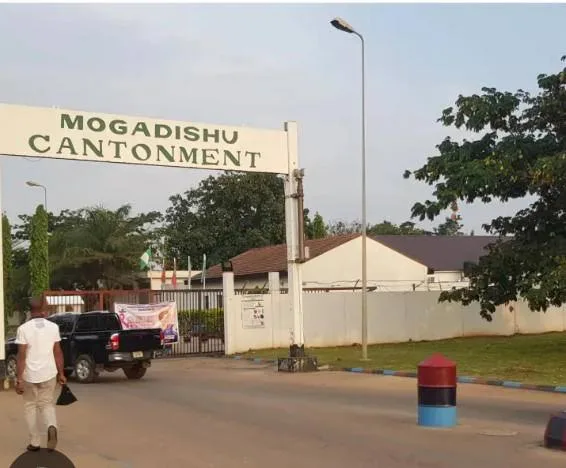
Suicide bomber killed in failed attempt to infiltrate Abuja army barracks – NEMA
The National Emergency Management Agency (NEMA) has confirmed that the explosion near the Mogadishu Army Cantonment in Abuja on Monday was caused by a suicide bomber attempting to sneak into the military barracks. According to NEMA, the incident occurred around 1:47 pm along the Mararaba-Nyanya Expressway, near a bus stop opposite the Mogadishu Cantonment, also known as Abacha Barracks. The bomber, who was carrying an improvised explosive device (IED), alighted from a Volkswagen Golf vehicle under the pedestrian bridge close to a military checkpoint. His suspicious movements attracted the attention of Military Police personnel on duty, who stopped him for identification. Moments later, the IED detonated, killing the bomber instantly and injuring one passerby. NEMA’s statement detailed the swift response: “At about 13:47hrs on Monday 26th May, 2025, NEMA AOO was alerted of an explosion in front of Abacha Barrack along Abuja-Keffi Road. AYA ERAB team was immediately activated to coordinate response. The team met stern looking security personnel at the already cordoned scene. Information gathered revealed that a Suicide Bomber attempted to sneak into the Barrack but met his Waterloo as the IED exploded on him while trying to negotiate an entry. The suicide bomber died instantly leaving one passerby injured. The EOD unit of the NPF evacuated the injured to National Hospital and took over the scene for further investigation; bringing the operation to a close at 17:29hrs. Stakeholders present included NEMA, Military, NPF, DSS, and FRSC.” The injured civilian was promptly evacuated by the Explosive Ordnance Disposal (EOD) unit of the Nigeria Police Force to the National Hospital in Abuja for treatment. The scene was cordoned off for forensic analysis and further investigations by security agencies. A military source told The Nation newspaper that the bomber had attempted to enter the barracks after being dropped off by a vehicle but was stopped near a checkpoint where passengers often alight before taking tricycles inside the cantonment. The source said the bomber moved a few meters away after being stopped before the device exploded, injuring two others who are currently receiving treatment at the Defence Medical Centre. The Nigerian Army confirmed the explosion via a post on their official X page, stating, “Explosion at bus stop opposite Mogadishu Cantonment Abuja. Situation under control. Details later.” Efforts to reach the Army spokesperson for further comments were unsuccessful. Police spokeswoman Josephine Adeh said the area was swiftly secured by the EOD unit to ensure the safety of commuters and residents, and a comprehensive investigation, including forensic analysis, has commenced to determine the exact cause and nature of the explosion. This incident marks another security challenge near the nation’s capital, following previous bombings in the region. Authorities have urged residents to remain calm and vigilant as investigations continue

From Lara.ng to Motion Space – How Samuel Odeloye is using transport data to fix Nigeria’s last-mile delivery
Samuel Odeloye, the founder behind the popular Lagos transit chatbot Lara.ng, is now channeling eight years of rich transport data into building Motion Space, a cutting-edge logistics platform aimed at transforming Nigeria’s last-mile delivery landscape. Lara.ng, launched in 2017, helped over 250,000 monthly users navigate Lagos’ complex public transport system by providing step-by-step transit directions. Although it never became a profitable venture, the platform amassed valuable hyperlocal data on commuter behavior, routes, and fare changes across Lagos. Odeloye and his team are now applying these insights to Motion Space, a full-stack logistics startup designed to slash delivery costs by at least 50% and improve operational efficiency for courier companies, delivery hubs, and small vendors. Motion Space’s software automates delivery management by assigning tasks to riders based on location and familiarity, streamlining operations from order intake to final delivery. Early tests show a 50% reduction in delivery times and a 30% cut in costs. Beyond software, Motion Space is deploying smart lockers equipped with security features and sensors to reduce delivery failures and offer convenient package pick-up in densely populated areas where door-to-door delivery is often unreliable. Operating on a dual business model, Motion Space offers its logistics software as a subscription service and leases its smart lockers as infrastructure to estates, malls, and fulfillment centers. This approach allows continuous revenue generation while maintaining control over hardware maintenance and upgrades. Odeloye’s transition from Lara.ng to Motion Space reflects a deep understanding of Nigeria’s transport and logistics challenges, combining data-driven software with innovative physical infrastructure to tackle inefficiencies that even major players like Jumia and Konga face. With a focus on operational excellence and scalability, Motion Space aims to become the backbone of Nigeria’s last-mile delivery ecosystem. Currently bootstrapped and backed by silent investors, Odeloye is prioritizing proving the business model before seeking institutional funding, positioning Motion Space for rapid growth and widespread adoption in the near future. This bold initiative could finally crack the code on Nigeria’s logistics puzzle, leveraging years of transit data and local engineering expertise to make last-mile delivery faster, cheaper, and more reliable for millions of Nigerians.

Govt to deploy 80% of 7,000 new telecom towers in Northern Nigeria to bridge connectivity gap
The Nigerian Federal Government has announced a major initiative to deploy 7,000 new telecommunications towers nationwide, with a strategic allocation of 80% of these towers to Northern Nigeria. This move aims to address the region’s significant connectivity deficit and support the country’s broader digital transformation and 5G rollout plans. The Federal Executive Council approved the project in March 2025, with the formal rollout scheduled to begin in the fourth quarter of the year. The first tower installation is set for a rural community in Abuja next week, targeting an area of about 5,000 people where insecurity has exacerbated connectivity challenges. Unlike traditional telecom masts, these new towers will serve as digital hubs, delivering internet access not only to residents but also to schools, hospitals, and local government offices, maximizing their community impact. Minister of Communications, Innovation and Digital Economy, Dr. Bosun Tijani, highlighted that the majority of unconnected clusters are in the North, justifying the 80% allocation to this region. He emphasized a collaborative model where mobile network operators will share the towers’ infrastructure, reducing redundancy and optimizing resources. This initiative is part of a larger strategy that includes the deployment of 90,000 kilometers of fiber optic cable and the use of satellite technologies such as Starlink to enhance national connectivity. Currently, over 54% of Nigerians – approximately 128.3 million people – lack internet access, with broadband penetration at just 48%. The government aims to raise broadband penetration to 70% by the end of 2025. The telecom towers project complements significant private sector investments, including a $500 million commitment by Airtel Africa to strengthen Nigeria’s telecom infrastructure. The new towers will bolster 4G and 5G coverage, facilitating digital transformation in sectors like e-commerce, fintech, education, and healthcare. Overall, the government’s focus on the North reflects the region’s disproportionate share of unconnected communities and the need to bridge the digital divide, while also addressing security challenges through enhanced connectivity. This ambitious project aligns with President Bola Tinubu’s “renewed hope agenda,” which prioritizes foundational initiatives to unlock national productivity and make Nigeria the most inclusive digital economy in Africa