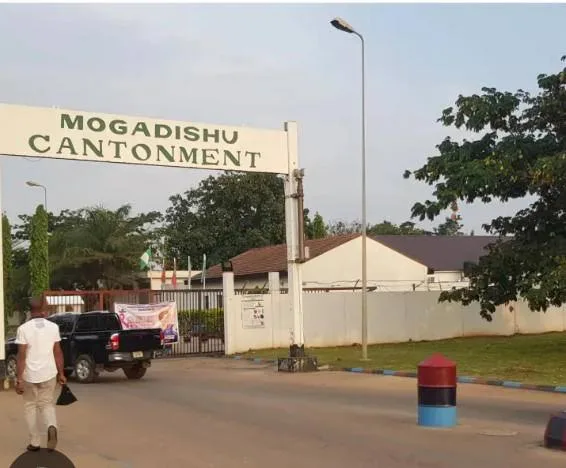
The Nigerian Army confirmed an explosion near the Mogadishu Cantonment in Abuja on Monday afternoon. In a brief statement posted on its official X handle, the Army said, “Explosion at bus stop opposite Mogadishu Cantonment Abuja. Situation under control. Details later.” The blast occurred around 2:50 PM at a bus stop adjacent to the barracks, which houses personnel from the Air Force and Navy. Eyewitnesses reported that the explosion was caused by an improvised explosive device (IED) contained in a rubber can, and preliminary reports suggest the incident may have involved a suspected suicide bomber. One person was injured and promptly taken to the hospital, while another was reportedly killed at the scene. The Federal Capital Territory Police Command confirmed the explosion and said the Explosive Ordnance Disposal Unit was deployed to secure and examine the area. A perimeter was established to ensure the safety of commuters and residents. Police spokesperson SP Josephine Adeh urged the public to remain calm and vigilant, encouraging residents to report any suspicious activities. A comprehensive investigation, including forensic analysis, is ongoing to determine the exact cause and nature of the explosion. The incident has heightened security concerns in Abuja, especially around key military installations, but authorities have reassured the public that the situation is under control and that no further threats have been detected.

FG to establish industrial hubs in Lagos, Ogun, Kano, and Abia to boost manufacturing sector
The Federal Government of Nigeria has announced plans to establish industrial hubs in four states – Lagos, Ogun, Kano, and Abia – as part of its strategy to accelerate economic transformation and boost manufacturing across the country. Minister of State for Industry, Senator John Enoh, disclosed the initiative during the 16th National Council on Industry, Trade and Investment held recently in Lagos. The industrial hubs are a key component of the government’s Industrial Revolution Work Group (IRWG), launched in February 2025, which aims to rejuvenate Nigeria’s industrial sector through stakeholder engagement, evidence-based policies, and consistent implementation. The hubs will focus on sector-specific manufacturing clusters: agro-processing in Kano, textile production in Aba (Abia) and Lagos, and pharmaceutical manufacturing in Ogun. For example, the Kano hub will specialize in converting cassava into ethanol and starch, potentially creating thousands of jobs, while the textile clusters in Aba and Lagos aim to restore Nigeria’s prominence in garment production and exports. The pharmaceutical zone in Ogun is expected to reduce Nigeria’s dependence on imported medicines. Senator Enoh emphasized that the project aligns with President Bola Tinubu’s Renewed Hope Agenda, which prioritizes economic diversification and sustainable development by addressing challenges such as energy deficits, infrastructure gaps, and regulatory bottlenecks. “We are entering an era of full-scale industrialisation where every investment, every reform, every decision must drive us toward a globally competitive, inclusive, and innovation-led economy,” he said. The IRWG initiative rests on five pillars: financing and investment transformation, energy and infrastructure modernization, regulatory reforms and ease of doing business, product standards and market expansion, and human capital development and industrial innovation. The government is urging federal and state agencies, the private sector, and development partners to collaborate in unlocking financing for micro, small, and medium enterprises (MSMEs), reviving dormant industrial zones, and building thriving, employment-generating clusters nationwide. The 16th National Council on Industry, Trade and Investment reviewed 75 submissions, including 30 actionable recommendations aimed at turning policy into concrete industrial growth. The minister described the council as “a clarion call to transform ambition into action” and stressed the urgent need for collective effort to realize Nigeria’s industrial potential. This initiative is expected to create thousands of jobs, expand domestic manufacturing capacity, reduce import dependency, and position Nigeria as a leading manufacturing hub in Africa.
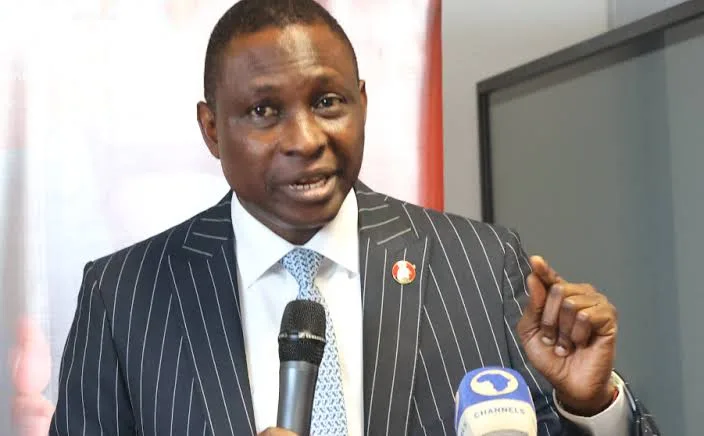
EFCC tracks, recovers part of N1.3tn lost to CBEX scam, arrests suspects
The Economic and Financial Crimes Commission (EFCC) has made notable strides in its investigation of the N1.3 trillion Crypto Bridge Exchange (CBEX) crypto scam, recovering a reasonable amount of stolen funds and arresting several suspects, EFCC Chairman Ola Olukoyede confirmed in a recent interview with TVC. Olukoyede stated, “We have gone far with CBEX. We have been able to recover a reasonable amount of money,” adding that the stolen assets were primarily in cryptocurrency, which posed challenges in converting them back to cash. He explained, “There is no way you will get the dollars in cash without necessarily going through the same process” used by the fraudsters. The EFCC has arrested some suspects while continuing to pursue others declared wanted, though details remain confidential to avoid disrupting ongoing investigations. “We have made a reasonable arrest… We are still after quite a number of people we have declared wanted,” Olukoyede said. Earlier, the EFCC had declared eight CBEX promoters wanted following a Federal High Court order to arrest them over a $1 billion fraud. Among those wanted are foreign nationals, alongside Nigerian suspects linked to the scheme. One suspect, Adefowora Abiodun, voluntarily surrendered to authorities, signaling progress in the probe. The EFCC has also worked with international partners, including Interpol, to track the fraudsters across multiple countries, as the scam involved foreign nationals and complex crypto wallet transfers outside Nigeria’s jurisdiction. Olukoyede cautioned that full restitution to victims would be difficult, given the nature of cryptocurrency transactions and the dispersal of funds across various wallets. “I will not sit here and tell you that we are going to restore every victim. It will become practically impossible,” he noted in earlier remarks. This ongoing investigation marks a critical effort by the EFCC to bring perpetrators to justice and recover assets from one of Nigeria’s largest crypto frauds to date.
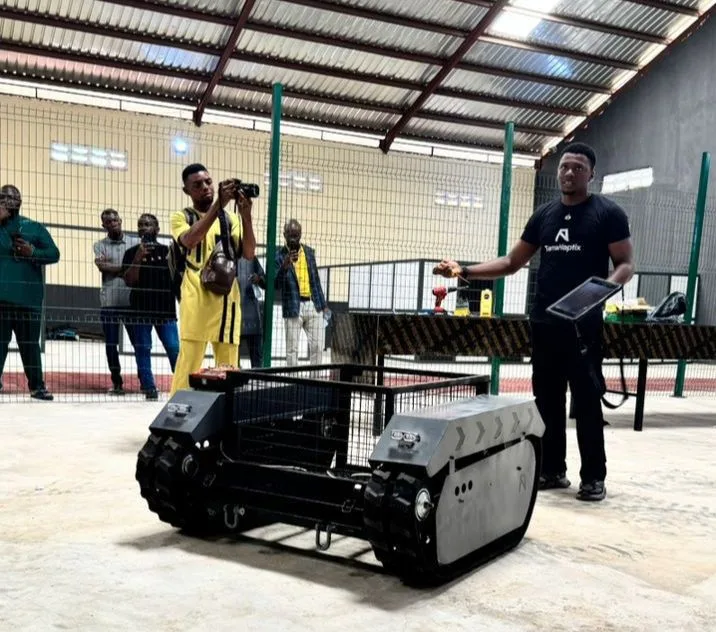
Terrahaptix rebrands as Terra Industries, sets ambitious global mission to protect critical infrastructure
Terrahaptix, the Nigerian autonomous systems startup known for pioneering infrastructure security solutions, has officially rebranded as Terra Industries. The announcement, made by CEO Nathan Nwachuku, marks a significant evolution in the company’s vision and scope. Founded in 2024 with a focused mission to protect Africa’s critical infrastructure using autonomous technologies, Terra Industries has since expanded its impact dramatically. The company now safeguards over $6 billion in assets, showcasing the growing importance of infrastructure security in the defense sector. “Our original goal was modest – to protect Africa’s critical infrastructure with autonomy,” said CEO Nathan Nwachuku. “Today, our ambitions have grown. While companies like Anduril and Helsing focus on protecting warfighters on the frontline, no one is adequately securing the infrastructure in the backline. Terra is ready to fill this vital gap.” Alongside the rebranding, Terra Industries has updated all its social media handles and launched a new website to reflect its expanded mission and global aspirations. The company aims to become a dominant player worldwide in infrastructure security, a domain it identifies as underserved but critical. Terra Industries’ innovative approach integrates AI-powered drones, solar sentry towers, and advanced software platforms to detect and neutralize threats to infrastructure such as power plants, pipelines, and communication networks. With this strategic repositioning, Terra Industries is poised to lead the next wave of defense innovation, ensuring that critical infrastructure worldwide is protected with cutting-edge autonomous solutions. Meanwhile, Daily Tech Nigeria has recently reported that Terra Industries (formerly Terrahaptix) secures a $1.2m contract to protect Nigerian hydroelectric plants.

Actress Chioma Akpotha celebrates YouTube milestone with 100,000 subscribers plaque
Nigerian actress Chioma Akpotha has reached a new milestone in her digital journey, receiving a YouTube plaque in recognition of hitting 100,000 subscribers on the platform. This achievement comes shortly after her triumph at the 2025 Africa Magic Viewers’ Choice Awards (AMVCA), where she won the award for Best Lead Actress. Expressing gratitude to her loyal subscribers, Chioma reflected on her rapid growth, recalling how she celebrated reaching 1,000 subscribers just a few months ago. Taking to Instagram, she shared her excitement, thanking her fans for their unwavering support. She pledged to continue providing premium content, urging viewers to stay tuned for more milestones ahead. With this latest achievement, Chioma Akpotha solidifies her presence as both an acclaimed actress and a digital creator, embracing the evolving landscape of entertainment.
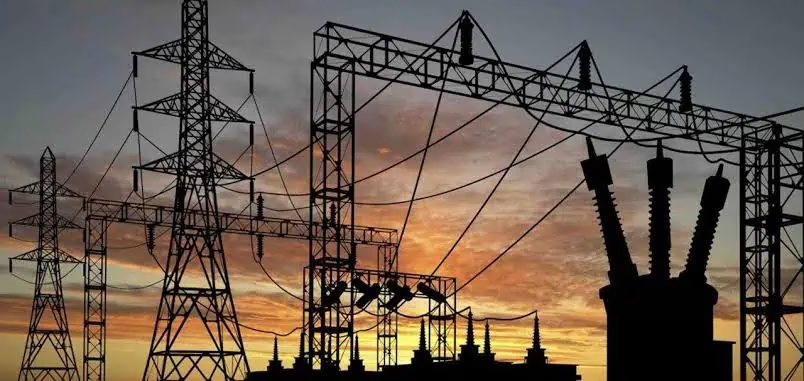
Power firms’ borrowing surges to N1.77tn amid sector reforms
The Nigerian electricity sector has witnessed a sharp rise in borrowing from commercial banks, with power firms securing loans amounting to N1.77tn as of December 2024, marking a notable increase from N1.43tn in December 2023. An analysis of the Central Bank of Nigeria’s (CBN) quarterly bulletin shows a significant uptick in credit activity, reflecting increased private sector interest despite high lending rates. Borrowing peaked at N1.89tn in February 2024, driven by optimism over government-led reforms, before experiencing fluctuations throughout the year. Sector experts attribute this trend to the federal government’s push for reforms, including deregulation, tariff adjustments, and incentives for renewable energy investments, particularly in solar energy. In 2024 alone, Nigerians spent N200bn on imported solar panels, underscoring a shift toward sustainable energy solutions. Minister of Power, Adebayo Adelabu, recently unveiled a roadmap to address electricity challenges, focusing on off-grid solutions, metering expansion, and distribution efficiency. Key initiatives include a Renewable Energy Plan aimed at deploying solar mini-grids in rural communities, aligning with Nigeria’s Energy Transition Plan and global climate commitments. Despite occasional dips in borrowing, power firms remain engaged with the banking system, signaling a long-term commitment to sectoral growth and investment. The resilience of private investors suggests confidence in the viability of Nigeria’s power market amid ongoing policy adjustments. This development indicates a crucial phase in the country’s quest for reliable energy access, as stakeholders navigate challenges while leveraging financial opportunities to sustain progress.